Diablo 4 Switch 2 review – It took a Nintendo port, but I finally get it
Our Verdict

Diablo IV finally clicked for me on Nintendo Switch 2. Its compelling loot loop, satisfying build crafting, and brutally enjoyable combat have turned what was once a game I repeatedly bounced off into something I don’t want to put down. The port makes a few visual sacrifices and occasionally stumbles under pressure, but those issues rarely get in the way.
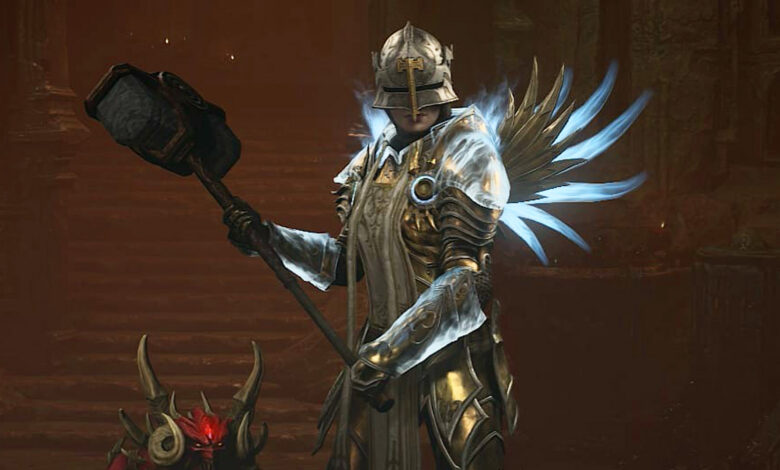
I’m a fiend for anything grimdark or high fantasy, yet I’ve only ever really dabbled with the Diablo series casually over the years. When Diablo IV launched in 2023, it marked the first time I’d properly engaged with Blizzard’s dungeon-crawling antics. But life happens, and again, my time within Sanctuary just wasn’t meant to be. That’s all changed recently, as I’ve been chipping away at leveling up my trusty Paladin. When it comes to Nintendo Switch 2 ports, this is easily among the best in the handheld’s roster.
Following its not-so-surprising reveal at BlizzCon 2026, this will likely be the first time people have played Diablo IV. If that’s you, then here’s a quick lore recap. Humanity faces a new threat in the form of Lilith, the Daughter of Hatred. Born from the union of an angel and a demon, Lilith helped create Sanctuary, the world humans call home. Now, she wants to protect humanity by granting its people the immense power of their Nephalem ancestors, but her ambitions also include overthrowing Hell’s rulers and claiming their power.
As you can expect, it gets pretty messy. Her former lover, the angel Inarius, gets involved and hopes to return to Heaven by killing her. Caught between these two warring forces, you join the Horadrim, an ancient order of scholars and demon hunters, to track down Lilith and stop her plans. Throw in a whole load of monsters and other supernatural beings for good measure, too. All caught up? Now, the thing is, with Diablo IV’s story, as rich and thrilling as it is, it can often take a backseat.

Honestly, Diablo IV throws a lot at you right from the get-go. It’s easy to feel overwhelmed when the game is chucking up seemingly endless amounts of information to absorb. Whether it’s descriptors of the extensive skill trees, unlocked items, or notifications for what’s changed in-game, booting up the new Switch game is a headache at first. Even as someone who had previously jumped in on PlayStation 5, it had me wishing I’d brought a notebook and pen.
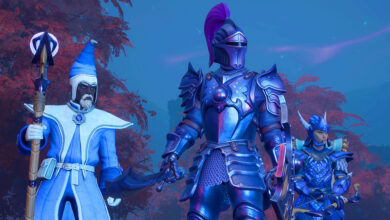
Thankfully, it doesn’t take long to get into the swing of things. Before embarking on your adventure, you create a character, choosing one of the game’s classes to build it around. The Paladin and Warlock are newer additions, arriving with the Lord of Hatred DLC. The Nintendo Switch 2 version bundles every post-launch expansion, so these are available immediately. There’s plenty of playstyle variety to choose from, whether you want the sheer brute force of the Barbarian, the mage antics of the Sorcerer, or the combat speed of the Rogue.
As I’d gone down the Rogue route on my initial playthrough, I started fresh with the Paladin here. A returning class from Diablo III, it offers four individual flavors for battle: Juggernaut, Zealot, Judicator, and Disciple. For me, it encompasses a satisfying mixture of rupturing demonic spleens with melee weapons, while dealing Holy damage through buffs and gigantic beams of Divine energy that I can spear into enemies. Diablo IV’s leveling is incredibly muscular, with an enriched suite of abilities to experiment with and useful passives to add.

Diablo IV’s build crafting gives you plenty of room to turn your chosen class into something that feels distinctly yours. The skill tree starts simply enough, letting you spend skill points on active abilities before branching into upgrades and passive bonuses that can completely change how an attack works. You can also refund points and reshape your build, so experimenting doesn’t feel like you’re permanently locking yourself into one path.
Each active skill can rank up to five times normally, with additional ranks coming from gear and other bonuses. As you progress further, the Paragon system takes over, giving you another layer of bonuses and customization once you reach level 50. From there, you’re not just making your character stronger; you’re constantly tinkering with how your abilities work together, whether that’s stacking Holy damage on my Paladin or building around a particular skill that suddenly becomes far more potent with the right bonuses.
The real hook of Diablo IV comes from its loot, and there’s no shortage of ways to get your hands on increasingly powerful gear. Legendary equipment can introduce unique affixes that dramatically change how your abilities work, giving you plenty of reasons to keep experimenting with different builds. Whether you’re hunting for a particular weapon or simply hoping for a better set of armor, there’s always something worth chasing. I often find myself veering off the main questline to explore dungeons, even if I’m woefully underpowered to complete them. I just want the action, the thrill.
Diablo IV’s grim atmosphere remains one of its biggest draws, too. From the grotesque designs of its demonic enemies to Sanctuary’s bleak, war-torn environments, Blizzard delivers a world that feels consistently oppressive. Its haunting soundtrack and weighty combat sound effects complement the visual spectacle, making every encounter feel suitably brutal. I can’t get enough of the metallic clang my Blessed Hammer makes when it bashes enemies.
Once you’ve finished the campaign, Diablo IV opens up even further, with a wealth of endgame activities to sink your teeth into. I can’t say I’ve sampled it all yet, but between Helltides, Nightmare Dungeons, and other challenging encounters, there’s certainly no shortage of things to do.

The Nintendo Switch 2 port isn’t completely flawless. I worried that, due to the highly busy nature of Diablo IV’s combat, it would suffer big time in Handheld Mode. While there are some infrequent stutters, it mostly holds its own when things get hectic. I’ve been playing it using the Performance toggle, which turns off ray tracing and other fancy post-processing effects. It also knocks down the resolution to 1080p in both Handheld Mode and Docked Mode. However, if you want a bit more visual polish, you can take things up to 1440p resolution in Docked Mode at 30fps.
Loading times have also felt reasonable, especially when entering dungeons or teleporting away to safety. Diablo IV’s combat demands consistency more than visual extravagance, and I’d rather have the smoother experience than squeeze out a little extra detail from Sanctuary’s already impressive environments. With that in mind, Performance is the better mode to experience Diablo IV in.
Playing with a monitor emphasizes how impressive Blizzard’s port is, as it goes toe to toe with its PlayStation 5 and Xbox Series X|S counterparts. The controls also translate comfortably to the Nintendo Switch 2, with responsive movement and attacks that make clearing hordes of demons feel satisfying. Navigating the inventory and skill menus takes a little more patience, particularly when comparing equipment on the smaller screen, but it never becomes a significant obstacle.
Diablo IV naturally fits into handheld play. I can jump into Sanctuary, clear a few dungeons, tweak my build, and put the console down without feeling like I need to commit to a lengthy session. The inclusion of cross-play and cross-progression is always welcome, as I can take my character to whatever platform I’m on. I’m all for this in RPGs and wish more games in the genre would take note.
After repeatedly drifting away from Diablo IV, I didn’t expect the Nintendo Switch 2 version to be the one that finally got its hooks into me. Yet here I am, chasing increasingly ridiculous gear and convincing myself that just one more dungeon won’t hurt. Blizzard’s port isn’t without its compromises, with occasional stutters and some visual concessions, but they’re easy to overlook when the core experience feels this good.