Review: Call of the Elder Gods (Nintendo Switch 2)
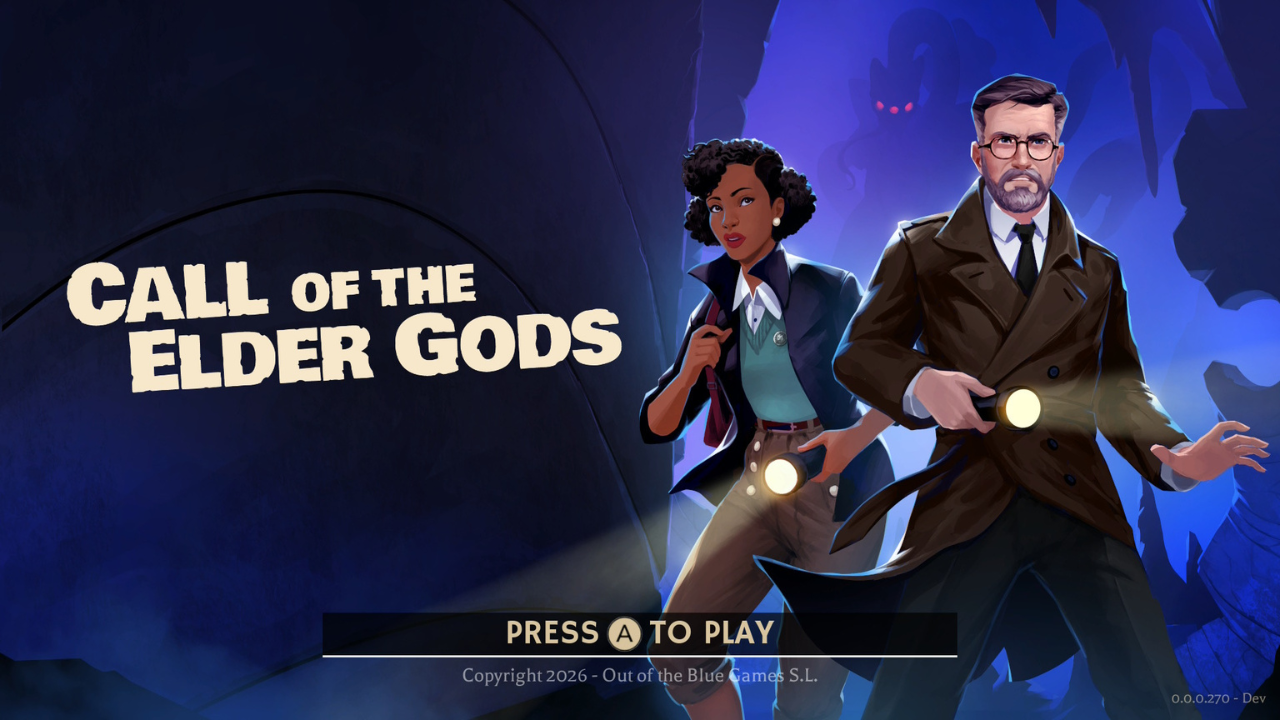
Call of the Elder Gods is an adventure puzzle game developed by Out of the Blue Games and published by Kawlee. This title is a sequel to Call of the Sea, though you don’t need to necessarily play the previous game to fully understand this one.
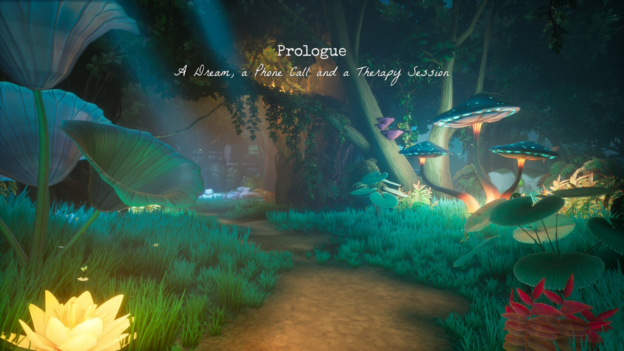
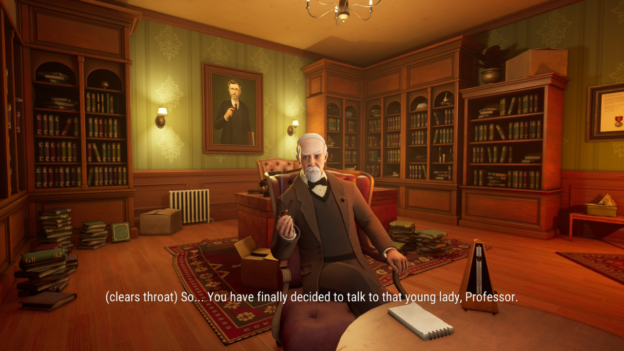
That said, you play as two different characters in Call of the Elder Gods: Harry Everhart, the protagonist’s husband from Call of the Sea and professor at Miskatonic University, and Evangeline Drayton, a student at the same university. Harry is seeing shadows in his visions and Evangeline is having strange dreams about an artifact. Together, this unlikely pair digs deep for answers.
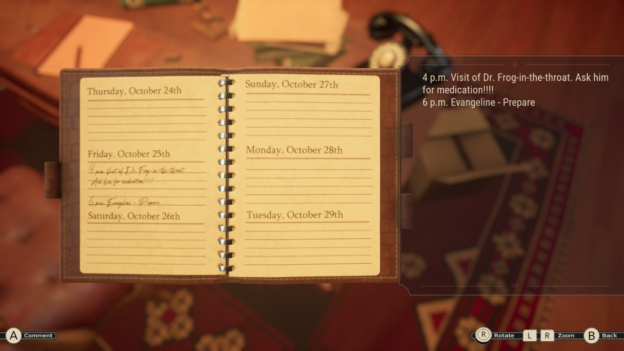
Call of the Elder Gods is a linear game. Once you hit a puzzle, you must solve it to move on. Luckily, the game is good at steering you in the right direction, though that doesn’t mean it hand-holds you. At the start, you can change your difficulty settings to toggle a hint system that allows Evangeline to keep track of clues in her journal, which you can check at any time. As much as I enjoy puzzle games, I’m not the greatest at them. So, I had it set to the easiest setting but only used the hint system as a last resort.
The hints in this game walk you through the current chapter step by step through each puzzle. It basically tells you the answer, so I only looked at it for maybe two puzzles throughout. They can be convoluted in a way that the puzzles present themselves with no explanation on what you need to do to solve it. Some were obvious and others I had zero clue what to do. Looking at the hint helped me realize what needed to be done and I could take it from there myself.
I won’t comment too much on the main story due to spoilers. This game takes place years after Call of the Sea. Even though you don’t need to know what happened in the first game, Call of the Elder Gods is similar in premise where Evangeline and Harry are trying to piece together their lost memories, all the while discovering something bigger than themselves.
The game is fully voice acted and beautifully done to boot. Harry and Evangeline communicate as you walk around and as you solve puzzles. Some puzzles need to be figured out by using both characters. You don’t need to toggle between the two. The game will shift you to be whoever you need to be at that moment. Again, it’s pretty linear. For example, there’s a puzzle where Evangeline is in an underwater cavern and Harry is above her in a cave. A dumbwaiter goes between the two areas and Evangeline needs a certain item to solve her puzzle, but the item is where Harry is. So, as Harry, you solve a puzzle to retrieve the item before sending it down to Evangeline, where she then solves her puzzle.
Between the stories of the two games and the way they’re told, I enjoyed Call of the Elders Gods more. Part of that is because the hint system was better and the puzzles were simpler than Call of the Sea. So, they were easier for me to figure out on my own. However, what I really enjoyed was going through the game with two different characters, seeing their POVs in certain situations, and being able to compare their similarities and differences of their internal struggles. I think the story in Call of the Sea was stronger, but the way the story is told in Call of the Elder Gods was more enjoyable. Not to mention that, in addition to the wonderful voice acting, the atmospheric music and graphics of each area were stunning and immersive.
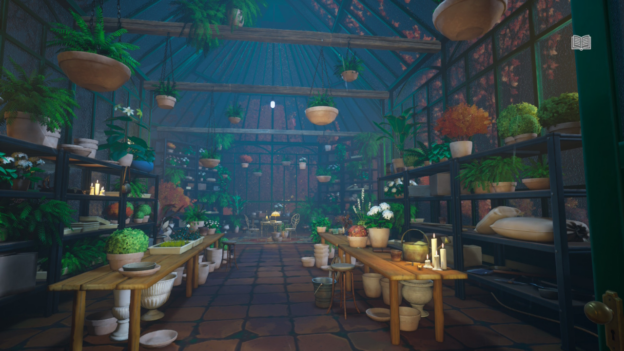
Call of the Elder Gods is a narrative-driven game with tricky puzzles and not a lot of explanation to them, but the hint system can help you out without holding your hand if you don’t want it to. The atmosphere is fun to explore and delving into the two characters’ journeys side by side was engaging.
If you’ve played Call of the Sea, then you won’t be disappointed by Call of the Elder Gods. But if you haven’t played the previous title and enjoy puzzle games, then this is worth adding to your list.