Tips for navigating China’s enormous games market
Stay Informed
Get Industry News In Your Inbox…
Sign Up Today
A lot of talk in the games industry right now centres around China’s global success and how Western developers can compete. But what about the opportunities for international studios looking to break into China – the world’s largest games market?
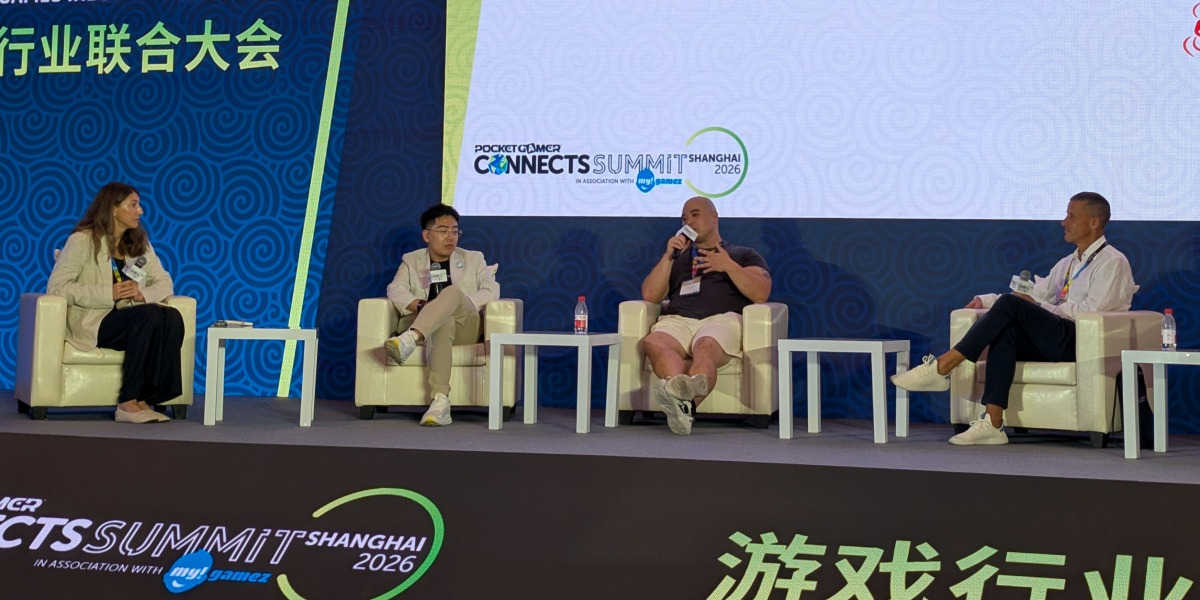
To answer that question, Habby business development manager David Pan, Thatgamecompany head of corporate development Shijie Xue, Kuuasema VP of international partnerships Armin Hummel and MyGamez VP of partnerships Svitlana Verpakhovska took to the stage at PGC Summit Shanghai to discuss publishing in China and how to navigate the sector.
Pan said developers that have a strong hit might think they should go big and just take on China’s potentially highly lucrative games market. But they’ll then find out that, for multiple reasons, it doesn’t fit.
That’s where, he said, having a publishing partner can fill in the gaps and help studios know what works and what doesn’t.
Xue said it’s important to understand the market and the players. For Sky developer Thatgamecompany, using NetEase’s expertise in local markets is a “strong superpower” for the team’s success in China, where the title has proven hugely popular.
How to choose a partner
Verpakhovska asked how companies should go about choosing a partner for entering China’s market. It’s worth noting that launching in China is a months-long process that involves finding a local partner, conforming to the country’s content guidelines and gaining a licence.
Pan said some publishers know certain genres much better – and the relevant target audience. Meanwhile, Xue said that for Thatgamecompany, it was important to find a partner that understood its own culture and mission, as its game Sky is different from a lot of others on the market.
“Having a partner that knows what we’re looking for and to be successful in our own way is probably the most important piece for us when we select our partners, not only in China, but globally in general,” he said.
User acquisition approach
The panel was asked whether there were different approaches for UA in China. Pan said while there are quite a few ad networks, most of the time it boils down to the largest ad networks where companies are putting their ad spend: Douyin and WeChat.
As far as how publishers conduct a UA campaign, however, “it’s kind of the same”.
“The one thing about China is how quickly things move,” said Pan. He explained that a campaign might start out effective and hitting CPI KPIs, and then all of a sudden, the numbers start skyrocketing.
“When people were saying they need to learn UA from Chinese publishers, it’s because they’ve been living in this brutal UA world for much longer than people in the West,” he added, saying companies need to work fast and more efficiently as a result.
Influencer marketing was described as a “must have step”. Xue said that having influencers, general content creators or Sky-specific influencers was “very important”, as they are the voice that represents the feeling, from a player perspective, around the game.
Live ops adaptation and player behaviour
When it comes to how to treat live ops, Pan advised that in Habby’s case, it doesn’t treat one region differently from another.
He said that these days, players in one region might wonder why users elsewhere in the world are getting access to content that they can’t have. “We always make sure we do an IP that’s going to be felt around the world”, he said. “We won’t do something that’s only popular in China.”
When it comes to monetisation differences, Xue said there’s no difference in monetisation methodology for Sky in different territories. “We try not to trick people.”
Pan added that players can see what you’re doing in all regions, so “we will never monetise the game specifically for one region compared to another – we keep it universal”.
One thing Pan and Xue noted, however, is how quickly players in China consume content – though this doesn’t mean extra content specifically for fans in the country.
“That definitely puts a lot of pressure on live ops,” said Xue. “But that’s a good thing, that means they care about the IP.”
Key advice
Asked for key advice on operating in China, Pan said it’s important for publishers to start early.
“There needs to be a lot of groundwork laid out,” he said. Developers will need to talk with potential publishing partners, with the stores, while the licensing process is also a months-long, time-consuming process.
Xue said companies looking to enter China should “talk to more people”. Not only just publishing partners, but stores, platforms and influencers. “Get as much info as possible,” he said, adding it will help with making informed decisions on publishing in China.