Despelote Review – Review – Nintendo World Report
Video games as a medium are special, mostly because they do what most other media can’t: provide direct agency. You are putting yourself into the shoes of the avatar and experiencing what the developers want. Along with this thought process, there’s a fine line to walk between narrative experience and gameplay but can you meld both so the gameplay itself is part of the story you’re telling? That’s a question a lot of indie games try to answer and one Despelote fumbles throughout its heartfelt story.
Despelote is the brainchild of Julian Cordero and Sebastian Valbuena, brought to us by Panic publishing. It’s a deeply personal story of Quito, a small town in Ecuador, as the Ecuadorian football club is on its way to be in the FIFA World Cup–a hyper specific pocket of time when Quito felt electric and hope was in the air for some sort of home town representation and Ecuadorian pride. Moving through Quito, you hear it in every single person you walk by: small conversations about last night’s game, what this could all mean for the future of Ecuador.
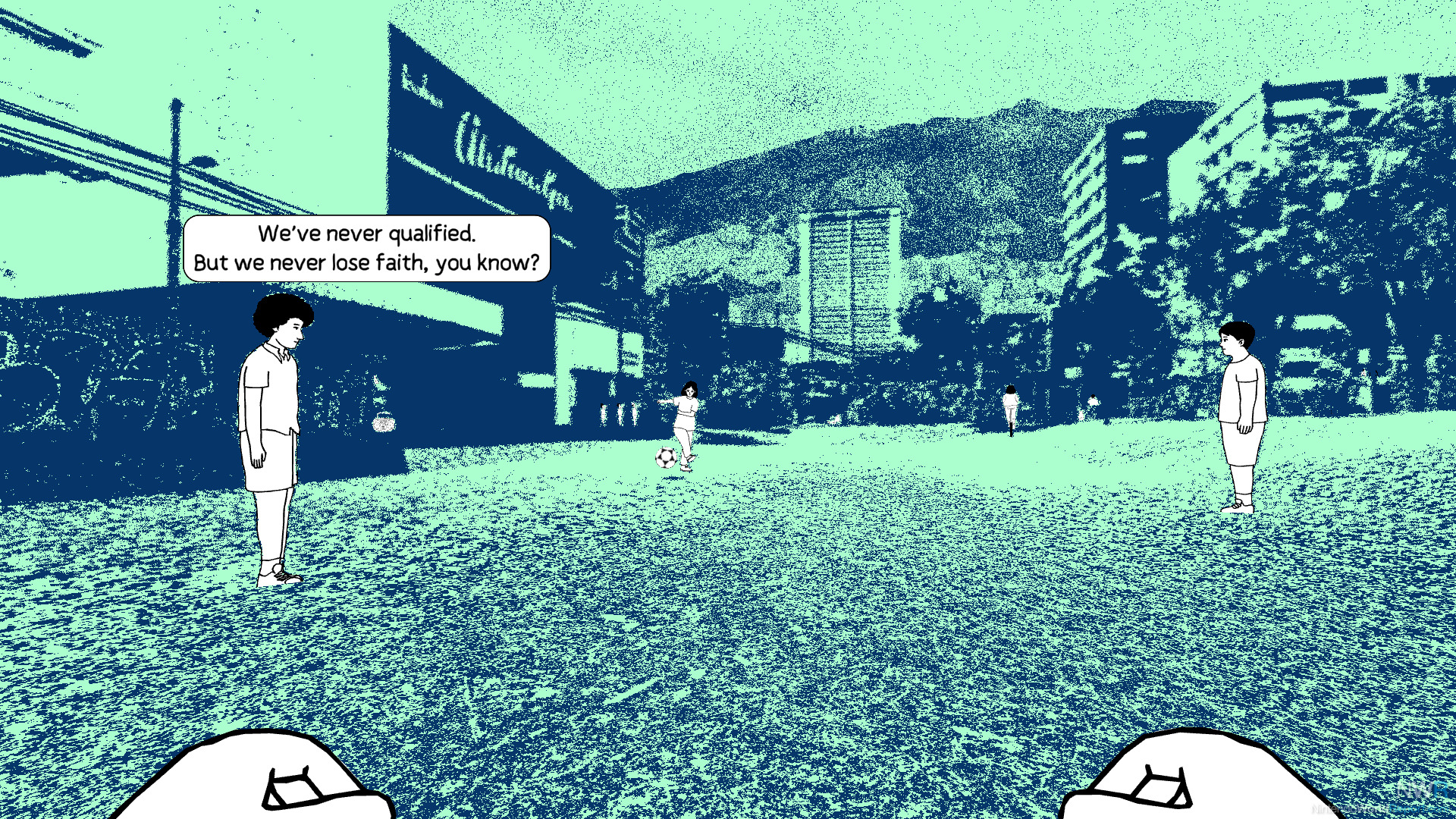
You play as a young pre-teen named Julian who is experiencing the normal pre-teen Quito life, while also experiencing the buzzing excitement of the time. Despelote has you jumping from vignette to vignette-style slice of life moments, such as waiting for your mother to finish dinner, so you play soccer with your friends in the park, or babysitting your little sister with a game of hide and seek. All are pretty mundane tasks but are set amongst this backdrop of historical fervor. The developer talks during the closing moments of the game about how these are just memories that, while not all 100% accurate, are to recreate very distinct moments from his past.
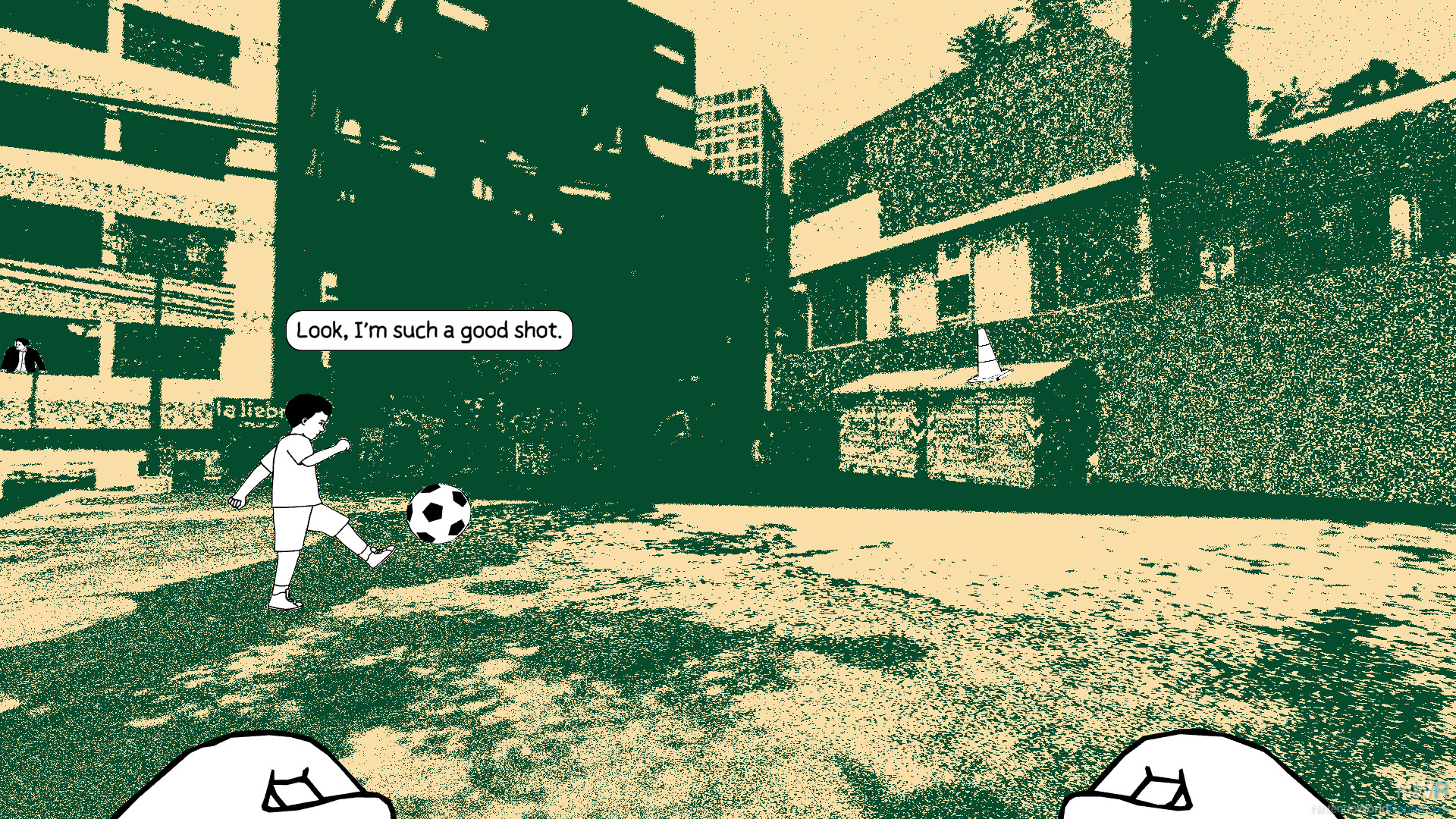
Now, I’m all for personal stories, but what brings me to a standstill is in the method I engage with said stories, because as I said before, it’s what separates games from other works. In the case of Despelote, I found that the actual gameplay lacks much of any kind of substance. The soccer mechanic is introduced first, where you can wind up your kicks, but it’s so inconsequential that you never need to engage in it. In fact, the memories themselves also fail to fully resonate. As you move through the memories, playing with your friends, taking exams, or even underage drinking with classmates, the story of the upcoming soccer games, and what they mean for the city are occurring almost as ambiance.
It’s a wild conceit but interesting nonetheless. There isn’t much of a story if at all happening during Despelote’s short runtime, but instead what’s happening to the town around your character, so it’s really a second-hand story–a vibes game–one that is trying to explain what this opportunity meant for the people of this town. This is instead of a direct A to B story, and in that sense, I commend Despelote for doing what I had never seen before, full 100% environmental story telling without a primary story occurring in the foreground. It’s kind of wild but it doesn’t necessarily make it engaging.
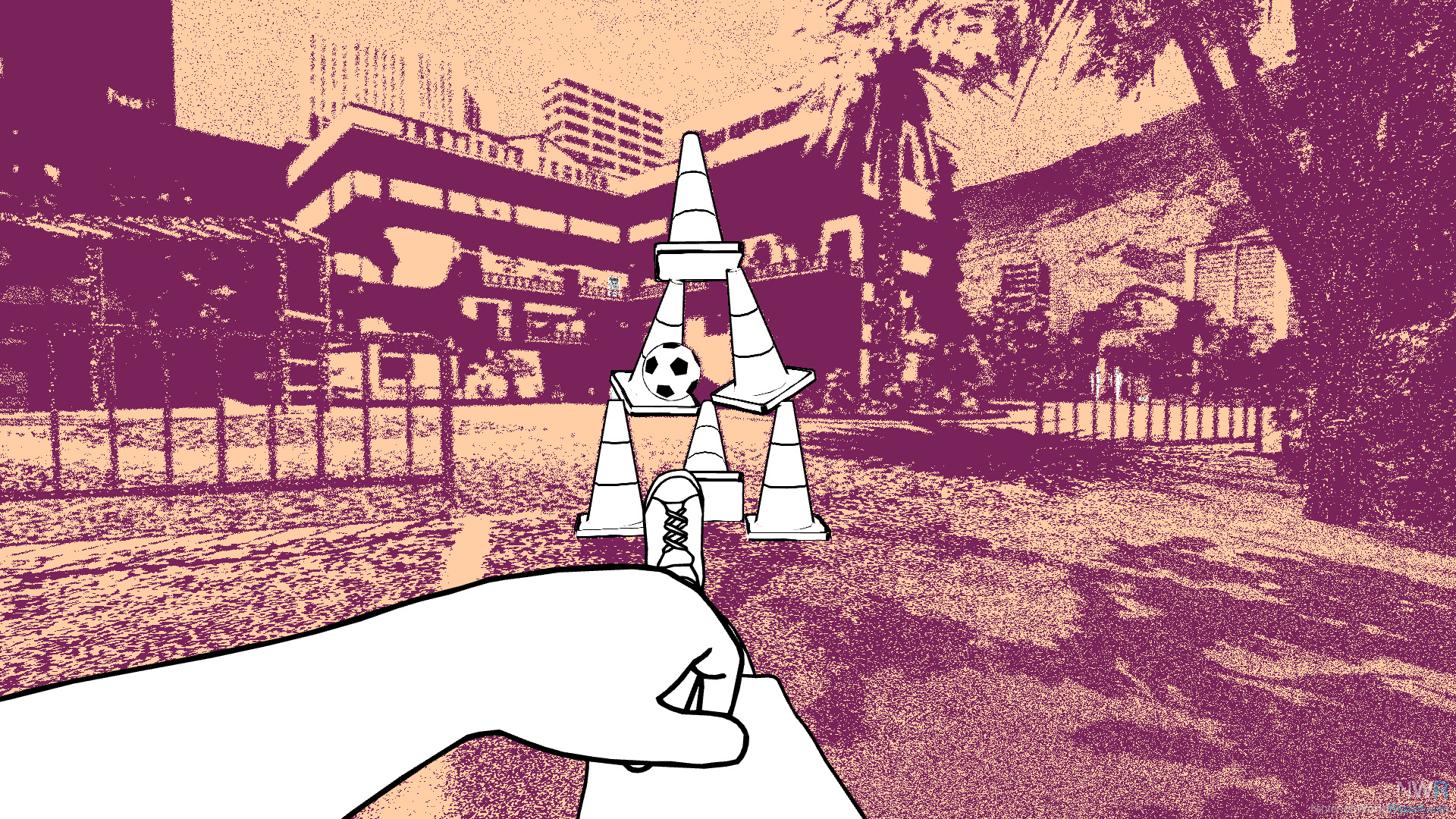
The thing I’ve been pondering about gameplay mechanics matching the story? Games like Death Stranding feel largely incongruent when you look at the bonkers story of oil ghosts vs the gameplay of walking from point to point. In that case there is the walking simulator genre, which is the ultimate disconnect. You are just moving forward while the story is told at you, and that’s kind of where Despelote sits, but with a slight alteration to the formula. The story isn’t told AT you, but instead told around you in the environmental conversations, overheard in grocery stores or park benches. Neighbor to neighbor, word of mouth, and you are there to absorb that atmosphere. You are transported to a different place and time, and you feel it all around you.
I kind of love this idea in theory but in practice, I found it utterly dull to play. At one point, your mother gives you a time limit to come home and you can look at your watch to see the time fly by. In that instance, you can wander the city and catch all the subtle conversations, but you could also sit on a park bench and wait until your time is up and the minimal story continues. The game wants you to feel the living, breathing town, meet your neighbors, and understand the importance of this cultural moment. Otherwise, you could blink and miss what makes Despelote truly fascinating. You have to engage with the game on its terms; otherwise, you’ll miss everything the developers are trying to show you. This is Despelote’s most glaring weakness and its highest strength. It’s ability to ferry you to another place and time, if only to experience what it was like living during the Ecuadoran hype of the World Cup. To help you understand why Soccer and sports in general, really traverse cultural barriers and bring people together. United in a search for representation.