That Time Roman Reigns Was Accused of Faking Cancer and Became My Hero
There are very few professional wrestling stories that transcend the business itself. Fewer still cut through the noise of kayfabe, backstage politics, booking philosophies, and internet discourse to land squarely in the realm of human experience. Roman Reigns’ journey with leukemia is one of those stories.
It is not compelling because it is inspirational marketing copy. It is compelling because it is uncomfortable, messy, misunderstood, and deeply personal. It is compelling because it mirrors the lived reality of thousands of people, myself included, who are navigating chronic myeloid leukemia (CML) in a world that still fundamentally misunderstands what “treatable cancer” actually means.
This is not just Roman Reigns’ story. It is a leukemia story. And it is, in part, my story too.
What Leukemia Is and What CML Is Not
Leukemia is a cancer of the blood and bone marrow. Rather than forming a solid tumor, leukemia disrupts the body’s ability to produce healthy blood cells. White blood cells multiply uncontrollably, crowding out red blood cells and platelets, leading to fatigue, weakness, infection risk, bruising, and a host of systemic complications.
There are multiple types of leukemia, broadly divided by how fast they progress (acute vs. chronic) and which blood cells are affected (lymphoid vs. myeloid). Chronic myeloid leukemia, or CML, is classified as a chronic leukemia, meaning it typically progresses more slowly than acute forms.
CML is caused by a genetic abnormality known as the Philadelphia chromosome, which creates the BCR-ABL fusion gene. This gene produces a protein that signals the body to keep making abnormal white blood cells. Modern medicine has become remarkably effective at suppressing that signal, but crucially, not eliminating it entirely.
This distinction matters.
Many oncologists avoid the word “remission” when discussing CML because the disease never truly disappears. It lingers at the molecular level. Treatment is not about eradicating cancer once and for all; it is about long-term disease control. Blood work can show no detectable leukemia cells, yet the underlying genetic abnormality remains. CML can return at any time.
This is why CML is often described as a chronic condition rather than a cured one. You live with it. You manage it. You hope it stays quiet.
Roman Reigns’ First Diagnosis: Football and the Unknowns
Roman Reigns, real name Leati Joseph Anoa’i, was first diagnosed with leukemia in 2007 during his pursuit of a professional football career. At the time, he was an undrafted free agent trying to carve out a place in the NFL.
What role leukemia played in the derailment of his football career is something we will likely never know. CML affects people differently. Some individuals experience minimal symptoms for years. Others deteriorate quickly.
In my own case, I lost strength and muscle mass rapidly. My body weakened in ways I could not explain at the time. Tasks that once felt routine suddenly felt impossible. My physical decline was not subtle.
Reigns was signed by the Minnesota Vikings, only to be released within a month of his diagnosis. He had brief, forgettable stints with the Jacksonville Jaguars, one of which lasted just five days, and the Canadian Football League’s Edmonton Eskimos. Shortly after, his football career was over.
While Reigns was able to quickly treat his condition and enter a dormant state, the damage to his professional football prospects had already been done. Whatever momentum he had was gone.
That door closed permanently.
From Leakee to The Shield
Roman Reigns debuted in Florida Championship Wrestling (FCW) in 2010 under the ring name Leakee. His time in WWE’s developmental system was, frankly, unremarkable. There were no glowing reports, no immediate buzz.
That changed in 2012.
Reigns debuted on WWE television as Roman Reigns, a member of The Shield alongside Dean Ambrose (now Jon Moxley) and Seth Rollins. The Shield was lightning in a bottle. It was modern, aggressive, and different from anything WWE had presented in years.
Reigns was immediately positioned as the powerhouse of the group. He spoke the least, wrestled the simplest style, and relied heavily on presence. When The Shield broke up, WWE made a decision that would define the next several years of programming: Roman Reigns was going to be the guy.
The Forced Babyface Era and Seeing It Coming
In 2014, I wrote an article predicting that Roman Reigns would soon be rejected by fans — BEFORE it actually happened.
Not because I am psychic. Not because I had insider knowledge. I simply saw the writing on the wall.
Roman Reigns was being pushed as WWE’s top babyface in an era where fans actively rejected corporate-chosen heroes. WWE doubled down. They forced crowd reactions. They reassembled The Shield multiple times to try to manufacture goodwill. They ignored audience feedback.
The backlash was inevitable.
Roman Reigns was booed relentlessly, not because he lacked talent, but because fans resented the manipulation. The disconnect between presentation and audience perception grew wider every month.
Then, during routine blood work conducted by WWE’s medical team, Roman Reigns discovered that his leukemia had returned.
Breaking Kayfabe and Breaking the Internet
In October 2018, Roman Reigns walked into the ring as the reigning WWE Universal Champion.
He did something unprecedented.
He broke kayfabe.
Reigns introduced himself by his real name. He spoke candidly. He announced that his leukemia had returned and that he would be relinquishing the championship.
For many fans, the announcement came out of nowhere. For certain wrestling journalists, it was met with skepticism.
Dave Meltzer and Bryan Alvarez openly questioned the situation. Meltzer cited an unnamed NHL player who allegedly played an entire season while dealing with the same condition. He cast doubt on Reigns’ description of his treatment.
Meltzer stated:
“There was an NHL player who had the same thing [Roman Reigns] had in the 2007 season who did not miss one game. He played every game while on this. And hockey is a pretty damn demanding sport. So everyone’s different. He actually said the pill was oral chemotherapy, but I don’t think it was.”
This infuriated me.
Not because Meltzer is a journalist doing his job, but because he was profoundly uninformed.
CML is one of the least deadly leukemias. It can still destroy your body. It can still sap your strength. It can still alter your life permanently. Oral chemotherapy is real. I am on it.
Oral Chemotherapy and the Reality of Treatment
Today, most CML patients are treated with tyrosine kinase inhibitors (TKIs), a form of oral chemotherapy taken once daily. Drugs like Sprycel and Bosulif suppress the BCR-ABL protein responsible for uncontrolled cell growth.
These medications are life-saving. They are also not easy.
Common side effects include fatigue, headaches, muscle aches, joint pain, hair thinning, and gastrointestinal issues. I am currently missing patches of my beard that I hope will grow back once I am off Bosulif.
You can function. You can work. But your body is constantly fighting itself.
So when Meltzer later spoke to a medical professional and referred to CML as “not the bad one,” people were offended.
I was not.
When I was diagnosed, my doctor told me plainly: “You have cancer. It’s Leukemia. The tests aren’t back yet, but there’s two types you could have. You want CML. It’s treatable.” From that moment on, my fingers were crossed that I had the “not the bad one.”
The problem was not the conclusion; it was the ignorance that preceded it.
Remission, COVID, and Stepping Away
Roman Reigns announced he was in “remission,” a term many doctors avoid using with leukemia. Still, the message was clear: there was no detectable cancer in his body. He returned to WWE.
Then COVID-19 happened.
This is not a subject I can discuss lightly. When people say COVID is only deadly to those with underlying conditions, they are talking about people like me.
So when Roman Reigns disappeared from WWE during the pandemic, amid public outrage over vaccines, I understood completely. He stepped away for his health and for his newborn children.
That decision likely saved his life.
The Tribal Chief and Reinvention
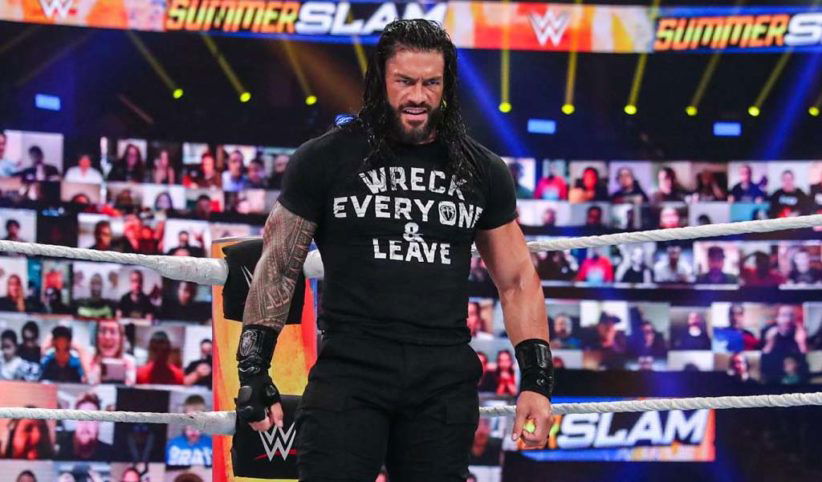
At the tail end of the pandemic, Roman Reigns returned at SummerSlam under the tagline “You’ll Never See It Coming.”
No one did.
Reigns returned as a full-fledged heel. Paul Heyman became his advocate. The Tribal Chief was born.
This was the version of Roman Reigns fans had been waiting for. Confident. Controlled. Charismatic. Dangerous.
Ironically, fans began cheering him; not because he was a babyface, but because he was authentic.
Reigns had finally arrived.
Why Roman Reigns Is My Role Model
Roman Reigns is a role model for me because he did not let chemotherapy define his ceiling.
He stays in peak physical condition. He eats clean. He trains relentlessly. He has mastered his craft.
When I was placed on chemotherapy, my body broke down. My muscles deteriorated. My spine became misaligned. Sitting for long periods became painful. I was working multiple roles at Wrestling Headlines—social media, news, moderation, YouTube—and eventually had to step back.
I gained weight. I lost confidence.
Then I watched a Roman Reigns match and asked myself: why not me?
Now I am in the gym. I am doing DDP Yoga. I am eating with intention: protein for muscle, rice cakes for fuel, chicken for recovery.
I find out in May if I am in “remission,” meaning I can come off chemotherapy.
Maybe my hair grows back. Maybe my strength returns. Maybe the hunger fades.
Maybe someday, people will understand that leukemia stories are not one-size-fits-all.
Roman Reigns helped me believe that I can still become something more.