Indie Wrestling Makes Room for the Shows Nobody Else Would Book
Independent wrestling is often described as the place where tomorrow’s television stars learn to wrestle. That’s true often enough, but it’s a lousy description of what makes a great indie show worth attending tonight. Nobody buys a ticket hoping to see a developmental footnote with a concession stand.
The best independent promotions and special events give fans something more specific than “good wrestling,” which is a promise so broad it could be printed on the side of a bottled water truck. They decide who the show is for, what those people have been missing and what the room should feel like. Four very different examples make the point: SHIMMER, Bloodsport, Effy’s Big Gay Brunch and Beyond Wrestling’s weekly Wrestling Open.
These aren’t four versions of the same product. One put women’s wrestling at the center when that was still treated as a risky idea, one took away the ropes and pinfalls, one built a celebration around LGBTQ+ talent and one made the local Thursday show a habit. What they share is the decision to stop asking how closely an indie can resemble a larger company’s television program.
SHIMMER’s own history gives the cleanest starting point. Its first event, held November 6, 2005, in Berwyn, Illinois, featured 18 women from around North America. The promotion’s stated premise was that skilled women wrestlers deserved an athletic showcase, and its business plan was built around filming shows for DVD rather than waiting for a national company to decide that the market existed.
That distinction matters because the wrestlers weren’t supporting characters in somebody else’s pitch. SHIMMER’s FAQ explains that it filmed two DVD volumes at each live event and distributed the series through Ring of Honor. It also describes the cost of flying in roughly 20 wrestlers and why the promotion limited its tapings instead of flooding its own market. There was a creative promise and an economic plan underneath it, which is more than plenty of people with a television deal can say with a straight face.
The risk was real, and so was the discipline. SHIMMER’s FAQ says the promotion waited until Volumes 11 and 12 to crown its first champion because it wanted fans to know the roster before a title tournament asked them to care who won. That’s a wrestling decision, not a publicity slogan. A belt can create a photo opportunity immediately, but it can’t manufacture a relationship between a crowd and the people fighting over it.
It would be easy to turn SHIMMER into a tidy prequel for every woman who later became famous elsewhere. That misses the achievement sitting right there in Berwyn. The promotion built a show whose central promise was already fulfilled when the wrestlers got their own bell, their own time and their own audience. Later opportunities for individual performers were valuable, but the independent show wasn’t merely valuable because somebody might leave it.
Josh Barnett’s Bloodsport makes almost the opposite creative move and reaches the same larger point. TrillerTV’s official listing for Bloodsport XV describes a ring without ropes and matches decided by knockout or submission, with no pinfalls. Those rules aren’t a cute graphic placed over a conventional card. They tell the wrestlers and the audience what kind of struggle they’re going to see before anybody throws the first strike.
Wrestling has a habit of adding things when it wants to feel bigger. Add a stipulation, add a run-in, add another person with a clipboard explaining why the run-in is legally binding. Bloodsport removes familiar tools and makes the absence part of the attraction. The point isn’t that every match should look like Bloodsport, which would be an efficient way to make Bloodsport ordinary. The point is that an independent event can establish a clear set of expectations and let performers work inside them.
That identity also makes disagreement useful. A fan who prefers near falls, ropes and the usual escape routes might decide the format isn’t for them. Fine. A show with a point of view will turn some people away while giving others a reason to seek it out, and that beats trying to be a slightly cheaper version of everything at once.
Effy’s Big Gay Brunch shows what happens when the promise extends beyond a match format. The official TrillerTV listing for the 2026 UK event, hosted by TNT Extreme Wrestling, advertised LGBTQ+ wrestlers alongside other independent names, a Rainbow Rumble and a card built as a celebration as much as a competition. The listing identified Effy and Lucy Sky in a featured tag match and presented the show’s identity directly, without pretending the people it was celebrating were incidental to the sales pitch.
There’s a difference between booking a wrestler and creating a room where that wrestler’s audience recognizes itself. The former can happen on any card, and it can be worthwhile. The latter asks the promotion to commit its advertising, tone and event structure to that audience. A themed show can still have weak matches or bad ideas, of course. Calling something inclusive doesn’t finish the work any more than calling a match hardcore makes the thumbtacks interesting.
Big Gay Brunch’s value as an indie example is the visible commitment to an identity. It treats LGBTQ+ talent and fans as a reason to build the event, rather than as a line in a diversity statement that disappears when the bell rings. That’s a larger lesson for wrestling promoters of any size: if an audience matters enough to mention in the pitch, it ought to matter in the actual show.
Beyond Wrestling’s Wrestling Open takes a less spectacular route, and I mean that as a compliment. The promotion’s current event page lists a Thursday show at White Eagle in Worcester, Massachusetts, with a spotlight match before the main bell time, a $10 door price if seats remain and a roster of local and traveling names. It also lists sponsors beside several wrestlers and businesses supporting the event. This is a wrestling show with an address, a weekly appointment and a recognizable set of people.
As WrestlingHeadlines reported on Beyond’s five year Thursday milestone, the weekly series has moved among Worcester venues while keeping the night itself. The Thursday habit is part of the product. People can make plans around it, bring somebody next week and watch a wrestler develop without needing a video package to remind them who that person was last month.
A weekly indie show has to win a different argument from an occasional destination event. Bloodsport can sell a sharply defined night, while Wrestling Open asks people to keep coming back after the novelty wears off. That means the room, the regulars, the emerging wrestlers and the price all matter. A promoter who gets those pieces right has built something sturdier than one viral clip, even if the clip earns more attention online.
There’s a reason the local piece matters. Independent wrestling is usually discussed through the names that graduate from it, so the scene can start to sound like a bus station with better entrance music. The people attending a Thursday show aren’t simply waiting for the bus. They’re following stories in their own city and deciding whether the next show deserves another ten dollars and another night out.
SHIMMER needed DVDs to make an expensive roster model work. Bloodsport needs its rules to make the name mean something. Big Gay Brunch needs the performers and audience to be central to the celebration, and Wrestling Open needs fans to trust that Thursday is worth showing up for again. None of those needs is automatically met by calling the show independent. Each one takes choices that fans can see and judge.
This is also why “just put good matches on” isn’t a complete business plan, even though good matches are obviously preferable to bad ones. Fans have more wrestling available than anyone can reasonably watch. A distinct show tells them why this card deserves their time, what kind of experience they can expect and why the wrestlers on it are more than replaceable names on a poster.
Independent wrestling doesn’t need every company to find a grand social mission or an unusual rulebook. Sometimes its most important promise is as plain as an affordable Thursday show that starts when advertised and gives the crowd a reason to return. The freedom of the indie level is the freedom to make that promise specific. The responsibility is to deliver on it after people have paid to get through the door.
The real compliment to a great indie show isn’t “somebody big should sign everyone here.” Signings can be wonderful for the people who earn them, and fans are allowed to be happy when a favorite gets a bigger check. But a show that only matters as an audition has already surrendered its own argument. SHIMMER, Bloodsport, Big Gay Brunch and Wrestling Open give fans different reasons to care while the lights are on in their rooms. That’s the part the rest of wrestling should be paying attention to.
Sources: SHIMMER Women Athletes FAQ; TrillerTV’s Bloodsport XV listing; TrillerTV’s Effy’s Big Gay Brunch UK listing; Beyond Wrestling’s Wrestling Open event page.
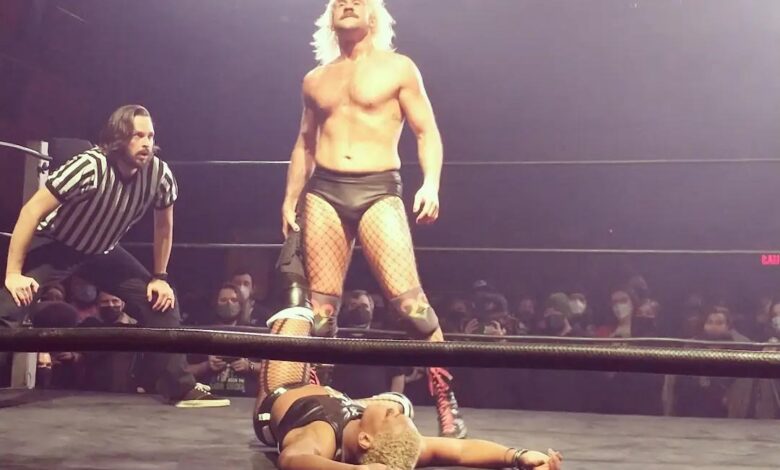
Featured image: Effy and Sonny Kiss at Enjoy Wrestling in 2022. Photo by Crushgals via Wikimedia Commons, licensed under CC BY-SA 4.0.