Review: Future Knight (Nintendo Switch)
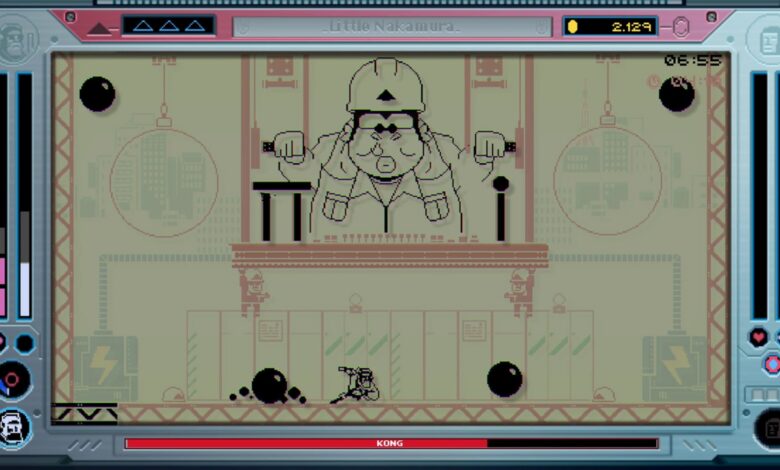
Future Knight is the game we wanted all those ’80s LCD games to be. You know, the kind you played on your watch or calculator, on various TOMY standalones, or—in an early precursor to the GameBoy—on the Microvision handheld system. The kind where, if you wanted 30fps, your imagination would have to provide 28 of them.
You can tell from the screen captures here what the developers are going for visually.
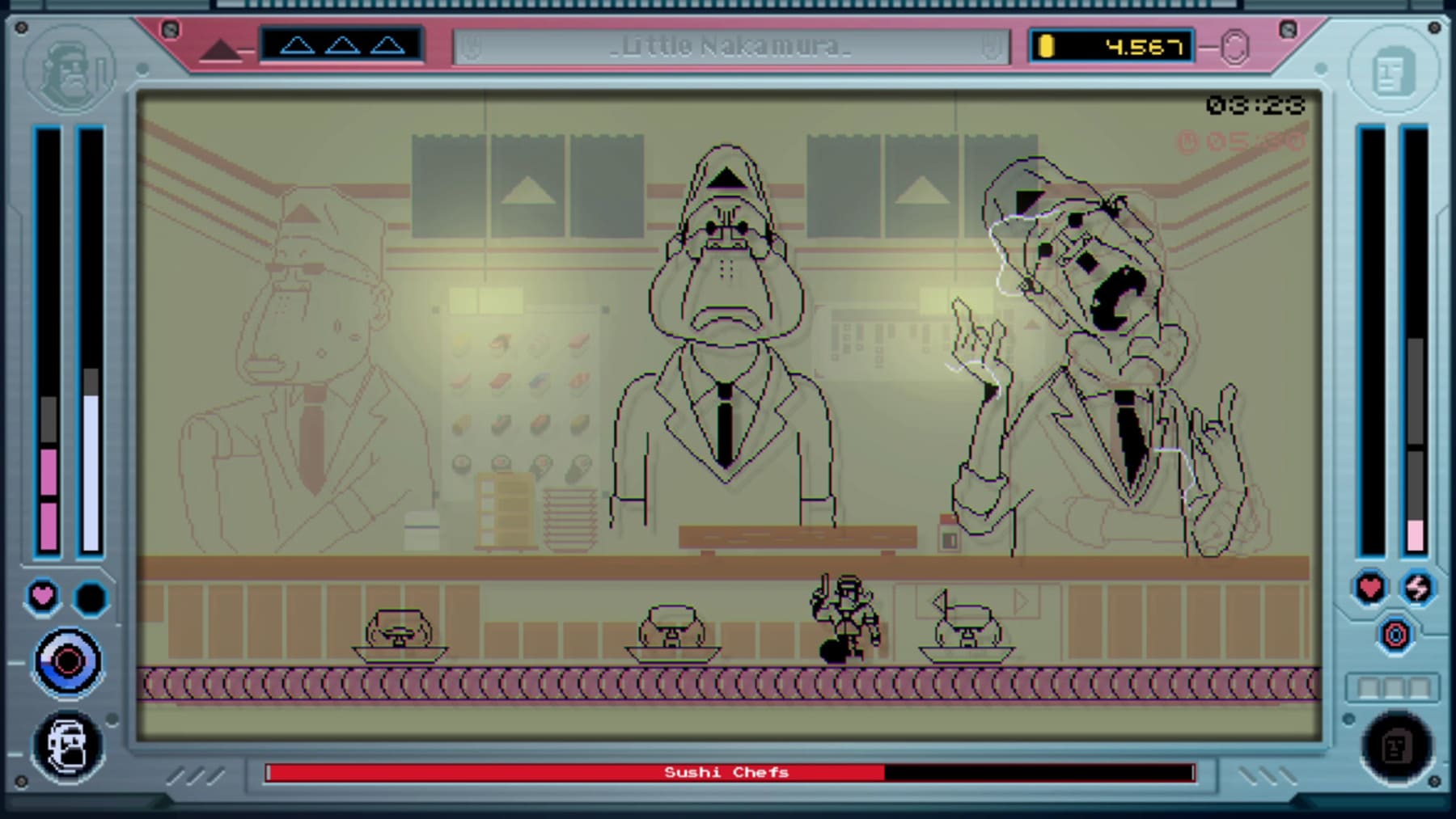
In an age where retro gaming seems regulated solely to 8- and 16-bit technology, I applaud Aeternum Game Studios for not only trying something different, but for succeeding…for the most part.
The premise to Future Knight is familiar, but twisted to the edge of recognition. In 1993, the “Lady of the Past” set out to wash her underwear and ended up erasing the brains of all humanity. You must travel back in time to correct this wrong. But are you a cyborg built by the son of the man sent back to protect the woman marked for termination because she gives birth to the boy who grows to build the cyborg to save her? No. You’re a cyborg built from the remains of a ’90s soap actor. And you’re also his benign tumor which can leave his body to assist as necessary.
The mission to save humanity is broken into convenient chunks from the Lady of the Past’s fateful day. She goes about her business, and it’s up to you (Future Knight) and your tumor friend (Two More) to interrupt the day. Of course, the evil minions are aware of your plan and will stop at nothing to stop you.
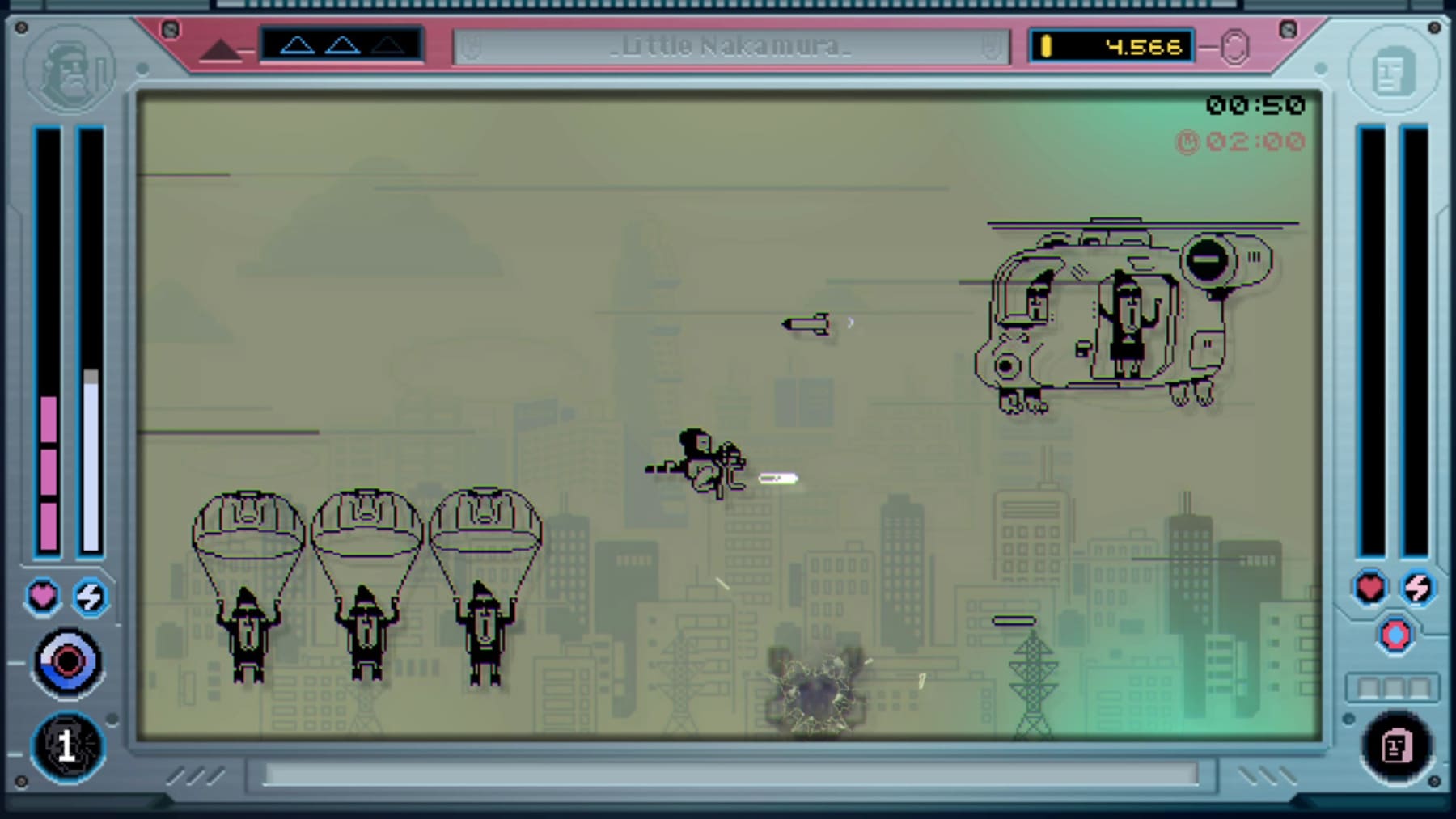
The action of the game progresses somewhat like Shinobi, complete with “Go!” when it’s time to move on. Future Knight is basically a simple 2D platformer with a familiar mix of projectile and melee weapons at your disposal. Jump, crouch, avoid, and attack as you cross levels and end up fighting various bosses. Checkpoints save your progress. It’s all pretty standard.
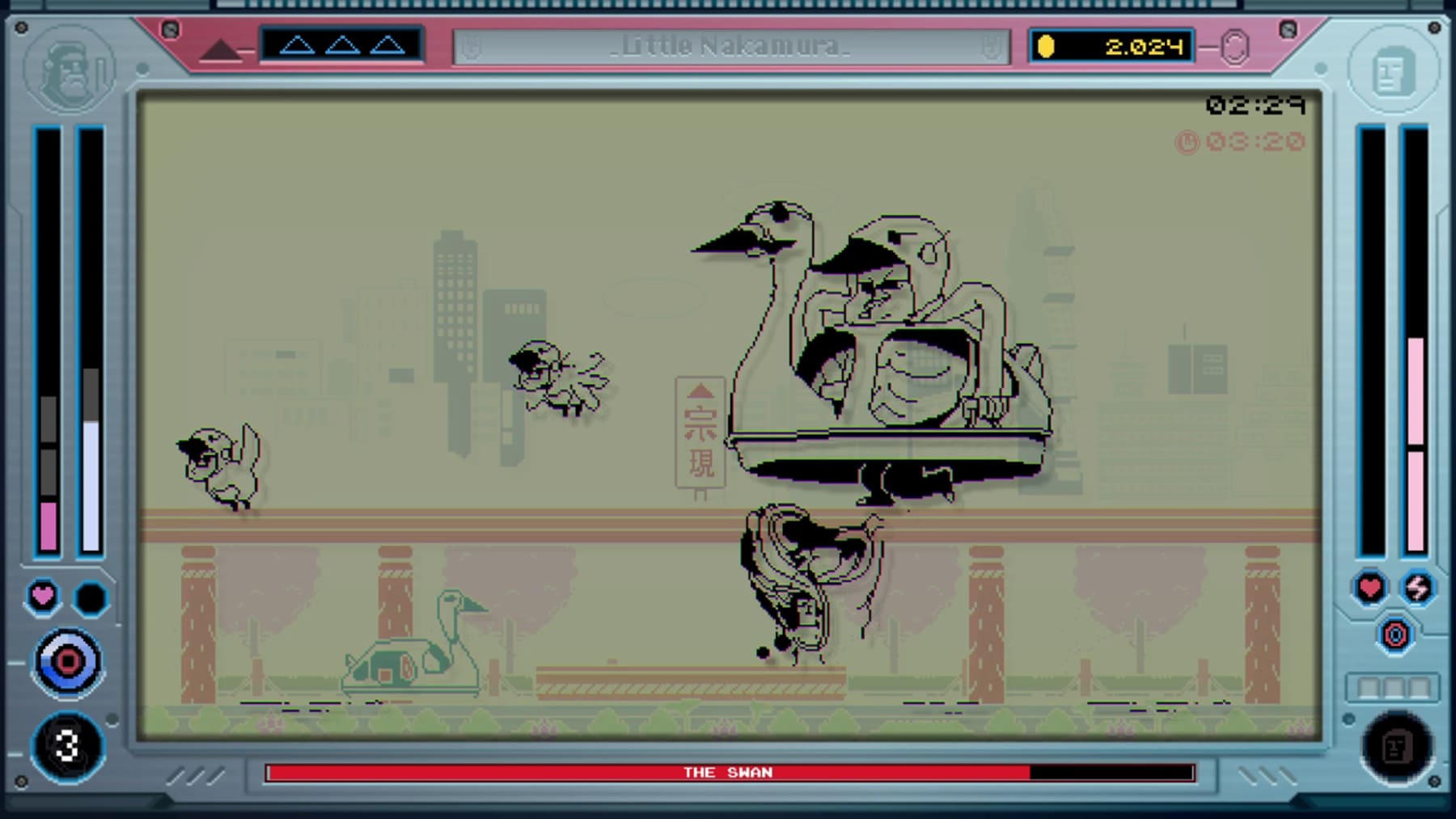
What’s not standard is Two More. At will, you can project your benign tumor from your body to reach otherwise inaccessible areas and do some damage of its own. Two More can squeeze through tight walkways, climb walls, and break apart blockages that Future Knight cannot. This is used not only for survival, but for the occasional puzzle solving required to gather up each level’s collectables. It’s a fun dynamic, but it’s not implemented as well as I would’ve liked. Even the process of expelling Two More is unwieldy, often resulting in him just dropping straight back into Future Knight. Fumbling with controls during battles is annoying enough, but struggling to get the little fellow into areas I know I’m supposed to access often prompted me to just move on without success.
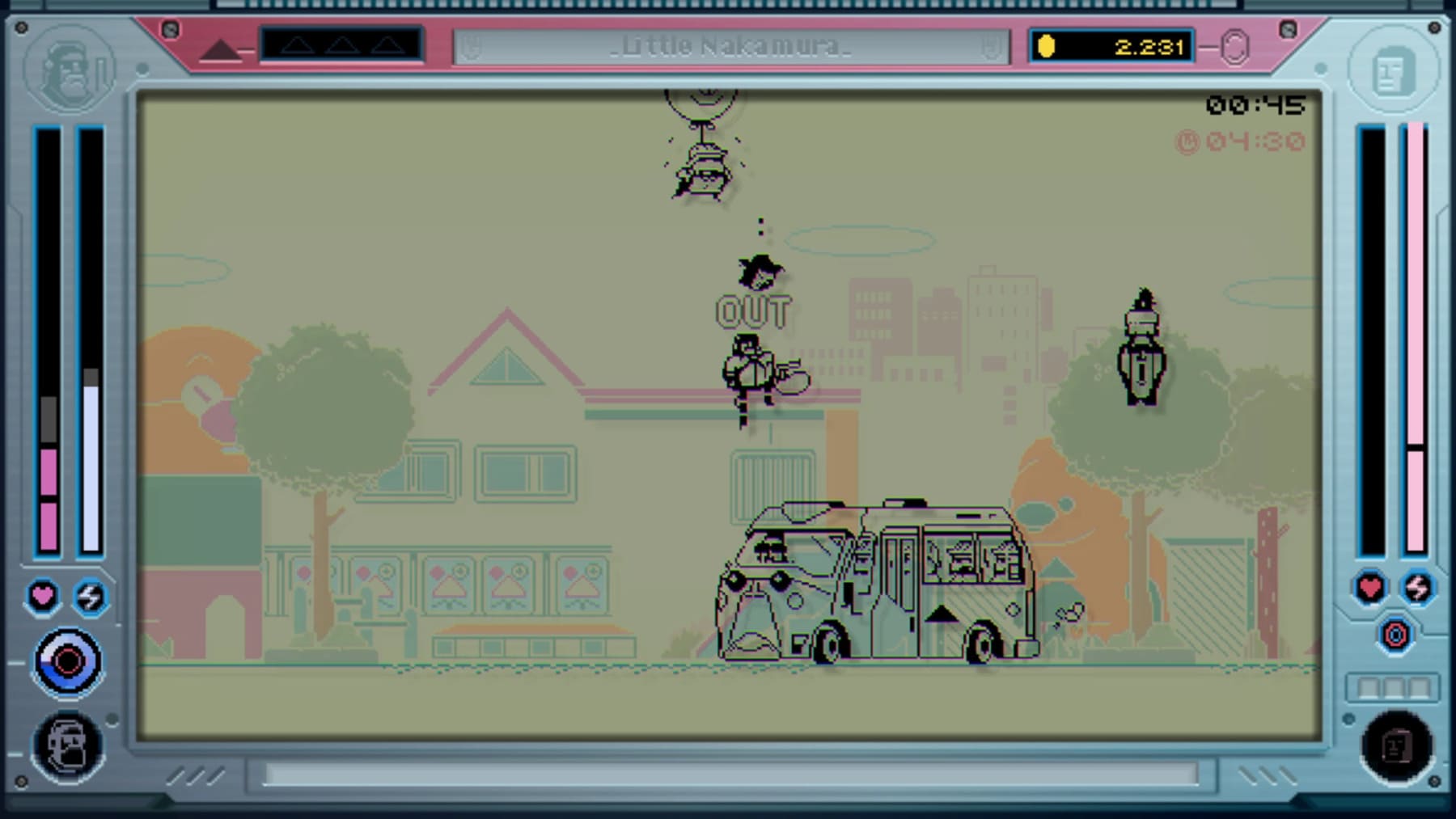
When the character swapping and control mechanics don’t interfere with the proceedings, Future Knight is quite fun to play. I expected the retro-LCD vibe to wear off on me, but I never tired of looking at it. It helps that the LCD animation here is up to today’s standards. More importantly, the action does progress nicely, with a fair difficulty ramp. The levels never really change, but the enemies do, and learning to deal with them was pretty entertaining. The same can be said of the bosses, which were quite unique and occasionally humorous to take on. I must say, though, that I had to get a couple of hours into the game before I could easily discern which background elements were interactive and which were purely decorative.
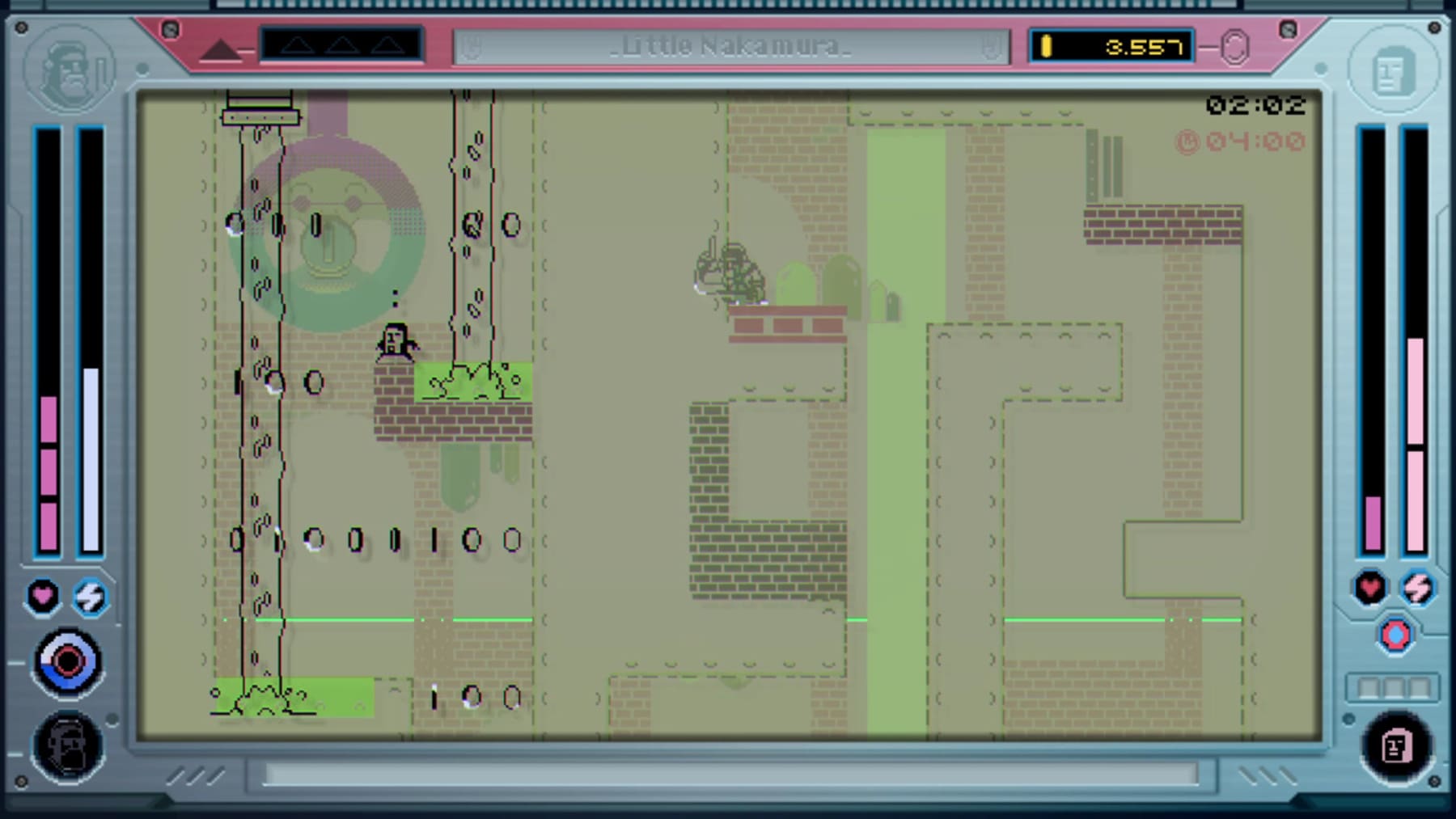
Ultimately, Future Knight is simply a 2D arcade action game. Combat and progression will be familiar to anyone who ever visited an Aladdin’s Castle at the local mall. But the visuals are closer to the gaming ’80s kids did on their digital watch when they were supposed to be reading The Pearl in American lit class. That makes Future Knight worth the purchase for retro gamers. And unlike with previous LCD games you may have played, you won’t lose interest before the teacher notices you’re not paying attention.