Review: Fire Emblem: Fortune’s Weave (Switch 2)
When a review of mine is this late, it’s typically because it took a while for me to get around to playing it. That’s not the case with Fire Emblem: Fortune’s Weave, but it did take me nearly all this time to get around to liking it. I’ll highlight its positive aspects, but first, I have some things I want to get off my chest.
Understand that Fire Emblem is my favorite Nintendo series. Not Zelda, not Mario, not Metroid: Fire Emblem. I’ve played every U.S. release since the first GBA game (and one Japan-only release), most of them multiple times. This is because I love the battles. I love the character-driven chess matches that play out on massive grids, pushing my strategy skills to their limits. I love the concept of permadeath and struggling with whether to push on or restart when I lose a favorite character.
Fortune’s Weave pushes these elements aside. We’ve been able to turn off permadeath for a while now, and the ability to roll back time makes it pointless even when you have it on. Fine; I can work around that. What I can’t work around is Fortune’s Weave’s approach to strategy gameplay, which has been dumbed down to the point of…well, to the point of the Fire Emblem Heroes mobile game.
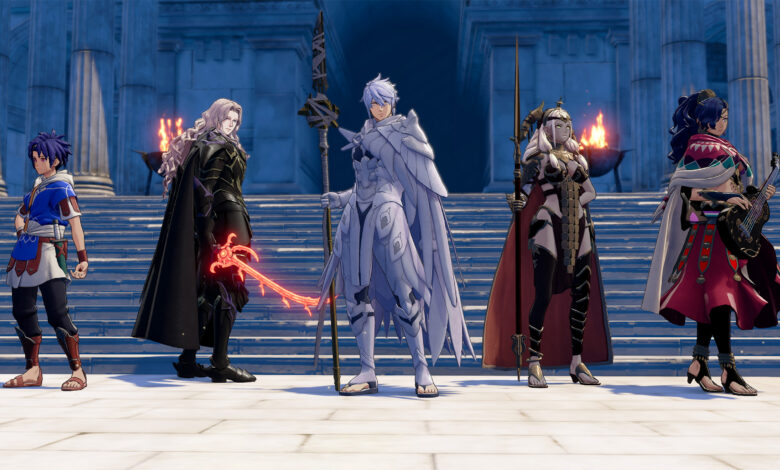
The game is set in Dagda, a neighboring continent to Fódlan from Fire Emblem: Three Houses. Four playable characters venture to the capital, Dagsion, to participate in the Heroic Games. The winner of these games will get one wish granted by Solel, the god who rules Dagda. These four—Cai, Dietrich, Theodora, and Leda—all have their own wish to come true, and all of them are compelling.
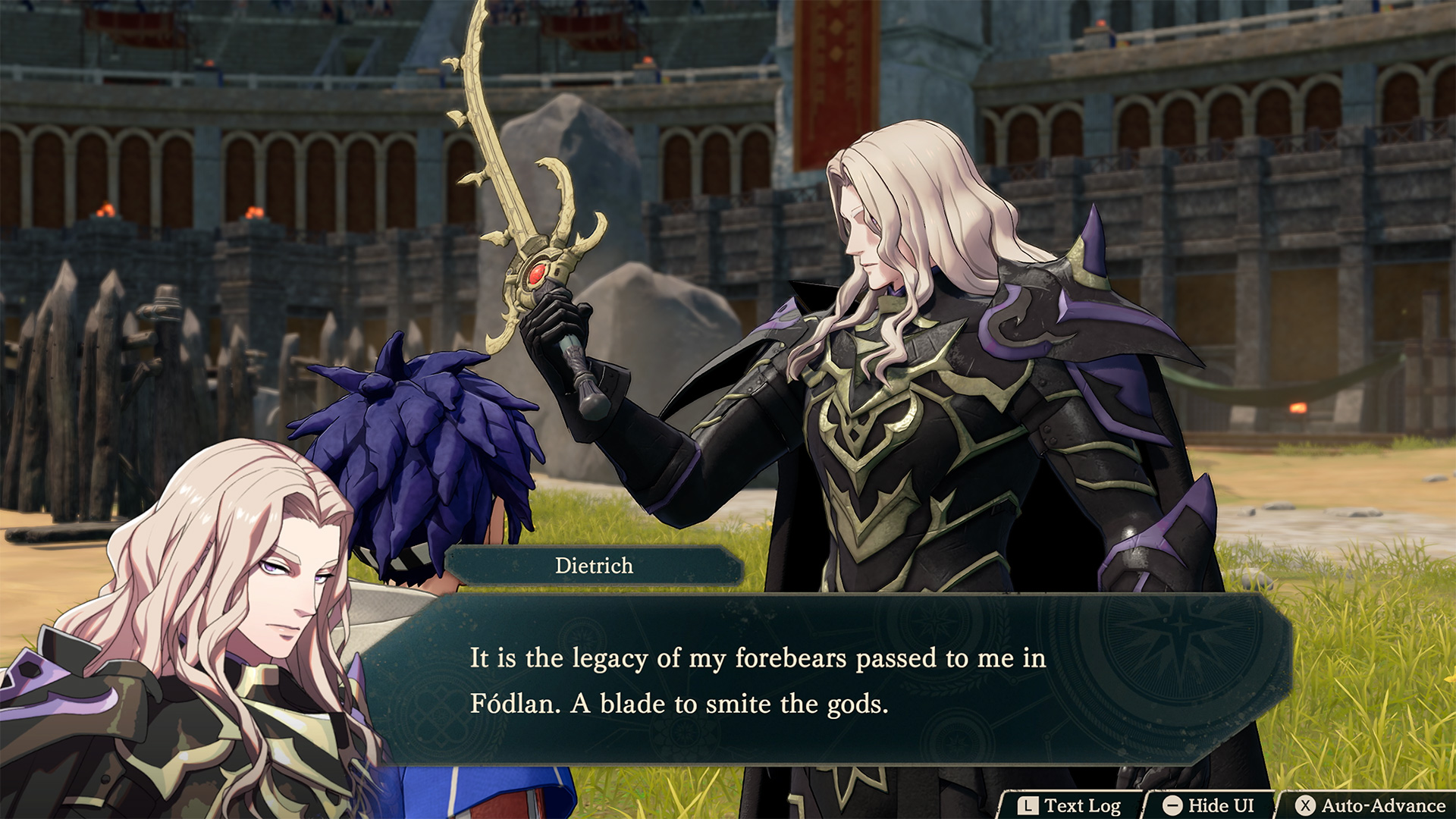
The story and characters in Fortune’s Weave are arguably the best the series has offered since Radiant Dawn. But what good is that if the gameplay amounts to little more than skirmishes and errands?
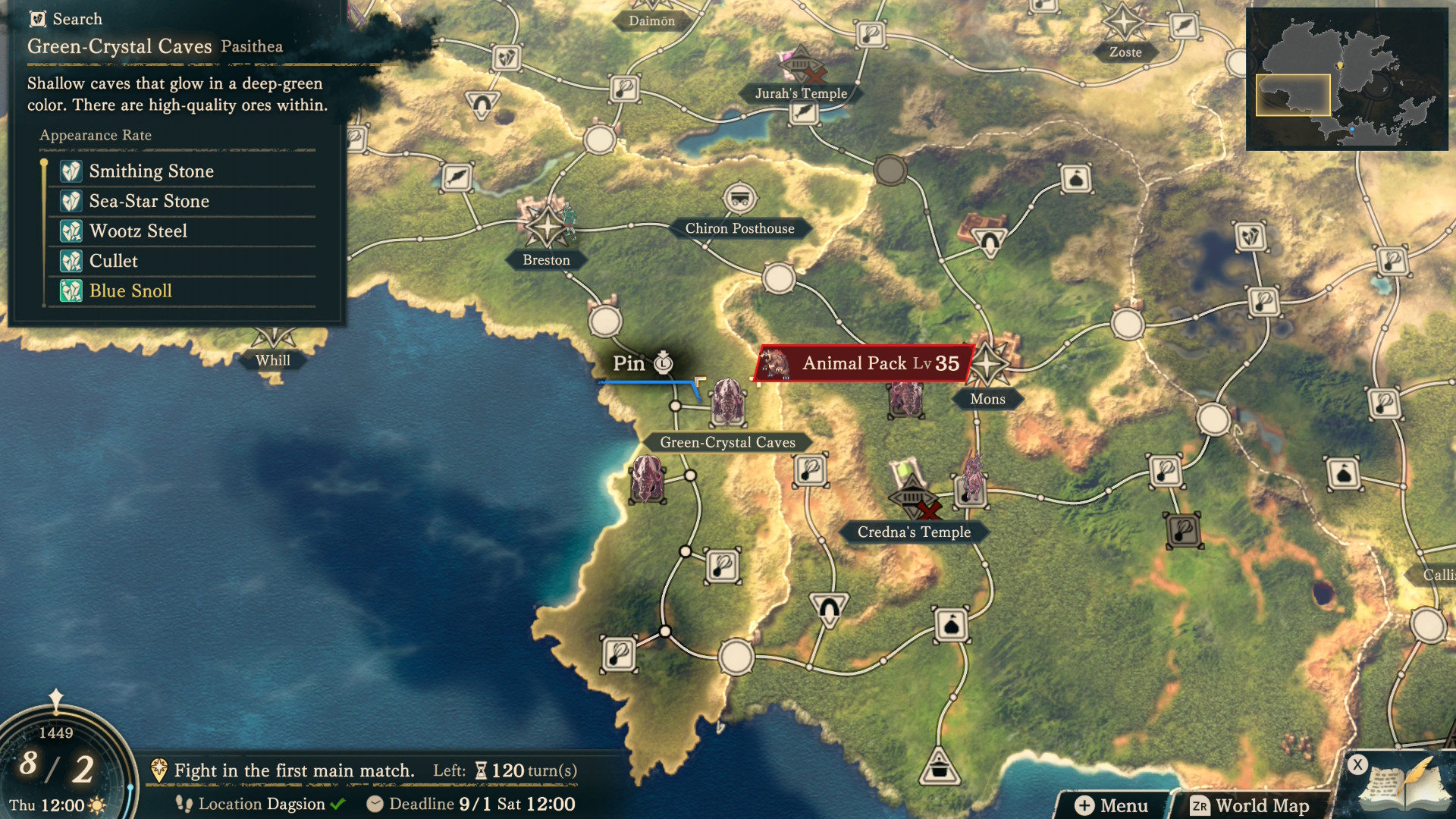
The games in the Heroic games, you see, are separated by months. Between them, your character of choice (or all of them if you choose to leap between character routes) levels up by taking on some sidequests, exploring caves, and just working your way across the continent. This is done on an overhead map, with each node taking up a quarter of a day. There are resources to collect, routes to unlock, villages to shop at, and it’s all just busy work.
So where are the battles? Not here. You’ll occasionally end up in a skirmish against thieves, monsters, and such, but these are quick, Fire Emblem Heroes affairs. You’ll take around five of your party members into a confrontation that’s usually settled in two to five turns. It’s not challenging. It’s not interesting. It’s just necessary.
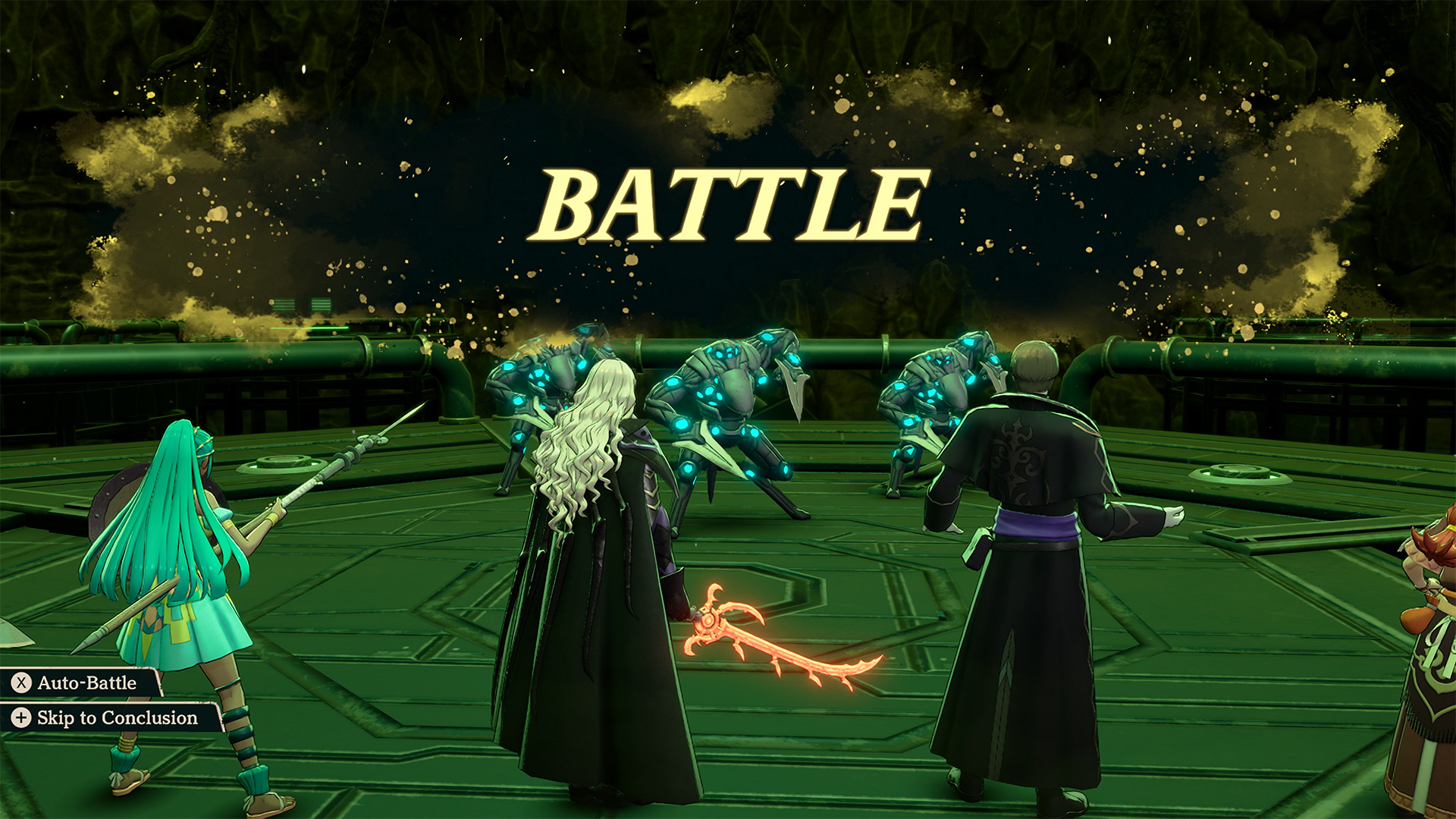
When exploring caves, you do so in third-person perspective. Free terrain movement is certainly a rarity for Fire Emblem games, mostly because it offers nothing to the series’ turn-based strategy gameplay. And it offers nothing here, too. You can stab at rocks and such to collect resources, loot any treasures you find, and then enter combat. These battles differ yet again, now tasking you with cycling through your chosen party members to deliver a hit and then take one from the enemy. You can link attacks for more damage, but that ability runs out (until you replenish it at a camp, so it doesn’t actually run out because the game is constantly giving you the materials you need to replenish it). And again, these fights last just a few turns and will only challenge you if you take on enemies well above your level.
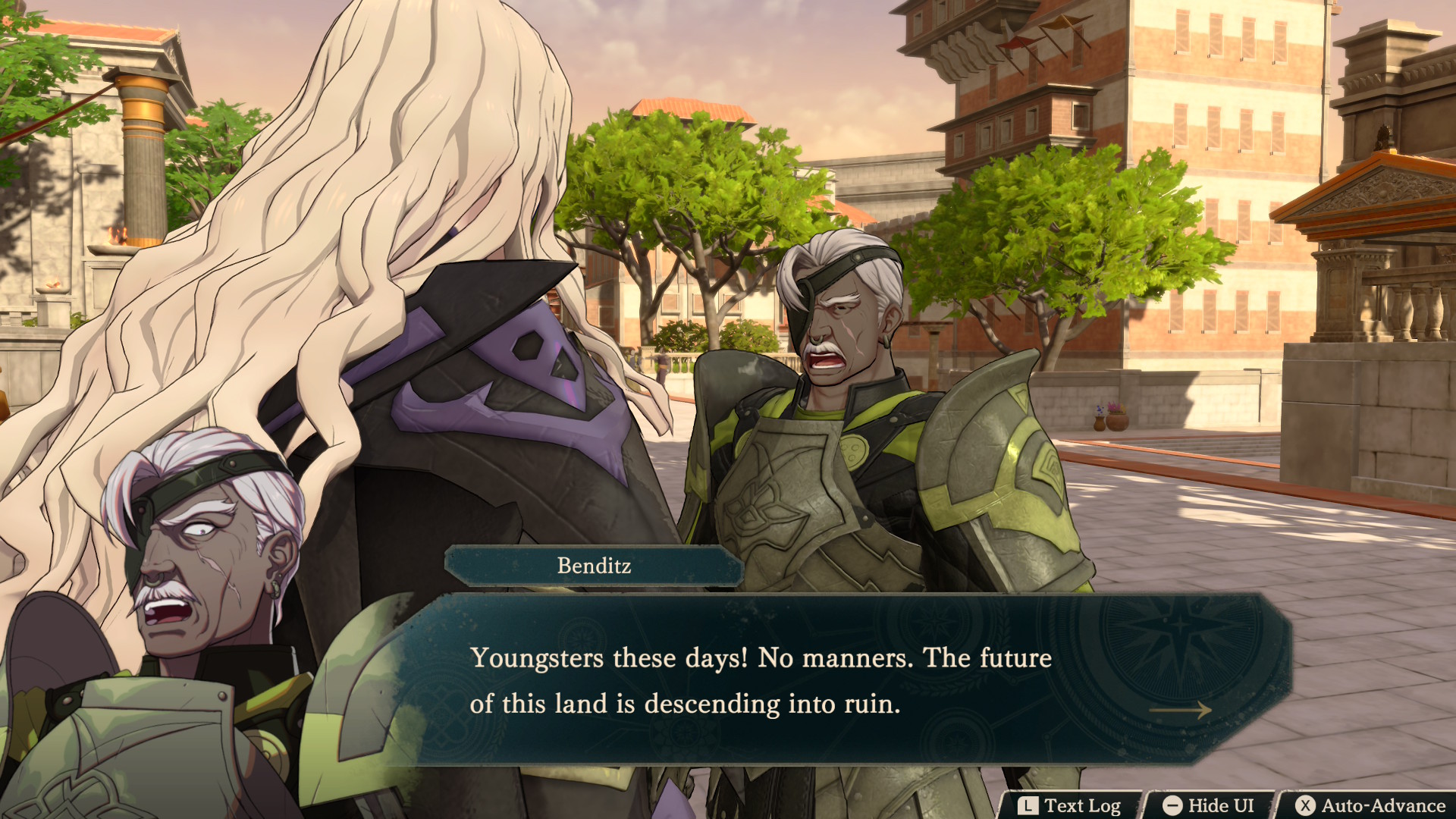
Back in Dagsion, there are plenty of things you can do to level up skills and relationships: help out at a chapel, take a bath, act in a play, talk to a bird, have some dinner, etc. These tasks are all very quick, and you can warp from venue to venue to speed things up. Completing these and the various quests you’re given also increase your renown, and that’s used to gain access to new features in the town and unlock new characters to recruit. There’s a lot to do, and you’ll be doing it a lot.
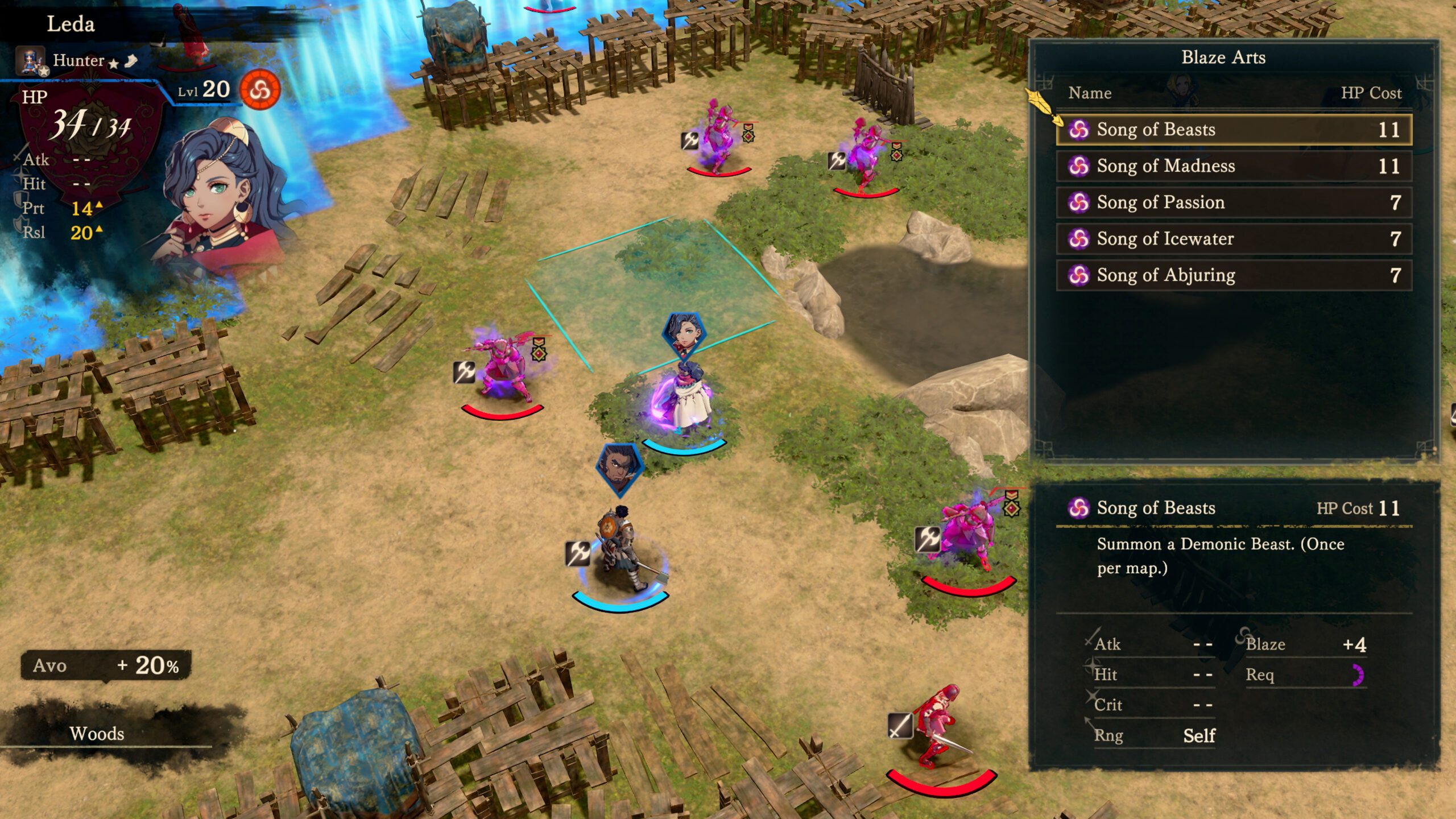
What you won’t be doing a lot is fighting, at least not in the way you’d expect from a Fire Emblem game. The narrative only occasionally gives you a major battle to engage in, either via the Heroic Games, a story component outside the city, or a handful of paralogues. When they finally arrive, it’s like the gates have opened and the fun has flooded in. The majority of these battle maps are clever, requiring you to take advantage of the central characters’ Blaze Arts. Figuring them out and optimizing their use was a lot of fun.
I just wish…
It’s like I said on a recent episode of the Pure Nintendo Podcast. You know how with Mario Kart World Nintendo created this whole area between races that you had to drive through and explore and engage in mini games and such? Fine, right? That’s what they did with Fire Emblem: Fortune’s Weave. But now imagine that when you finally got to a race, four out of five of them involved only four karts and one lap. That’s the gameplay of Fortune’s Weave.
And it’s a shame, because all of this nonsense is mostly confined to Part 1. When you finally make it to the much shorter Parts 2 and 3, the game finally focuses on what matters and drives to a strong finish. The problem is that Part 1 takes so long that you can be 40 hours into the game before this happens…and that’s if you’re only playing one character’s route! The developers realized you may be so exhausted by this point that they actually give you the option to skip Part 2 entirely. Let that sink in for a minute.
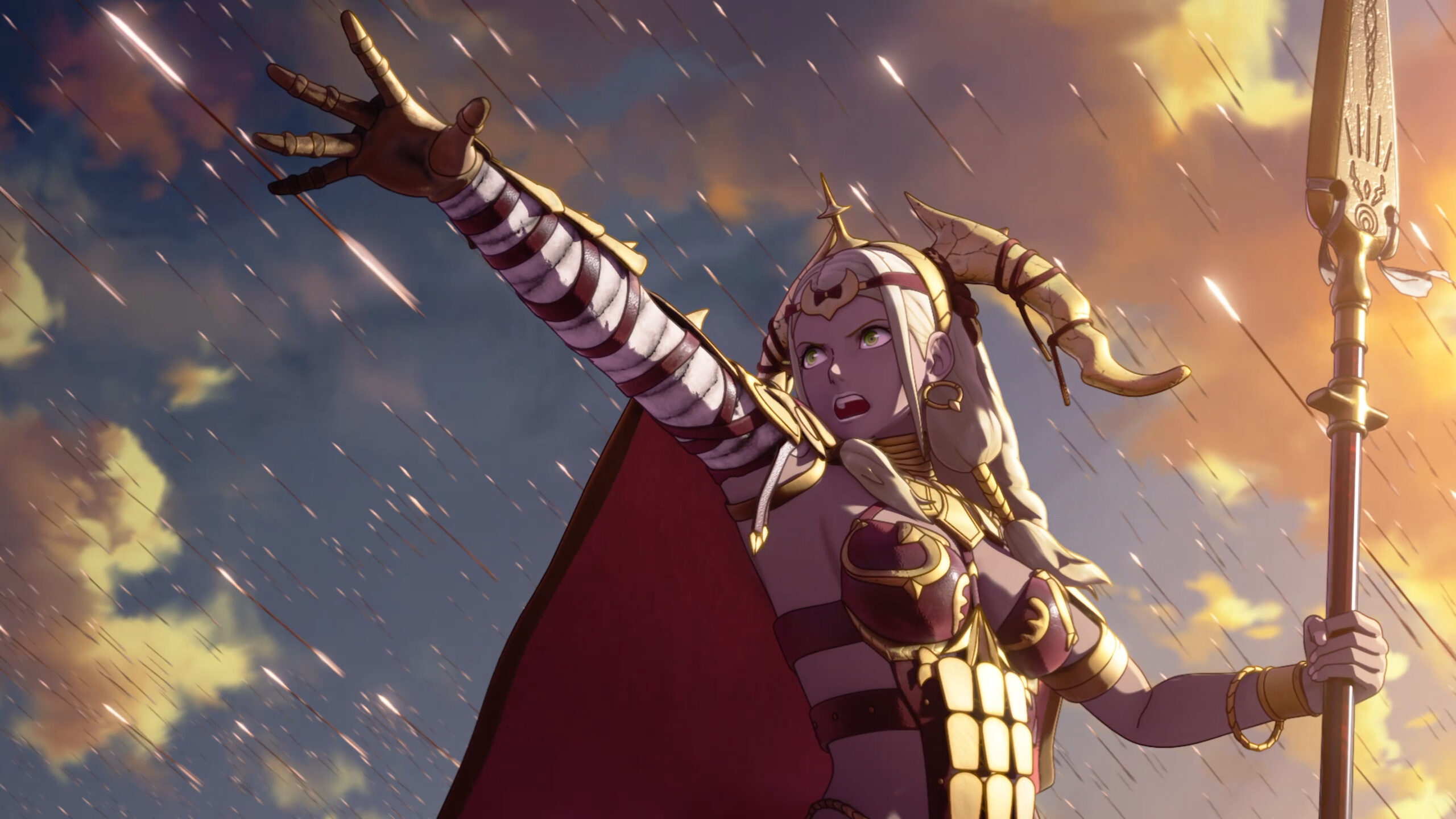
All this, and yet here I am giving the game a Good rating. Why? A few reasons, beginning with the outstanding production values. The gameplay visuals, cutscenes, soundtrack, and voice acting (well, most of the voice acting) are cinema-quality.
You also get a ton of content. Playing through everything this game has to offer could take you up to a few hundred hours.
Finally, as a reviewer, I can’t punish a game too much for not being what I want it to be. Fortune’s Weave may not offer a true Fire Emblem experience for longtime fans, but its diversions will appeal to those seeking a meaty and diverse JRPG. And although the game didn’t command my attention like the best Fire Emblem releases, it also didn’t push me away. That’s good, because I was ultimately fine with the time I sunk into it.
I just wish more of that time felt like Fire Emblem.