Petit Planet devs talk multiplayer, monetization, AI, and… Clarkson’s Farm?
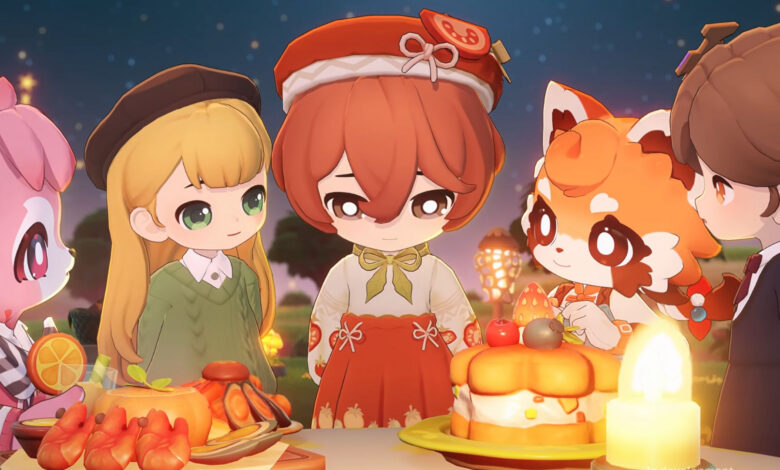
We’ve been waiting for Petit Planet for quite a while now; long before it even went by that name. Way back in February 2024, we caught wind of a new Hoyoverse trademark for something called XinBuGuDi. Another followed just a few months later, with ‘Astaweave Haven’ popping up in June 2024, before Hoyoverse finally settled on the global name Petit Planet in October of that year.
The official reveal came just under a year later, with both the teaser and full announcement trailers arriving in September 2025. Since then, we’ve seen three closed beta tests and a heap of changes, with the game shaping up to be Hoyoverse’s vibrant, live service answer to Animal Crossing.
Now, the Petit Planet release date is less than one month away, and we can’t wait. Ahead of launch, we sat down with Lead Game Designer Murphy and Lead Artist Yinli Huang for an exciting Petit Planet interview, discussing everything from inspirations and the design process to multiplayer modes and AI NPCs. We were already excited to dive into the Starsea before, but after this chat, we truly can’t wait.
While we’ve seen some successful examples in the past, the core of cozy games can feel a little at odds with the idea of a live service model, especially when it comes to limited-time events, banners, battle passes, and the daily grind. However, Murphey assures us, “we understand the cozy and slower-paced gaming experience,” confirming that the team “will try to extend the time window as long as possible” for limited-time events, and that they aim to “create a pace where our players won’t be worried about having to complete tasks and stay active to get all the resources.”

As for the core gameplay loop, she tells us, “for players, there is no ‘ultimate goal’ for each version; instead, we aim to provide different types of goals for different types of players.” Breaking this down further, she explains, “In the short term, when players log into the game, they can experience random new creatures, new weather, and explore new things – those are the little surprises we’ve prepared for them.”
“In terms of the mid-term gaming experience, as players invest more time and energy into the game, their relationships with the NPCs will gradually develop, so you’ll unlock more stories behind these neighbors and grow more familiar with them.” Finally, she adds, “In terms of the long-term goal, you can start to decorate your planet and your home. There will be lots of furniture and decorations, and you’ll always get new ideas as new events launch. Players can also enjoy sharing their content with the community. So, as a live service game, we aim to provide different types of content for different players.”
Hoyoverse games generally stick to a consistent six-week update schedule with major versions dropping once a year. However, Murphy says Petit Planet “will take a slower pace.” But don’t worry; that doesn’t mean we’ll be starved for content, as she also confirms that we can still expect “constant updates,” including new locations, hobbies, stories, cosmetics, characters, and more.
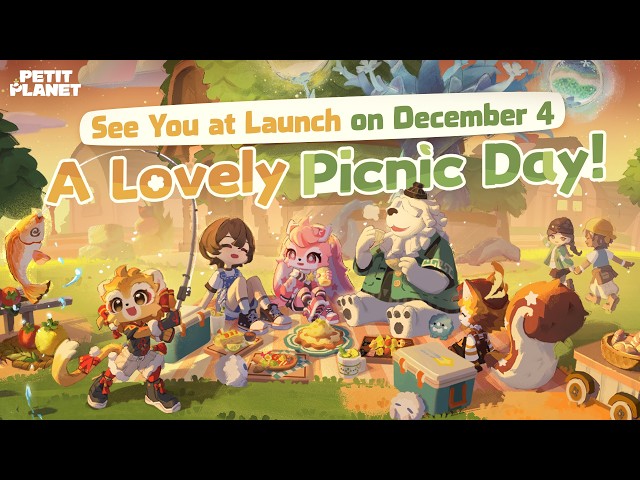
Of course, you can also expect seasonal events to pop up. For these, Murphy says, “We will look up references in the real world, because we think that can provide an immersive experience for our players. We’ll start with some more common holidays that are more familiar to our players, but, as our game develops, you can look forward to more interesting festivals with more regional features in the future.” Of course, with the history of Hoyoverse games, we were also curious about whether we can expect to see any Easter eggs or collaborations with other games in Petit Planet’s future. Murphy’s keeping her lips zipped, though, replying, “We want to keep that as a surprise!”
But the slower update cycle isn’t the only difference between Petit Planet and games like Genshin Impact. “Unlike other Hoyoverse titles, there aren’t really main stories in this game,” Murphy explains. “Our purpose is to provide an immersive experience of gradually establishing relationships with neighbors; a more simulated experience of real life.” Therefore, instead of vast, sprawling narratives that put you in the shoes of the hero, Petit Planet’s “main focus is to build up a world full of details that can gradually build up an emotional connection with players.”
Of course, the neighbors are the true heart of this emotional connection, and the team has given them a lot of love to reflect this. “We’ve spent a lot of time refining the stories of our NPCs so that you will feel like they are really your friends,” Murphy states. “As you develop a closer relationship with certain neighbors, you can unlock more features and experiences with them. For example, you can change their outfit and decorate or change the appearance of their home, just like when you grow more familiar with a real friend and help them pick an outfit.”

Beyond socializing with these cute characters, Petit Planet also offers some great multiplayer content, allowing you to interact with players from all over the world. Murphy shares that you can invite up to seven people to visit your planet at the same time (eight, including yourself), during which you can play football, board games, and card games. Of course, there’s also the Galactic Bazaar, a multiplayer hub area which, Murphy tells us, has a much higher limit than personal worlds. And it looks like the multiplayer fun doesn’t end there, either. “In the future, we might introduce more gameplay into the multiplayer gaming experience,” Murphy hints, highlighting that “the social system is still a very important part of Petit Planet.”
But, as we all know, multiplayer often breeds bad behavior if players are left unmoderated. Luckily, Hoyoverse has thought of that, too. Murphy assures, “We have several systems in place to protect the social system and interactions among players. For example, we have a comprehensive report system, a moderation system, and also an account ban system. When players report harassment or other inappropriate behavior, we will take action based on our user agreement.” Punishments include feature restriction and, in more serious cases, account bans. “Our major purpose is to provide players with a friendly atmosphere to interact in,” Murphy states, “so our social system is also designed for that purpose.”
Building this robust social system has actually been one of the greatest challenges during development. “We want to add elements of social interaction between strangers,” she says, “but there is a challenge: how to take care of the demands of both introvert and extrovert players. We do think that introverted players also have demands for interacting with others, but we think that should happen in a safe and relaxing environment where the players can control every step.” On the other hand, extroverts tend to “want a more multiplayer gaming experience.” Murphy explains that balancing the needs of both groups is quite tricky, but community feedback has helped a lot in this area.

Petit Planet has seen multiple closed beta tests over its development and has evolved a lot throughout that time. Speaking on the feedback the team has received during these betas, Murphy explains, “Many players love the social system, but we also found that some introverted players felt that the frequency of neighbors visiting them might put some pressure on them.” As such, the team adjusted how often these visits occur so these types of players “won’t feel the pressure of being social, even with NPCs.” She also tells us that feedback has made it clear that “besides those very gentle, warm neighbors, players also want some neighbors with interesting, unique, and strong personalities,” promising that this “will be the foundation of our future plans.”
On the other side of the coin, when discussing the biggest challenges the team has faced while bringing Petit Planet to life, Yinli says, “We started to explore different solutions, from mimicking the real world to a very anime style. So, we tried multiple times to find a middle ground here.” As a specific example, Yinli points to the plants of all things: “Designing plants is a very difficult thing, because you think of the objects in real life, and at the same time, you have to consider the art style of Petit Planet.” Luckily, with a combination of in-depth research and a team of talented experts, Petit Planet has managed to strike a great balance between real-world familiarity and its unique art style.
Another surprising hurdle was the camera. “The biggest challenge is actually the way the camera looks at the game because, when you place different items on a spherical world, the items far away from you will be invisible,” Yinli points out. “Another challenge is the dizzy feeling caused by the three-dimensional movement of the players. It took us a long time to figure out the technical solutions. Now, we’ve set up different coverage for different items, content, and settings to figure that out.”

As for designing new neighbors, Yinli tells us they start with their “unique personalities and background stories.” The team has “a very comprehensive design” for each neighbor, setting up their cultural background, stories, habits, relationships with other characters, and even a system that Yinli describes as being similar to the MBTI. Then, in the art design phase, the team “adds unique phrase expressions, actions, and reactions,” while also making sure that the colors and visuals align with the overall style of the game. That’s a lot of work!
While on the topic, we just had to ask who Yinli and Murphy’s favorite neighbors are. Murphy chooses Yunguo, “because Yunguo is a very shy character who has a kind of green thumb and loves plant things. Yunguo is very introverted, but is still trying to meet new people and build up connections. That’s something I feel is very brave.” On the other hand, Yinli struggles to pick, saying, “As the lead artist of this game, I’m deeply involved with the design of every neighbor, so I love every one of them!”
Now, we all know that Hoyoverse is the crowned champion of gacha games, so it was clear that Petit Planet was going to follow a similar monetization system. However, you don’t have to worry about missing out on the cutest new neighbor, as the game doesn’t have a character gacha. When we asked why they decided to take a different route this time, Murphy informed us, “In Petit Planet, we want to make sure our core gameplay, including interaction with NPCs and the multiplayer experience, is accessible to all players. So the monetization will be cosmetic only.”
She confirms that “all the neighbors will be free to all players”, and you can “experience all the stories with them for free.” However, she also shares that “the monetization solution in previous tests is not the final version. We’re still in development to find the most suitable way to monetize. So when the game launches, we’ll also listen to player feedback and continue to improve.”

It does look like Petit Planet will still feature cosmetic banners, though, with the first batch of Petit Planet codes from the livestream offering ten Curio Sea Whistles (which appear to be pull currency for the limited banners) and confirmed in-game rewards including free Sea Whistles (which we presume are the standard banner currency). Yunli speaks on this, too, saying, “In terms of the generosity of resources, when the game launches, you’ll have more events and activities, as well as some seasonal stories. So, as you experience more content in this game, you will feel like you get more resources in that aspect.”
It’s undeniable that the cozy games space has absolutely blown up over the last decade, with exciting new experiences dropping every week. However, it seems Petit Planet’s inspiration comes from quite the unexpected place. “I recently watched a documentary called Clarkson’s Farm. It shares a lot of inspiration about how planning and running a farm can bring pure joy to daily life.” Murphy muses. “So I think I get inspiration from that.” Honestly, as a lifelong Brit, I can’t say I expected Jeremy Clarkson to pop up in a conversation with the Petit Planet devs, but here we are!
So what is it that makes Petit Planet really stand out from other games like Animal Crossing or Stardew Valley? Well, Murphy puts it down to a couple of things – starting with the background and setting. “We set up the whole game in space, so that gives us a lot of room when developing the visuals and gameplay,” she says. “For example, the Starsea exploration experience, where the players can drive a boat and explore different islands in the Starsea – that’s a natural result of the background of exploring planets.”

She believes another big draw is its status as a live service game with ever-evolving content, as well as the UGC system, which allows you to customize your planet to the fullest, including skies, rivers, and oceans. She also points to the AI NPC system. While this has proven somewhat controversial online, she highlights that its ability to “remember your conversation history and provide customized interactions to different players” contributes to the game’s uniqueness. Yinli expands on this, explaining that the AI characters “have preset moral values and personalities,” but, as you engage with them over time, they “develop more customized interactions based on the input of each player.”
Yunli also confirms that the AI system has “a very complete personality and moral value set up,” as well as a thorough content moderation system to minimize any risks. However, “the players can have full control of all the data the game generates in terms of storage and deleting data.” And don’t worry if you’d rather not engage with this system at all – Yinli also confirms the recent announcement that there’s a toggle in-game allowing you to choose whether you want to use the AI features at all.
Petit Planet is actually the first Hoyoverse game to arrive on a Nintendo console, with the Nintendo Switch 2 launch confirmed to be coming in the future. When asked about what led them to make this step, Yinli tells us, “We think that, as a life simulation game, Petit Planet is very suitable for playing on Nintendo Switch 2.” However, as for the fabled Genshin Impact Switch port (or any other Hoyoverse game)? Well, “for other projects, there are different considerations and different demands. So there are no certain plans for that.” Looks like we might make it to Celestia before the tale of Teyvat hits the hybrid handheld, after all.

Petit Planet is due to launch on Friday, December 4, 2026, for iOS, Android, and PC (Windows), with pre-downloads starting on Sunday, December 1. You can pre-register now on Google Play, the App Store, the Epic Games Store, or the official website. We look forward to seeing you out on the Starsea!