WWE Saudi Arabia Deal: A Complex Relationship
WWE’s relationship with Saudi Arabia has lasted long enough to acquire its own highlight reel, public-relations vocabulary and collection of arguments that never quite leave the room. Every time the company brings out another enormous show, the discussion tends to start at the latest card and work backward only as far as the last uncomfortable headline. The record is more revealing when you let it run from the beginning.
This is not a case against Saudi wrestling fans. They deserve the chance to see the performers they love, and those performers can give them a great night without personally approving every decision made by the people paying for the event. The interesting question is what WWE agreed to sell alongside the wrestling, and how often its own announcements have shown the limits of the story it wants to tell.
1. The deal came with a reform slogan attached
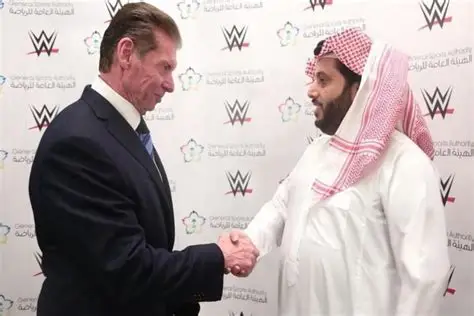
WWE and the Saudi General Sports Authority announced the Greatest Royal Rumble in March 2018. The release described the event as part of a ten-year strategic partnership supporting Vision 2030, the Saudi government’s economic and social reform program. That is a different proposition from booking an arena, flying in a roster and selling tickets to people who already love wrestling. WWE placed its brand inside a government message about what Saudi Arabia was becoming.
For the fans in Jeddah, the April show meant John Cena, Roman Reigns, AJ Styles, Daniel Bryan and a 50-man Royal Rumble on their doorstep. That part is real, and dismissing their excitement because of their government would be a cheap way to avoid the actual issue. The company chose to describe the event as part of a decade-long national project. The people in the seats did not write that press release.
WWE’s 2018 annual report later called the Greatest Royal Rumble the start of its ten-year agreement and counted Crown Jewel in Riyadh among the year’s major international events. Corporate language is usually designed to make a decision sound inevitable after the decision has already been made. Here it also establishes something useful: the relationship was meant to be durable, public and beneficial to both partners. Nobody had to uncover a secret contract in the heel’s briefcase to learn that.
There is a respectable argument that entertainment can create openings across borders. It becomes less respectable when the company wants credit for every opening but treats questions about its government partner as an interruption to the show. Vision 2030 was part of the sales pitch from day one. WWE cannot use that partnership as a point of pride when announcing a spectacle and then act surprised that people examine the politics attached to it.
2. WWE’s women’s revolution hit a border
January 2018 brought WWE’s first women’s Royal Rumble, with Asuka winning a match built to signal that the women’s division could carry one of the company’s signature formats. Three months later, the Greatest Royal Rumble card in Jeddah featured a 50-man version and no women’s match. WWE’s own event record supplies the contrast. The company could produce a bigger Rumble in Saudi Arabia, but the women whose progress it was celebrating at home had no place on that card.
That year also brought Evolution, WWE’s first all-women’s pay-per-view. WWE announced it in July and staged it in October, five days before Crown Jewel in Riyadh. I don’t think the women who worked Evolution should have their achievement reduced to a public-relations footnote. They earned that stage, and the show matters on its own terms. The awkwardness belongs to the company that was selling a revolution in one market while its Saudi cards still had no women’s match.
WWE finally announced Natalya against Lacey Evans as its first women’s match in Saudi Arabia for Crown Jewel on October 31, 2019. Natalya won, and WWE’s account describes a crowd that responded to the match and its significance. That moment deserves to be taken seriously. A girl watching those two wrestlers in Riyadh did not need a commentator in another country explaining why visibility matters.
The same moment also tells you how long the exclusion lasted. WWE had been promoting its Saudi partnership for more than a year and had already staged multiple major events there before it could advertise one women’s match. Calling the 2019 match progress is fair; calling the entire history an uninterrupted triumph would require editing the first chapter out. Wrestling loves a comeback story, but it usually remembers the thing the babyface had to come back from.
3. The hardest decision appeared beside the earnings guidance
Journalist Jamal Khashoggi was killed inside the Saudi consulate in Istanbul on October 2, 2018. On October 25, WWE said it would still stage Crown Jewel in Riyadh on November 2. The company acknowledged the gravity of the crime and said it would honor its contractual obligations to the General Sports Authority. In that same earnings release, WWE said its full-year financial guidance depended on the Riyadh event taking place as scheduled.
WWE did not cause Khashoggi’s murder. The question is how it responded as a business partner of the Saudi government while the killing was under international scrutiny. A later United Nations special rapporteur’s inquiry concluded that Saudi Arabia was responsible under international human-rights law for his extrajudicial killing and criticized the failure to establish full accountability. Saudi Arabia’s Human Rights Commission rejected the inquiry’s allegations and called its findings biased. The 2019 report and response came after WWE made its 2018 decision, so neither should be smuggled backward into the October boardroom as information the company had then.
The documents from October are troubling enough without inventing a private meeting. WWE publicly presented the choice as difficult, explained it through contractual obligations and told investors its guidance assumed the show would proceed. A wrestling company is allowed to consider the consequences of breaking a deal. Readers are allowed to notice when the moral language and the financial language occupy the same page, with the financial language receiving the cleaner finish.
Some people will argue that canceling a show would not have brought Khashoggi back or changed the Saudi government. That is true as far as it goes, but it is a strangely low bar for judging a company’s decision. WWE had deliberately tied its product to a government reform campaign earlier that year. When that government faced a grave crisis of accountability, the company’s response became part of the partnership’s meaning. You cannot sell the symbolism and then declare symbolism irrelevant as soon as it gets expensive.
4. A grounded plane became a test of what anyone could prove
After Crown Jewel in October 2019, more than 175 WWE performers, production workers and employees boarded a charter flight home from Riyadh. WWE reported that aircraft problems, including mechanical issues, kept them on the tarmac for more than six hours. Atlas Air, the flight operator, issued its own statement attributing the delay to a mechanical issue and apologizing to passengers. The disrupted trip kept much of the roster from reaching that week’s SmackDown, where NXT wrestlers filled the sudden opening.
That is the documented event. Claims that the passengers were deliberately held by Saudi officials over a payment dispute have circulated for years, but the flight delay itself does not prove those claims. It is tempting to turn a miserable travel day into a political thriller because the setting already has enough unresolved tension to support one. If an allegation cannot be established, the column does not get to award itself a better plot twist.
There is still a human story in the verified account. A global show is not just the stars who get entrance music and a camera close-up. It also needs the crews who build it, people who get everyone home and a live television schedule that does not politely wait for a repaired plane. WrestlingHeadlines later covered Rhea Ripley’s account of the NXT call-up that night, one visible consequence of the disruption.
The comedy version of the story is that the broken travel plan accidentally gave NXT a terrific television invasion. The less funny version is that a huge international production had more than 175 people counting on one departure working. Both can be true without turning a mechanical explanation into proof of a conspiracy. WWE’s Saudi history is complicated enough when you leave the unverified material out.
5. The answer to years of scrutiny was WrestleMania
In September 2025, WWE announced that Riyadh Season would host WrestleMania 43 in 2027, the first WrestleMania planned outside North America. Its announcement praised the partnership and listed the Saudi events it had already produced. The move takes a relationship that began with a special Royal Rumble and puts the company’s biggest brand on the same stage. If the first agreement was an experiment in how much wrestling could be attached to a national image campaign, WrestleMania is the deluxe edition with the expensive packaging.
Human Rights Watch’s 2026 account of Saudi Arabia describes continuing restrictions on peaceful expression and serious concerns about executions and due process. Those findings do not mean every Saudi citizen endorses state policy, and they do not erase genuine changes in public entertainment or women’s participation. They do mean WWE’s original reform framing cannot be treated as a completed story simply because its events have grown larger. A bigger stage is evidence of a bigger stage.
WWE has every right to explain why this relationship matters to its business. It should be just as willing to explain what standards it applies to the government partnership, what it can actually influence and where its influence ends. That would give fans something more useful than another montage insisting that fireworks answer a question about accountability. Pyro is very good at lighting a stadium. It has never been especially good at illuminating a contract.
These five chapters do not require pretending the matches were worthless or the audience was fooled. Some of the wrestling was memorable, Natalya and Evans made real history, and the fans who attended got experiences they had long been denied. The record also shows a company that sold reform, accommodated exclusion, chose to proceed after a journalist’s killing, managed a serious travel disruption and then expanded the arrangement to WrestleMania.
That history deserves a better response than asking everyone to enjoy the show and forget the rest until the next press release. WWE knows how to tell a story in which the past matters, even when the hero would rather it didn’t. The same standard should apply when the company itself is the one walking to the ring.
Sources: WWE and Saudi General Sports Authority, March 2018 announcement; WWE 2018 annual report; WWE 2018 Women’s Royal Rumble result; WWE Greatest Royal Rumble results; WWE Evolution announcement; WWE Natalya vs. Lacey Evans result; WWE third-quarter 2018 earnings release; UN special rapporteur’s Khashoggi inquiry; Saudi Human Rights Commission response; WWE and Atlas Air on the 2019 flight delay; WWE WrestleMania 43 announcement; Human Rights Watch, World Report 2026.