WWE Losses That Made the Comebacks Matter
WWE has a familiar sales pitch for a painful loss: be patient, because the comeback will make it worthwhile. That sounds wonderful until you remember that patience is usually requested by the people who already know the finish. The audience has to buy the next ticket while wondering whether the wrestler they care about is climbing a mountain or simply being asked to stand beside one for a year.
A defeat can improve a wrestling story, but it cannot do the work by itself. The loss has to change what the wrestler wants, what the audience understands, or what the winner is able to get away with. Otherwise, a rematch is just the same appointment moved to a later date. WWE has produced both kinds of delay, and the difference deserves more attention than the old claim that fans should always let a story play out.
Take Daniel Bryan at WrestleMania XXVIII. Sheamus beat him for the World Heavyweight Championship in 18 seconds, according to WWE’s match account. It is difficult to make a wrestler look much smaller without mailing him a bill for the ring rental. Bryan’s loss was brief enough that the entrances may have taken longer than his defense, but the reaction to it refused to fit into the space WWE had allotted.
The following night, the crowd made the word “Yes” into its own commentary on Bryan and the result. WWE’s look back at the chant describes the response that followed WrestleMania. It would be convenient to present those 18 seconds as the first beat of a perfectly designed two-year masterpiece. It would also give the people who made that noise far too little credit.
The audience did not need a carefully typeset invitation to decide Bryan mattered. Its objection became part of the act, and WWE eventually had to deal with a star whose value was obvious whenever a crowd could see him. At WrestleMania XXX, Bryan beat Triple H to reach the main event and then defeated Randy Orton and Batista for the WWE World Heavyweight Championship, as WWE’s results record. The payoff worked because the victory answered more than a question about whether Bryan could win a match. It answered whether the company could keep treating him as the smaller choice.
That distinction matters. A popular wrestler can lose and still be popular on Monday. The interesting part is what the story does with the gap between the company’s apparent judgment and the audience’s judgment. Bryan’s path did not make the original squash feel pleasant in retrospect. It made the crowd’s refusal to accept the squash feel consequential, which is a different and much more satisfying thing.
Bianca Belair’s defeat to Becky Lynch at SummerSlam 2021 posed a different problem. Lynch returned, challenged Belair for the SmackDown Women’s Championship and won quickly after the opening exchange. WWE’s account confirms the change of title and the sudden finish. In a single segment, a champion built around athletic dominance went from defending her place at the top to watching somebody else hold it. That is a strong disruption if the next chapter respects what was taken from her.
The danger was that Belair could become a prop in someone else’s return. A surprise appearance already supplies excitement; it does not require the outgoing champion to lose her identity along with her belt. Wrestling fans can understand the shock without being required to call it good for the person on the receiving end. If WWE wanted the defeat to mean something later, Belair needed more than a ceremonial invitation to try again.
She needed the space to pursue Lynch, to remain credible while she did it, and to win a match that felt like an answer to the embarrassment rather than an unrelated title change. At WrestleMania 38, Belair defeated Lynch for the Raw Women’s Championship, as WWE’s event results confirm. The titles were different, but the people and the injury to Belair’s standing were the same. The later victory had force because it addressed the original relationship: Lynch had taken a moment from Belair, and Belair took back the center of the picture.
None of that requires pretending the SummerSlam finish was automatically brilliant. A payoff can be effective while the first decision remains debatable. That is how stories usually work outside a sales presentation. The real achievement was not that WWE made everyone grateful for a very short title match. It was that Belair continued to look like a champion even during the stretch when she could not call herself one.
Sami Zayn’s loss to Roman Reigns at Elimination Chamber 2023 presents an even harder test, because there was no later one-on-one world-title victory to staple onto it. In Montreal, Zayn challenged Reigns for the Undisputed WWE Universal Championship and lost, as WWE’s result shows. The atmosphere and the Bloodline story had made Zayn’s choice to stand against Reigns feel enormous. The defeat therefore could not be handled as a routine failed title shot without shrinking everything around it.
WWE did something more interesting than simply promising Zayn the same match again. His conflict with Reigns was also a conflict about belonging, loyalty and the cost of being useful to a family that would never quite let him be one of them. Kevin Owens had been hurt by Zayn’s choices, so reconciliation could not be ordered like a new T-shirt. Zayn had to accept that he could not undo his time with the Bloodline by finding one perfect move against Reigns.
At WrestleMania 39, Zayn and Owens beat The Usos for the Undisputed WWE Tag Team Championship. WWE’s match setup and event results establish that outcome. It was not the world championship the Montreal crowd had wanted for Zayn. Calling the two achievements interchangeable would flatten both of them. The tag victory mattered because Zayn found an ally, repaired a relationship and helped break a piece of Reigns’ power structure.
That is the version of a comeback wrestling rarely advertises. Sometimes the loss reveals that a wrestler asked the wrong question. Zayn could not beat the Tribal Chief in Montreal, but he could stop measuring his worth by whether that man allowed him a seat at the table. The story became less about taking Reigns’ belt and more about walking away from his approval. A tag title win can carry that idea if the audience has seen the relationship that had to be rebuilt to reach it.
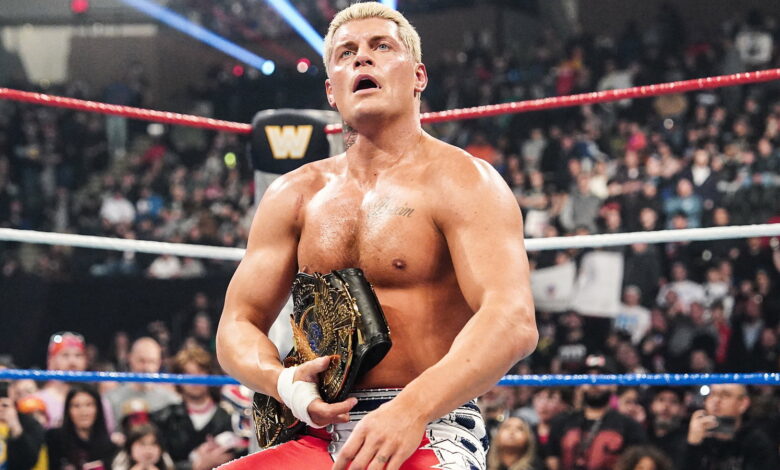
Cody Rhodes gives WWE the cleanest before-and-after comparison. Reigns beat him at WrestleMania 39 after Bloodline involvement, and Rhodes eventually defeated Reigns at WrestleMania XL. WWE’s 2023 results and 2024 results establish the two ends of that journey. On paper, the lesson looks easy: delay a coronation by a year and the crowd will cheer louder. That is the kind of conclusion a calendar would reach if it had booking privileges.
The extra year was a risk, not a guarantee. Rhodes had to remain compelling in stories that did not always put Reigns directly in front of him, and Reigns’ circle had to continue giving the final match a meaningful obstacle. The WrestleMania XL finish brought people connected to that wider fight into the picture before Rhodes finally won. The spectacle felt large because the interference and relationships around Reigns had been part of the problem all along. It was an answer to the machinery that beat Rhodes the previous year, not merely a second attempt with a better pinfall.
WrestlingHeadlines covered the immediate shock of that first result in its report on Reigns beating Rhodes at WrestleMania 39. My point here is narrower than any claim about what the office intended behind the scenes. The public story only works if the year between the matches gives the loss consequences people can recognize. A writer cannot declare a wait worthwhile on the night the wait begins. The audience gets to decide whether the episodes that follow earned it.
That is why these four examples should not be squeezed into the same inspirational slogan. Bryan’s loss became a dispute between the audience and WWE’s apparent hierarchy. Belair’s became a challenge to restore the standing she had built. Zayn’s became a chance to escape a relationship that had made him mistake acceptance for loyalty. Rhodes’ became a test of whether a hero could survive the entire system around an almost unbeatable champion. Each loss changed a different question. Each payoff answered the question the loss had created.
The usual defense of a disappointing finish asks fans to trust the future. Trust is earned in the present, episode by episode. Give the defeated wrestler agency, let the consequences stay visible and make the eventual win solve the actual problem. If the only change is that a championship ceremony appears one year later, the audience has not witnessed a story. It has watched WWE put a receipt in a drawer and hope nobody asks for it.
A great wrestling comeback does not erase the defeat that started it. It gives the defeat a place in the wrestler’s life and lets the audience remember why it hurt. WWE is at its best when it understands that difference. The crowd does not need to be told that losing was secretly winning. It needs to see a wrestler return with something they could not have carried into the first match.
Sources: WWE WrestleMania XXVIII; WWE WrestleMania XXX; WWE SummerSlam 2021; WWE WrestleMania 38; WWE Elimination Chamber 2023; WWE WrestleMania 39; WWE WrestleMania XL.