Cody Rhodes was right about AEW.
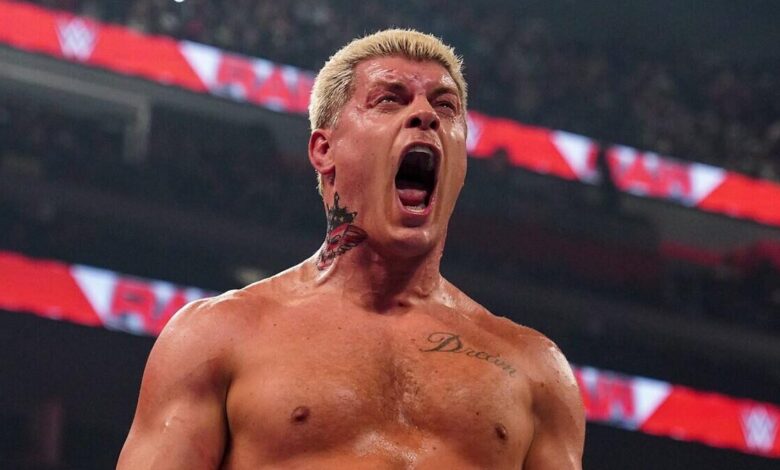
Cody Rhodes, the physical embodiment of wrestling Americana. A man whose generational wealth lies not in cold, hard cash, but in the blood, sweat, and tears paid to the cold-blooded business of professional wrestling.
His career is one defined by the ability to overcome adversity and triumph in the face of a great evil, all while flirting with the possibility of opening that forbidden door to the dark side. At no point was that courtship more toxic than in the latter days of Cody Rhodes’ run in AEW.
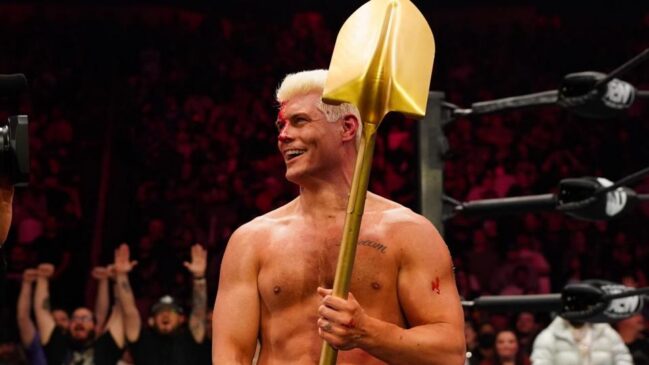
Shackled by a contractual exclusion from the AEW World Championship scene, fans criticized the “Codyverse” that spawned in the upper mid-card scene. Furthermore, the oblivious nature of Rhodes’ earnestness and American bravado clashed with a fanbase that craved depth and shades of grey at the time. Much to his credit, Cody Rhodes stood his ground and knew that if there was ever to be a blonde blue-eyed babyface to bring wrestling to the mainstream once again, it would be the son of a son of a plumber.
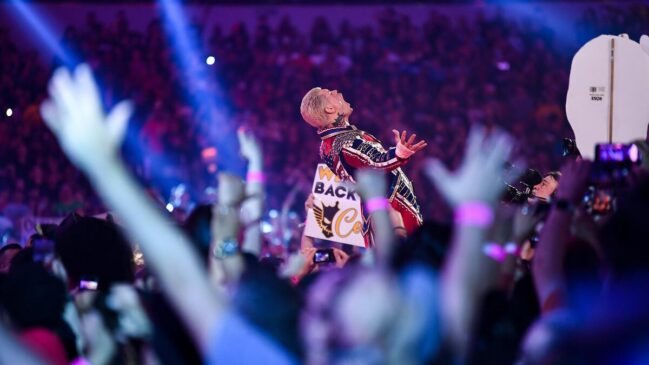
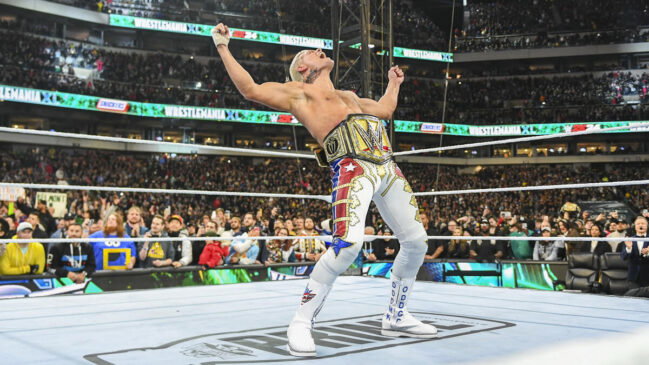
Returning to WWE at WrestleMania 38, Cody Rhodes immediately established himself in the main event scene alongside Seth Rollins. The showcase match to solidify Rhodes as the face of the company would be at Hell in a Cell 2022 where a bright red target was painted on an already black and blue torn pectoral muscle. Riding this wave of grit and determination, the valiant Cody Rhodes would square off against Roman Reigns in back-to-back WrestleMania main events, cementing his place not only in the Hall of Fame, but in the hearts of the fans.
Undoubtedly, Cody Rhodes is a better fit in WWE. However, why did Cody Rhodes not work in AEW? Many fans point to the different tastes that each fanbase possesses and while that explanation can initially suffice, it falls apart upon further inspection. AEW is tinged with the colors of black grunge and stained blood, but enthusiastic blue-eyed babyfaces still have a place in the home of sickos. Will Ospreay is lovably committed to a sincere and genuine presentation as just one of the mates from Essex. Willow Nightingale still gets fans to rhythmically clap in unison as she unconditionally smiles in the face of her foes. Even the Devil himself embraced a level of white meat wholesomeness alongside his brochacho.
The reason Cody Rhodes could not fit in AEW was due to a lack of believability and self-awareness in his circumstances. Modern day wrestling does not exist solely in kayfabe nor reality. The blending of the two stories is what makes the medium so interesting and captivating as the talented professionals are able to make fans lose track of which world they are in. However, that does present a challenge on the part of the performer as they have to understand how both their character and real-life struggles are being presented from the point of view of the audience.
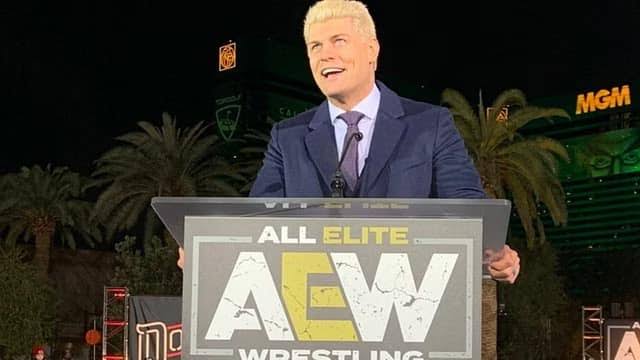
Therefore, when the fans tune in week after week and see Cody Rhodes stuck in the mid card without much mobility, they start to ask the wrong questions. In kayfabe, those questions are legitimate storytelling devices as Cody is struggling to make a legacy for himself without ever claiming the top prize in this company. However, in reality the fanbase is well aware of the fact that he is a founding member of said company and could at any point easily book himself a title shot. This would have not been such a major problem if Cody leaned into that blending of reality and kayfabe, creating a character that abused his power and went back on his word. Instead, Cody insisted on a fairly bland middle ground where he just accepted his storyline circumstances and went about his business in the mid card. Not only does that devalue his stock on the roster but it puts a cap on anyone that would work with him. You are a reflection of the people that you associate with.
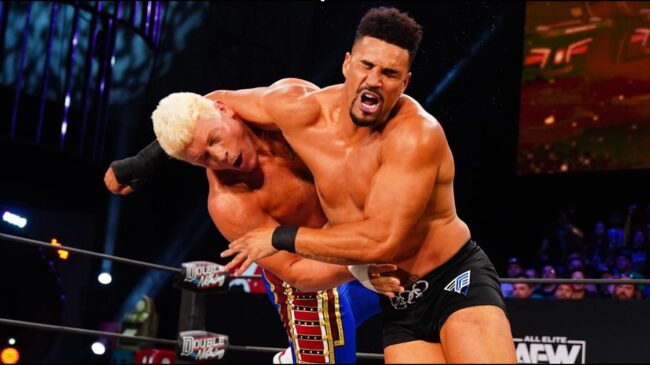
This phenomenon is not unique to Rhodes’ time in AEW, in fact he was not even the first, second, or third person to make this mistake in AEW. The Elite themselves, Young Bucks and Kenny Omega, started off their tenure in the company by consistently losing the big matches. Both Cody Rhodes and the Elite made these specific decisions in order to learn from lessons gone by of promoters booking themselves over the actual deserving and popular talent. However, the difference in this case was that Cody Rhodes and the Elite in 2019 were still the deserving and popular talent that the fans wanted to see at the top. Half a decade later and only now are talks of these performers winding down starting to happen. The Elite noted this dissonance and started to respond to the fans by doing exactly what the company was founded on, being the place where the best wrestle. The fans wanted to see Cody Rhodes chase for that big title against a devilish foe, but without those stakes his fiery compassion felt flat. Rhodes had all the ingredients to cook up a Michelin-star meal that would make even Brandi proud, but he was stuck working the line at McDonald’s.
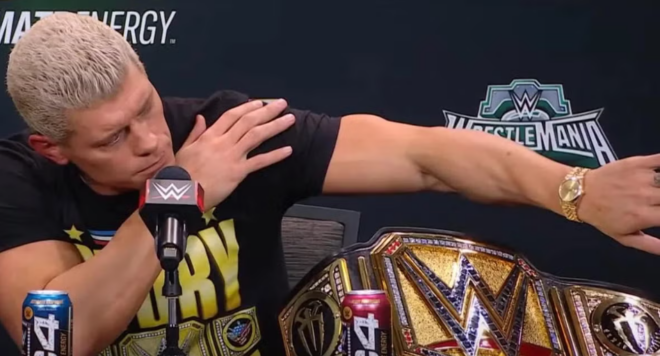
Furthermore, Cody Rhodes as a babyface works best when he is up against a wall and needs to overcome an obstacle. Rhodes is not Superman; he comes back stronger every single time you kick him down. The fans bought into his quest for specifically the WWE championship not only because it was the title his father never held, but also because he was fighting WWE the corporation just as much as he was fighting the Tribal Chief. When he was a child, the Rhodes name was kicked down repeatedly whether through his father’s mistreatment at the hands of Vince McMahon or legally owning their surname. This weaving of real-life lore into the storyline made Cody’s struggle believable. Even past the initial victory at WrestleMania 40, Rhodes’ earnestness fits in the setting of WWE because this is still his dream. Due to its rich history and existence as a publicly traded company, WWE the corporation exists as a character in kayfabe. This character is distinctly heel due to decades of Vince McMahon portraying a villainous character and running the company. Therefore, Cody Rhodes’ heroic earnestness compliments the cloud of corporate oppression as a beam of hope the crowd can rally behind. This dynamic could not work in AEW simply because the company works on too small of a scale. AEW is not a billion-dollar corporation that answers to shareholders, it is the pet project of a billionaire’s son. Therefore, the story of Cody defending the title on behalf of the fans, keeping it away from a “cheap-ass, corporately created John Cena bootleg”; cannot happen in AEW without the said corporation actually existing.
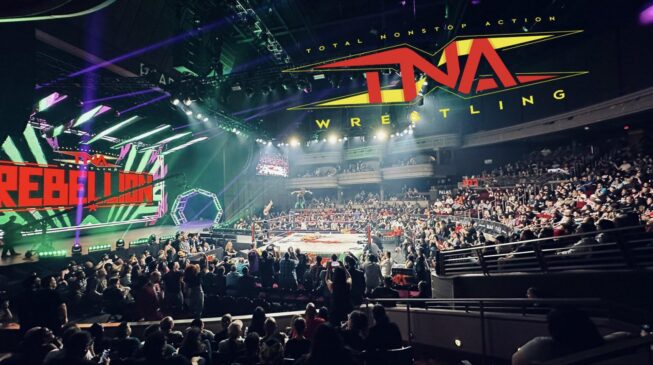
Similar instances would occur in a setting like TNA. When Eric Bischoff and Hulk Hogan took the reins of the company, they would try to relive the glory days from their NWO invasion but without the correct setup. The NWO felt like an invading force because they were fighting against a system, whether it be the corporate overlords of TNT or the delegated authority figures on screen. To TNA’s credit, they did in fact have an onscreen authority figure with legitimate ownership of the company in the form of Dixie Carter. However, as the Deadlock podcast once so eloquently stated, it is incredibly hard to fully believe in an invasion angle when you are in 200 seat arenas. There needs to be a sense of scale to give the invasion weight.
Ultimately, the irony of Cody Rhodes in AEW was not that he was incapable of telling a compelling story, but that he did not recognize the story his circumstances were already telling. Cody’s earnestness, patriotism, and unwavering belief in himself are not qualities inherently incompatible with AEW. In fact, they could have made for a fascinating character study of a man whose perception of himself as the company’s virtuous standard-bearer gradually collided with the reality of his position within it. However, that required Rhodes to acknowledge the contradictions that made his character so fascinating in the first place. Instead, he often presented himself as a hero without confronting the uncomfortable questions that heroism invited. In WWE, his history with the company, his father’s legacy, and the sheer institutional weight of the promotion gave his perseverance a tangible enemy to overcome. Every setback became another chapter in a struggle that fans could understand, and every triumph felt like a victory against forces larger than himself.
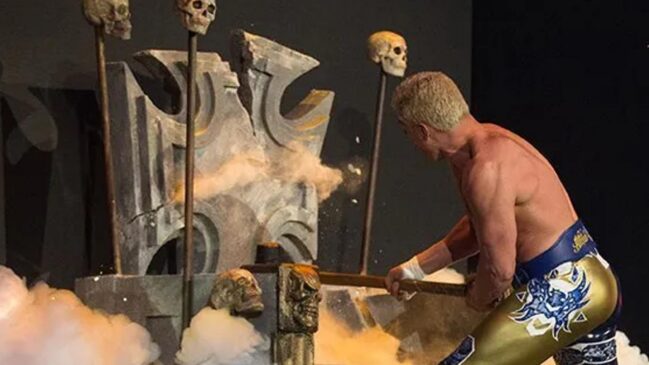
That is what makes the “Codyverse” such a fascinating missed opportunity. It was not simply a collection of disconnected storylines and baffling creative decisions but rather a tug of war between a performer’s carefully constructed self-image and an audience increasingly unwilling to accept it at face value. Professional wrestling thrives when those two perspectives collide, when the man behind the character and the character himself become indistinguishable in the eyes of the crowd.