Wings of Theve uses first-person to tell a more personal story – PlayStation.Blog
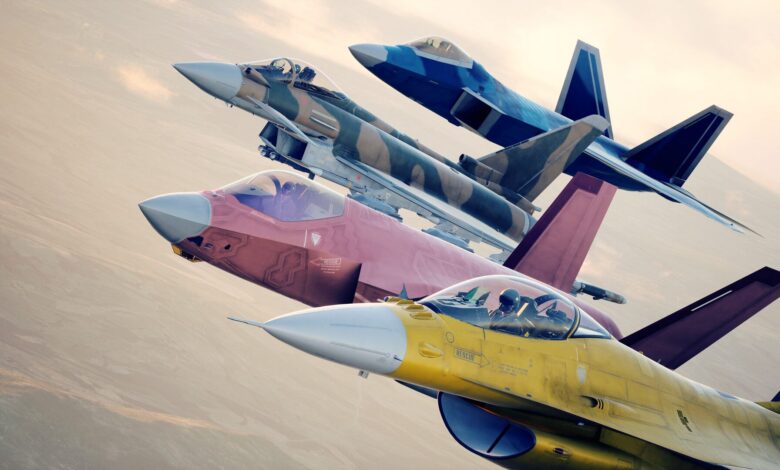
The world of Strangereal, setting of the Ace Combat games, has developed a deep and storied history over the course of the series. But with Ace Combat 8: Wings of Theve, developer Project Aces has changed its approach to storytelling to create a more intimate and emotional tale than it has in the past. That approach brings you a lot closer to the desperate attempts of the Federation of Central Usea’s battered navy to fight off the invading Sotoans, and the many characters fighting that war.
The biggest change is that, in Ace Combat 8, you play a fighter pilot silent protagonist who is, nevertheless, a major character throughout the story. The game opens with a cutscene in which you’re found floating in a life raft after a battle by the Endurance, one of the FCU’s last remaining aircraft carriers.
After you’re aboard, you’re sent up as navigator for fighter pilot Jan “Rex” Cope, whose job isn’t to engage in battles, but to serve as a propaganda tool. He’s known as the Wings of Theve, a legendary fight pilot ace named for the FCU’s capital, but you quickly find out that Cope isn’t the incredible ace he’s portrayed to be on social media. Instead, his instructions are to run from every fight, but when the two of you are shot down, Cope is killed in action.
But the Wings of Theve is too important to the struggling FCU to go out that way, so you inherit Cope’s call sign and secretly replace him. As the new Wings of Theve, you have a central role in the war effort, and your skills help bolster the propaganda — for better or worse.
First-person cutscenes put you in the story
Previous Ace Combat games have told their stories through detailed cutscenes, but in Ace Combat 8, those cutscenes are mostly presented from a first-person perspective, putting you in a room or on the deck with other characters. The story unfolds as if you’re living it both in and out of the cockpit, rather than having it narrated to you, and haptic feedback in the DualSense controller helps make those moments feel realistic and intense, especially in the heat of battle.
While your character Rex, as in past games, is silent, you occasionally get the chance to answer yes-or-no questions by pressing left or right on the DualSense’s D-Pad, and to interact during cutscenes by looking around with the right analog stick or responding to prompts at key moments by hitting Triangle or Square.
Through those minor interactions, you can do a bit to shape Rex as a person, and the other members of Joker Flight, your squadron, will respond to how you choose to lead them with your decisions.
Becoming part of the squadron
Ace Combat 8 puts a big emphasis on all its characters, especially the members of Joker Flight. You spend almost the whole game with them, whether it’s hanging out during cutscenes between missions that expand on the plot, sitting through briefings where they’ll chime in with comments or information, or listening to them over the radio while you’re taking down enemy aircraft.
That focus on characters makes the story of the FCU’s battle to repel Sotoa feel immediate, personal, and harrowing. You’re not just running a series of disjointed missions, you know the stories of the pilots who are being asked to risk their lives to complete them, and you know what’s at stake if you fail.
You also get a lot of chances to make small decisions that give the sense that you’re influencing your squadron’s perception of you. In one early mission, you encounter an allied group of pilots who are also a famous rock band — and a member of your squadron, Coster, is a big fan. When he asks if he can briefly leave your formation to help them, the choice is up to you, but Coster appreciates it if you let him lend his guns and missiles to protect his heroes. Little moments like this help create a bond between you and the rest of Joker Flight.
Those extra character moments also get you invested in your squad’s well-being. You can issue orders to them with the D-Pad, sending them out to engage targets on their own, calling them back in formation to attack your target, or asking them to cover you. Since your squad feels like a group of able pilots who you know personally, it helps push you to put their skills to use and to rely on them during the story, as well as to help them out when they get into trouble in the skies.
A war effort full of individuals
The radio is a huge part of Ace Combat 8’s storytelling. Throughout missions, you’ll communicate with your commanders and your squadmates via radio as they give you key information and comment about what’s happening.
But the radio, and the sound design that accompanies it, also do a great job of selling what it feels like to take part in missions. When a mission to retake FCU territory turns into an ambush by Sotoan forces, you hear the struggle and fear of your ground forces as they all yell into their radios at once, reporting their situations or begging for help from the Wings of Theve.
The radio also gives you chances to do a little to shape your story. If troops on the ground call for your aid and you respond, they acknowledge it — and often, those same characters might show up on later missions. The legend of the Wings of Theve affects more than just the number of likes on social media, and while the story doesn’t change based on your decisions, those small character moments with the people who fight alongside you make it feel like your contributions to the war effort are important ones.
Through its approach to its Story Mode, Ace Combat 8: Wings of Theve pulls you into the struggle of the FCU in a way that’s deeply personal and often intense and emotional. You can fly the skies of Strangereal yourself when Ace Combat 8 takes off on October 2 on PlayStation 5.