Tiger Ali Singh On Vince McMahon Offer, Jim Ross & WWE Run
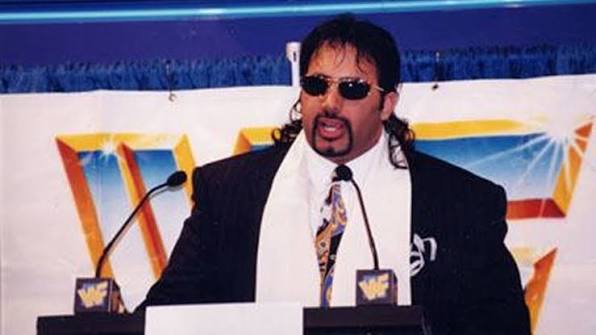
Tiger Ali Singh has made a rare interview appearance to discuss the unusual circumstances surrounding his arrival in WWE, the difficulties he says followed behind the scenes and the creation of his memorable “How Low Will America Go?” segments.
Speaking with Bryan Asbury on Developmentally Speaking, Singh said his signing was tied to WWE’s international television business in the late 1990s. He also alleged that Jim Ross deliberately undermined his development after he joined the company, while explaining how an idea inspired by daytime television ultimately gave his character new life.
Tiger Ali Singh Says Vince McMahon Offered Him A “Blank Check”
Singh said his path to WWE began while he and his father, Tiger Jeet Singh, were working internationally. According to Singh, Antonio Inoki informed them in late 1996 that WWE’s television rights arrangement involving Star Sports and Sky Sports was approaching renewal.
Singh said Inoki proposed establishing a wrestling company in India with Tiger Jeet Singh while grooming the younger Singh as one of its future stars. Not long afterward, the Singh family heard from then-WWF Canada president Carl DeMarco about Vince McMahon’s interest in meeting with them.
Singh said Bret Hart played an important role in connecting the two sides.
“The key person that played the pivotal role was Bret ‘The Hitman’ Hart.”
According to Singh, McMahon asked Hart about finding a wrestler with appeal in India and other Asian markets. Singh said Hart initially recommended Tiger Jeet Singh before suggesting his son as someone WWE could consider.
“He goes, ‘Absolutely not. He’s like an ambassador and all that, but his son started wrestling in ’93 and maybe we can look at him.’ So, big shout out to Bret. He’s the one, and I’ll never forget it.”
Singh eventually traveled with his father to WWE’s offices in Connecticut for a private meeting with McMahon and DeMarco. Singh said the meeting did not involve a traditional wrestling tryout or detailed discussion of his ability in the ring.
Instead, he recalled McMahon making an extraordinary offer.
“He basically looked at me, he goes, ‘I want to sign you for life.’”
Singh said McMahon explained that such an arrangement was not legally practical and discussed a long-term contract instead.
“He goes, ‘Here’s a blank check. You just sign your number.’”
Singh said he declined to name his own price and deferred the decision to his father. His request was that WWE also give Tiger Jeet Singh an honorary position with the company.
“He goes, ‘I would love it. He will be our very first international ambassador, and I’ll give him a 10-year guaranteed contract.’”
Singh maintains that WWE’s interest was connected to strengthening its position with its international television partners rather than simply recruiting another wrestler.
“There was a different reason for me getting signed. It wasn’t that, okay, he’s a wrestler, we’re going to put him there. It was because he was trying to secure a TV deal.”
WrestlingHeadlines has not independently verified Singh’s account of WWE’s television-rights negotiations or the specific contractual offers described in the interview.
Tiger Ali Singh Alleges Jim Ross Sabotaged His WWE Run
While Singh described his early interactions with McMahon positively, he presented a very different account of his relationship with Jim Ross.
Singh said he openly acknowledged to WWE that he lacked consistent ring time before signing and expected house-show work to help him develop. According to Singh, that work largely never came.
“The most I ever wrestled on house shows in one calendar year was probably 20 or 25. So there was an internal sabotage happening.”
Later in the interview, Singh directly identified Ross as the person he believes was responsible.
“I was not booked on one house show. The plot was thickening. In this particular case, Jim Ross was not booking me.”
Singh alleged that Ross also portrayed him to other wrestlers as someone who refused to work house shows or lose matches. Those are Singh’s allegations, and the interview does not include a response from Ross.
Singh said wrestlers including Bret Hart and Road Warrior Animal encouraged him to get on the road because they believed regular matches would allow him to improve and establish relationships with the locker room.
“Bret Hart, he would say, ‘Hey, are they getting you booked on the road?’ I said, ‘No, Bret. I don’t have anything. They just bring me to TV.’ He goes, ‘Well, we got to change that. You got to get out here.’”
Singh estimated that he wrestled only around 50 or 60 house shows throughout approximately five years with the company.
“Any shows that you saw me working on TV, I had no house shows. So just imagine you’re studying for your exam and you weren’t attending any classes throughout the year, and then all of a sudden, ‘Oh, we got a test.’”
Singh and his father eventually became involved in arbitration with WWE. Singh said the proceedings allowed his side to present documents and testimony concerning his treatment during his tenure.
He repeatedly described the outcome as vindication, although he did not provide the full arbitration decision during the interview.
“It all came to air during our legal battle with them, which, with God’s grace, we were vindicated.”
Despite the allegations he made about Ross, Singh said he no longer carries personal hostility toward the longtime wrestling executive and announcer.
“Even to Jim Ross, I wish him no ill will. I know he’s suffering with some health issues. I wish him the best of health.”
Tiger Ali Singh Explains The Creation Of “How Low Will America Go?”
Singh’s WWE run eventually found a more distinctive direction when he began developing what became the “How Low Will America Go?” segments.
Singh said the concept emerged partly from his frustration over collecting guaranteed money without receiving enough opportunities to wrestle. He recalled his mother challenging him over accepting money she did not believe he had earned through regular work.
“She goes, ‘This is setting you up for failure. This is not earned money.’”
That pushed Singh to think about how he could create an opportunity for himself.
He began studying the popularity of The Jerry Springer Show, particularly its ability to generate large audiences with relatively simple production.
“I was just so blown away with, on a shoestring of a budget, the ratings he was able to pull in.”
Singh combined that inspiration with memories of Ted DiBiase’s Million Dollar Man segments. His variation would involve real audience members rather than predetermined participants.
“I go, what if I could do a version, but make it real and set it up like Jerry Springer and really push the envelope?”
Singh said he wrote out the concept and faxed it to Vince Russo, who quickly took the idea to McMahon.
“Vince Russo, I’m so grateful. He really loved it and he ran with it.”
According to Singh, Russo called him shortly afterward and told him WWE wanted to introduce the idea on television almost immediately.
“He goes, ‘We’re flying you out to TVs and we’re going to go live with this.’ I go, ‘Go live with what?’ He goes, ‘This How Low Will America Go?’ I go, ‘It was just the idea of it.’”
Singh said he was initially given several pages to memorize for the first segment but struggled with the script before going through the curtain. He recalled McMahon taking the pages away and simplifying the assignment.
“He takes my two or three pages, he rips it out and he throws it, and he goes, ‘The start and the finish is the most important thing.’”
The segments subsequently became one of the best-remembered elements of Singh’s WWE career, with audience members accepting money to perform deliberately degrading challenges.
Singh recalled one segment having to be performed twice because McMahon wanted the selected audience member to be wearing WWE merchandise. Another challenge involving an audience member licking material from his associate’s feet also required an immediate second take.
For Singh, the unpredictable involvement of real audience members was what separated the concept from traditional scripted wrestling segments.
“Because of the spontaneity and it was reality television, it was probably the very first implementation of reality television in the WWF programming.”
Singh said the creative success finally gave him something he had been searching for since arriving in WWE.
“I wanted to modernize it. I wanted to go in uncharted waters. I wanted to go on the path that’s less walked on. I just didn’t want to do the same, and that got me excited.”
If you use any portion of the quotes from this article, please credit Developmentally Speaking with Bryan Asbury, with a h/t to Wrestling Headlines for the transcription.