
Alien: Isolation 2 has huge access to 20th Century’s archives, but Ridley Scott remains Creative Assembly’s “guiding star”

Alien: Isolation 2 has a lot to live up to. Creative Assembly’s original game remains one of the most effective Alien experiences ever made, largely because it understood exactly what made Ridley Scott‘s 1979 film so terrifying. Now, more than a decade later, the studio wants to evolve that formula without losing what made it work.
Speaking to Pocket Tactics after our Alien: Isolation 2 preview, art director Ana Sopikova explains that Creative Assembly has a close relationship with 20th Century, giving the team access to the Fox archive and a wealth of behind-the-scenes material from the original movie.
“We have the archive from Fox that has all the behind-the-scenes pictures, and it’s just amazing to see all the sets kind of in a different light, so you can really inspect the details and how everything was built,” Sopikova tells me. That access gives Creative Assembly a chance to deconstruct Ridley Scott’s directorial process.
The team can study how the production built its sets, what materials it used, and how it achieved Alien’s distinctive visual identity. For Sopikova, one of the team’s guiding principles asks how the crew would have built something on a film set in the 1970s. That means considering the materials available at the time, sticking to the established color palettes, and maintaining the tactile, retro-futuristic aesthetic that defines Alien.

She refers to Ridley Scott’s first Alien movie as the “bible” when the team needs guidance. “I say this every day at work as well. They’re all tired of hearing it in the office.” Sopikova iterates to me that “the guiding star is really Ridley Scott’s experience […] that’s the guiding star for us, and we always come back to it.” Despite the team’s close relationship with 20th Century, Sopikova clarifies she hasn’t personally spoken with Scott about Alien: Isolation 2.
“We personally haven’t. We’re just humble artists. We’re focused on making the game,” she tells me. “So no, we’re not in any Hollywood fame circles.” While Creative Assembly seemingly hasn’t brought Scott directly into its development process, the developers make it clear that Alien: Isolation 2 isn’t just repeating what came before.
“It’s not a remaster, right? We wanted to evolve it meaningfully,” Sopikova stresses. “We wanted to make sure that we’re not kind of just taking the existing assets and putting them in a new engine, because that wouldn’t be fair to fans, I think. And for us as well, it wouldn’t be satisfying.”
That evolution becomes particularly apparent in the sequel’s setting. While Alien: Isolation trapped players aboard the Sevastopol, Alien: Isolation 2 takes the Xenomorph outdoors, putting players on an actual planet surface. It’s a major change for a franchise that usually keeps its characters inside claustrophobic corridors, ships, and space stations. The challenge for Creative Assembly involves balancing that new freedom with the authentic Alien experience fans expect.

“We are trying to obviously keep a mixture of old and new,” Sopikova explains. “People love the first game, and we love the first game. Obviously, we want to give people still a good chunk of that authentic Alien experience because we are still laser-focused on the original Ridley Scott’s 1979 film.”
That means the new Switch game retains the low-fi sci-fi aesthetic, analog set design with chunky buttons that helped define the original Alien and Isolation. At the same time, the team wants the new setting to feel like a natural extension of that world. “The original Alien is all very relatable. It’s believable. It’s truckers in space,” she tells me. “For us, it’s how do we take that and how do we apply it to a planet surface so it feels familiar, but different?”
That grounded approach also prevents the new environments from distracting from what really matters: the Xenomorph. “The only thing that’s extraordinary is the Alien really, and everything else is kind of just the backdrop for it.” The planet’s weather is another layer to the survival experience. Rain, fog, noise, and poor visibility can all change how players approach an encounter, while the Xenomorph adapts to those conditions and uses them to hunt its prey.
“How are you going to adapt and survive in these conditions, and how is the Alien going to adapt to hunt you differently in these conditions?” Sopikova asks. That builds on the unscripted cat-and-mouse gameplay that defined Alien: Isolation. Rather than abandoning that formula, Creative Assembly wants to add more variables and see how the Xenomorph responds.
“It’s all about experiencing the Alien the way you haven’t experienced it before. It’s the Alien in the outdoors.” The Xenomorph can use its senses to track players, meaning hiding doesn’t guarantee safety.
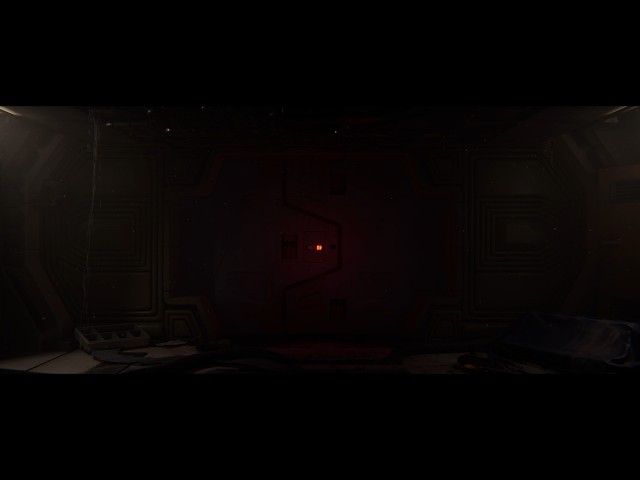
“It actively hunts you. If you hide behind the desk, it’s not just going to come and get you. It will be looking for you, and eventually it will get you.” The sequel takes the original game’s ideas around an adaptive, unscripted Alien and pushes them further. Players now have to consider how fog could destroy their visibility or how heavy rain could drown out sounds they would normally use to identify danger.
“If the fog comes in and you can’t see in front of you, or the rain is so loud that you can’t hear anything, these things are just adding different layers on top.” Those systems can combine in numerous ways, creating situations that even the developers can’t completely predict. “It’s infinite possibilities, basically, and the Alien adapts to that,” Sopikova adds.
Creative Assembly also has the benefit of watching other filmmakers put their own stamp on the Alien universe. Sopikova points to the franchise’s continued evolution as something exciting for the team, particularly after the release of Fede Álvarez’s Alien: Romulus.

“When Romulus came out, I think you don’t know if you’ve seen it, but they actually had the save station from Alien: Isolation. For the team, that was amazing. Just to see something that was designed in Creative Assembly to be there on the big Hollywood screen.”
Creative Assembly doesn’t need to reinvent Alien to make the sequel work. It already understands what made the original so effective and knows when to break from it. And if Sopikova’s final advice is anything to go by, surviving this time will require players to do more than hide: “You better improvise to survive.”
For more interviews like this, join us on the Pocket Tactics Discord server.