How China’s game industry is using AI, from art to ad-buying
- Tripo AI, XDream Robotics and Mintegral show AI already running China’s production, ad-buying and live ops.
- Avia and Good Day Solution say Chinese studios ship AI first, refine later.
- Moonton uses AI to read fan sentiment across 80+ markets – but keeps final judgement human.
Stay Informed
Get Industry News In Your Inbox…
Sign Up Today
AI in gaming usually gets discussed through concept art, NPCs and speculative demos. We got an inside look at what’s actually running behind the scenes at Chinese gaming companies.
We spoke to six people close to that shift: studio founders, an esports executive, a 3D technology chief executive and advertising-technology leaders, to see how far AI has actually gone inside China’s gaming industry.
Creating game assets in seconds
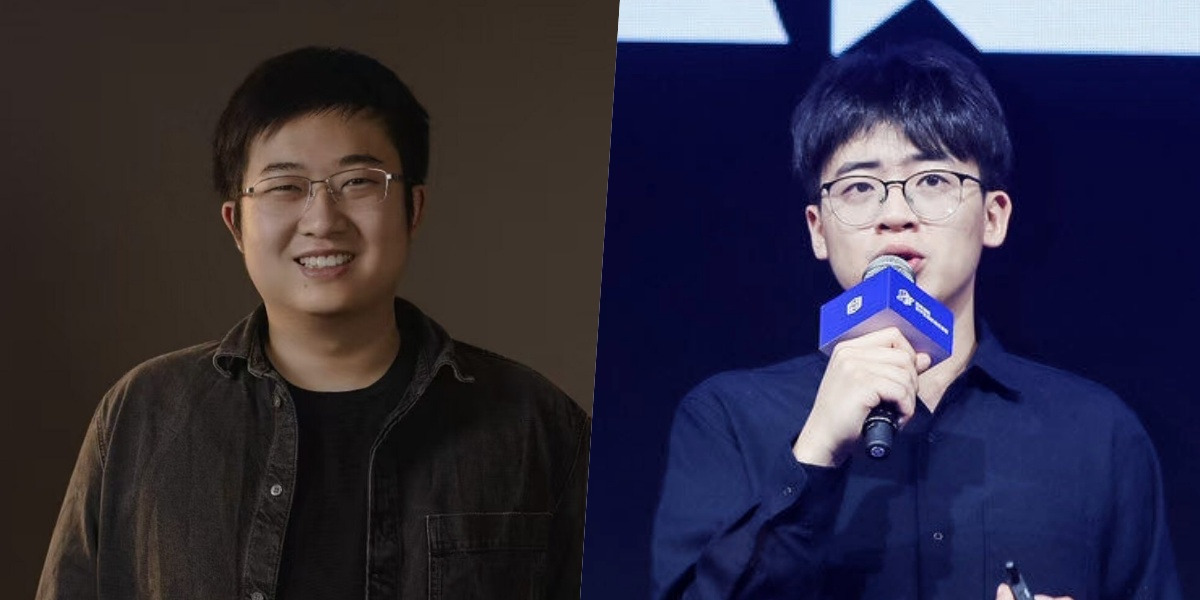
Tripo AI chief executive Simon Song, whose company is now backed by close to $350 million in funding this year, explains why Chinese studios have moved so fast on AI.
“We think Chinese studios are adopting AI quickly because the gaming industry has always been highly competitive and production-intensive. Creating games requires massive amounts of content, from characters and environments to 3D assets, which traditionally involves long and costly production cycles. AI is helping developers accelerate these processes and focus more on creativity and player experiences,” Song says.
“This is also what Tripo AI aims to achieve. Through our AI-native workspace, Tripo Studio, powered by our proprietary 3D foundation models, creators can transform text and images into production-ready 3D assets in seconds, we are making 3D content creation faster, more accessible, and more efficient.
“By enabling a more streamlined production pipeline, AI gives small game studios and individual creators more opportunities to bring their ideas to life. For larger game studios, AI helps accelerate asset iteration across large-scale projects, and help maintain greater consistency in visual quality while reducing repetitive manual work,” he says.

“We also recently unveiled Project Eden, our world model designed to let multiple users co-create and interact within persistent, shared environments. Looking ahead, we hope AI can empower everyone to create their own digital worlds more easily, allowing creators to focus on imagination and storytelling rather than technical limitations,” Song adds.
AI is also changing how companies interpret player behaviour, particularly when operating across multiple markets.
Tiger Xu, global head of MLBB Esports at MOONTON Games, says the international expansion of Mobile Legends: Bang Bang depends on understanding audiences at a local level.
“MLBB operates across more than 80 countries, and MLBB Esports has been the most-watched mobile esport globally since 2021. That didn’t happen by taking one tournament model and exporting it everywhere. Instead, we achieved this by building a global esports ecosystem that could grow across different regions, while staying relevant to local audiences.
AI is used during the early stages of market analysis, helping MOONTON identify which subjects, teams and players are attracting attention.
“When we take MLBB Esports to a new market, or when we bring tournaments like the Mid Season Cup (MSC) and MLBB Women’s International (MWI) onto a global stage like the 2026 Esports World Cup (EWC), it is important for us to understand local landscapes. What are fans talking about? Which teams or players are driving attention? What storylines are resonating? What cultural context should our teams be aware of?
Previously, gathering that information required teams to examine community conversations and local feedback market by market.
“A few years ago, much of that early information gathering took longer because teams had to review community conversations, fan sentiment, content, and local feedback market by market. Today, AI helps us process those signals faster and identify where our teams should look deeper,” Xu says.
As the esports operation grows, Xu says localisation becomes more important.
“The bigger the ecosystem becomes, the more important it is for us to understand how different communities are experiencing the same tournament. MSC has become the most popular esports tournament in EWC history, showcasing the scale of MLBB’s global reach. At that level, localisation becomes even more important because different communities can experience the same global tournament very differently. Indonesian fans may follow one storyline, Filipino fans another, while newer markets may be discovering MLBB Esports for the first time through MSC and MWI in Paris, France.”
The technology helps narrow the field of investigation, but Xu says the final interpretation remains human.
From concept art to live operations
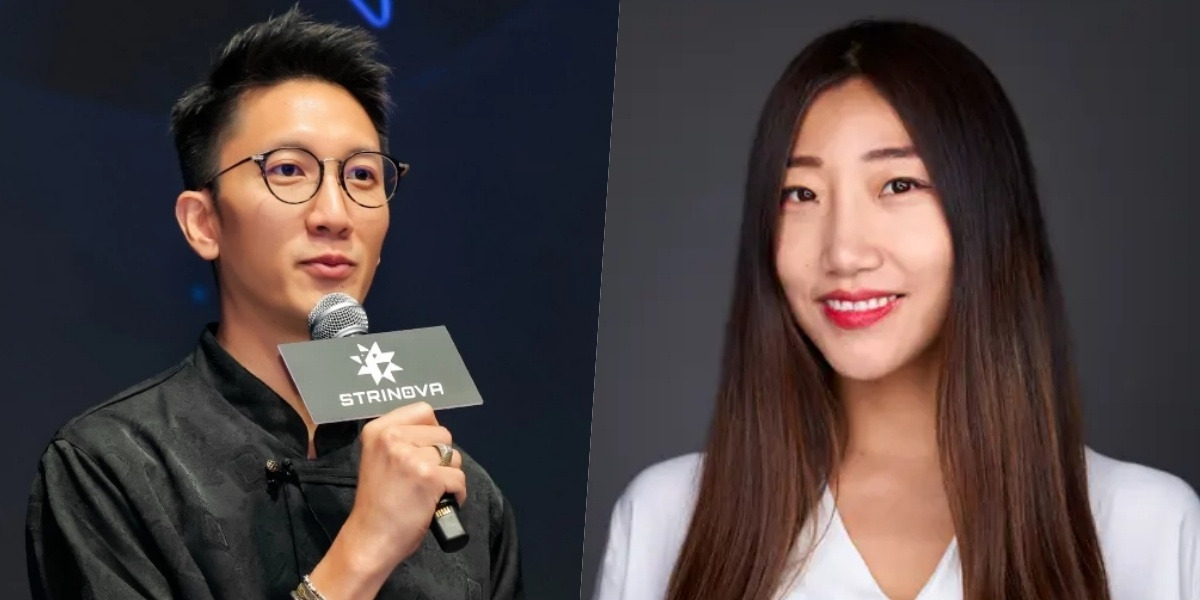
Jeff Lyndon, co-founder of XDream Robotics, describes Chinese gaming companies’ adoption of artificial intelligence as a series of operational shifts beginning around 2023.
The first widespread application, he says, was image generation.
“I think one of the first AI applications was image generation – from concept art to ads, image generation has significantly reduced the reliance on artists.”
For studios expected to deliver frequent updates, image generation helped address a longstanding production bottleneck. Concept artists had previously been required to produce much of the material needed before teams could test new content and advertising ideas.
“With image generation, game studios are able to quickly test a massive amount of content and ad ideas and apply them down to production and operation.”
Large language models were adopted next, particularly in customer service and the management of fan communities. Lyndon says many Chinese teams now use AI bots to handle work that previously required substantially larger support teams.
“Customer service has scaled down by more than 50% because of AI.”
That claim illustrates one of the central tensions surrounding adoption. The technology can allow companies to support larger player communities, but it may also reduce the number of employees required to operate those services.
Lyndon says similar capabilities are also becoming available to companies that previously could not afford the kinds of systems used by China’s largest publishers.
“Honor of Kings is a good example of how good AI bots can maintain a good player ecosystem. But this tech was always far out of reach for other players in the market – only Tencent or the bigger whales had it. Now, with AI, this is no longer an unachievable capability for most companies,” he says.
AI enters the advertising operation
Advertising is another area in which Chinese gaming companies are transferring work from individual specialists into automated systems.
Lyndon says experienced advertising buyers have traditionally held considerable influence because campaign performance could depend heavily on their judgement. Their value also made them frequent targets for recruitment by competing companies.
Artificial intelligence reduces that dependency by allowing companies to train systems on advertising performance and player data.
“This job is now heavily redistributed to AI, to reduce the risk of your ad buyer being poached.”
The production of advertising materials is changing alongside campaign management. Artificial-intelligence video tools allow companies to create and test more versions of an advertisement without commissioning each one separately.
“Now AI is taking over that part of the job, creating a massive amount of video every day for A/B testing.”
The lower production cost also allows companies to target smaller groups of prospective players.
“To the point where we can have one ad specifically targeted to convert a very small subset of players – which, before AI, the ROI wouldn’t have made sense for.”
One operator, multiple AI agents
Phoena Pang, VP of Americas and global partnerships at Mintegral, says automation is changing the composition of user-acquisition teams.
“Where you might previously have required a full user acquisition team, it’s now just a single operator. The role shifts from execution to orchestration,” she says. Behind that shift is a specific architecture: “We’ve designed a multi-agent system. One agent focuses on a specific task, another checks the output, another handles quality control. For more complex tasks, we introduce a planning layer, responsible for breaking the work down and distributing it across multiple specialised agents.”
Fraud detection is the other side of that same scale. “This is something we’re actively exploring and investing in – utilising AI to identify fraudulent traffic in our network. The challenge is that the companies generating it are also using AI, so it’s an ongoing game of cat and mouse,” Pang says.
She also confirms, from outside China, one detail that shapes everything else in this piece: “ChatGPT or Gemini aren’t easily available in China without workarounds, which create an additional barrier. Teams will ultimately need to use a mix of models depending on the task – local options for cost and accessibility, and international ones when they need broader capabilities.”
The staffing question
The most commercially consequential application may be workforce reduction.
According to Lyndon, companies are using artificial intelligence either to maintain output with fewer employees or to improve performance without expanding their teams.
He says that “most Chinese studios have either cut back 20-40% of staffing in Live Ops to achieve the same performance, or they didn’t cut back on staffing but gained a 20-40% performance boost with AI.”
Lyndon believes staff reductions have become the more common outcome because growth in the wider gaming market has slowed and companies are under pressure to improve profit margins.
His figures represent his observations rather than independently verified industry-wide data. They should therefore be understood as an attributed assessment, not as a definitive measure of employment changes across China’s gaming sector.

Why Chinese companies move quickly
Tom Van Dam, VP of business development at Avia, argues that the pace of adoption reflects a broader commercial mindset.
“To understand AI in Chinese game companies, you must first understand the local companies’ core DNA, which I’ll describe with a famous quote ‘Victorious warriors win first and then go to war, while defeated warriors go to war first and then seek to win.’ To win is to succeed in the games business, and if you don’t succeed, it won’t matter how you didn’t use AI.”
Bo Mei, founder of GoodDay Solution, similarly sees willingness to deploy and test AI in real production environments as an important distinction.
“Where I think China is genuinely ahead is the mindset. Having worked closely with game teams in both China and the West, I find that Chinese game companies are generally more willing to put AI into real development. They often pursue two goals in parallel: shortening production time and lowering costs (降本增效 in Chinese), while also testing features like AI NPCs, companions and generated worlds to see if those ‘new elements’ can create new kinds of player experiences.”
Access to open-weight domestic models has also reduced the cost of experimentation.
“Another advantage I would say is openness. DeepSeek, Qwen and Hunyuan have made capable open-weight models widely available, while game-specific projects such as Hunyuan-GameCraft and HunyuanWorld have released both code and model weights. This means teams can start experimenting without having to build everything from scratch.”
Continue the AI conversation at PGC Summit Shanghai – tickets are here.