‘What’s your salary? I told him, and he said no problem, we’ll double. And those days are gone:’ Listening to game dev legends reminiscing in 1989 about the ‘golden days of computer games’ already being over is a trip
AdminApril 1, 2026
Recently uncovered cassette tape recordings of the 1989 Computer Game Developers Conference reveal how much has changed in the games industry in the last 40 years, as well as how much has stayed the same. Decades ago, Origin Systems’ Robert Garriott was already worried about the PC gaming market being oversaturated, even when a mere fraction of today’s game volume was releasing every year. And nostalgia’s pull was seemingly just as powerful in 1989 as it is in 2026, as one of the panels at the conference, titled The Golden Days of Computer Games, was asking attendees to “Return with us to the thrilling days of yesteryear (about 10 years ago).”
Steve Cartwright, an early Activision employee whose design credits include games like Seaquest and Aliens: The Computer Game, talked about getting his start in the industry in the early 1980s thanks to Activision co-founder David Crane. While the first half of the anecdote feels completely foreign today, I have a feeling the last line will hit home for most current game developers:
“I called up a friend of mine from school named Dave Crane. I said, Dave, want to go out for lunch or something? Go out, see a movie, hang out together. He said, ‘how would you like to be a game designer?’ Dave had just started a little company called Activision. I said, Dave, I don’t know anything about designing games. You should get somebody with some experience. He said, ‘there is nobody with experience.’
Article continues below
“I said, Dave, I don’t know anything about programming. He said, ‘it’s a 6502, you only need to know four instructions.’ I said, I don’t know, Dave, I just got a job at an engineering firm. I’m working on the design of a power supply, got a couple technicians working for me. I got a big raise. I don’t think you can match my salary. He said, ‘what’s your salary?’ I told him. He said, ‘no problem, we’ll double it.’ And, uh, those days are gone. I don’t know if the rest of the world has caught up to us or we’re vastly underpaid, but it’s not like that anymore.”
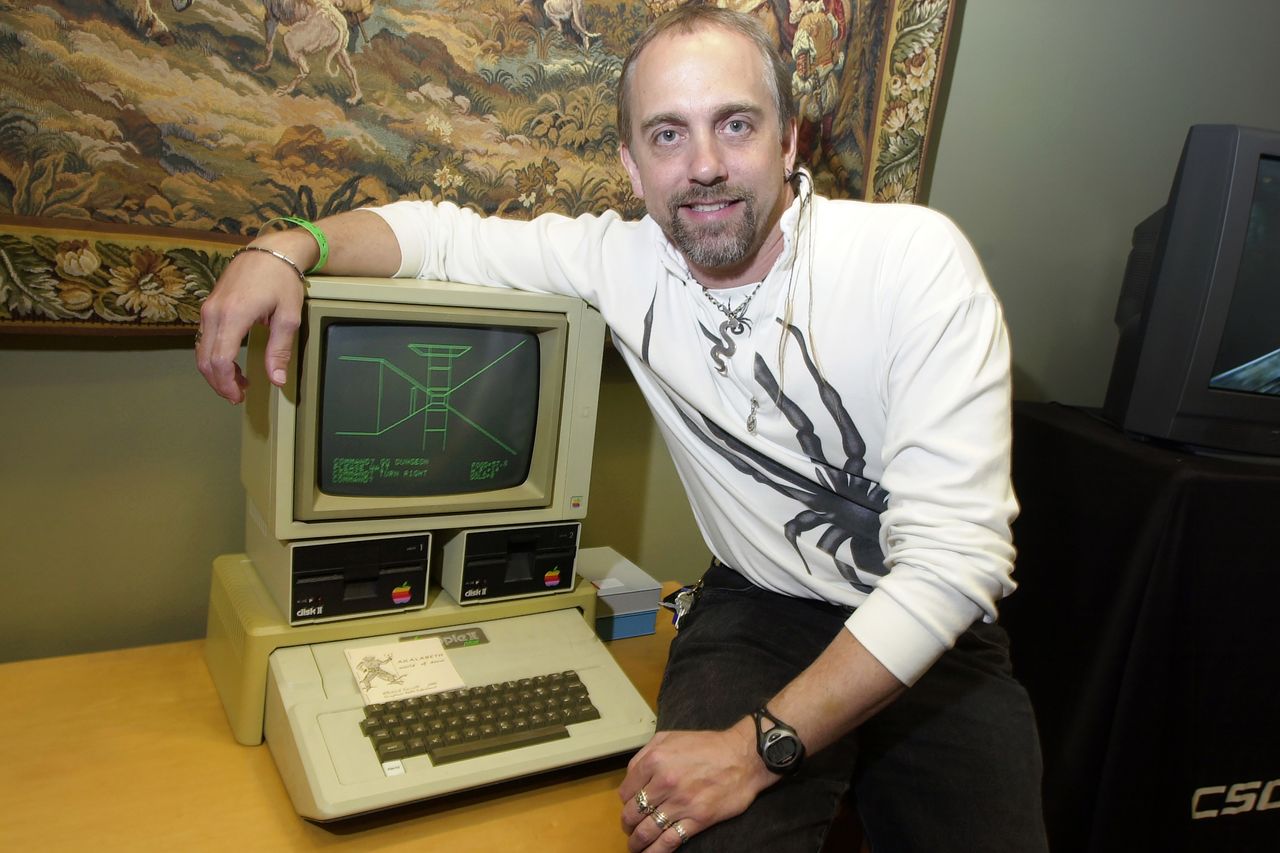
Ultima designer Richard Garriott, also on the panel, talked about the early days of selling his games in ziploc bags, and how publishers would say “forget it and close the doors” when he told them he wanted to sell the game in a box with a cloth map and detailed instruction booklets. That is, until he met Sierra On-Line’s Ken Williams, who went along with the idea to great success.
When someone in the audience asked what the PC games industry had lost since the “golden days,” M.U.L.E. designer Danielle Bunten Berry said that “I think we’ve lost the sense that we can do anything we want to.”
“My experience with publishers at this point is there’s an awful lot of ‘the market wants’ or ‘the market doesn’t want’ that wasn’t there in the early days. Then it sort of was ‘hey, that’s cool, let’s do it!’ It was much more product-oriented, much less market-oriented.”
Keep up to date with the most important stories and the best deals, as picked by the PC Gamer team.
My favorite question, though, from here in the far-flung future, goes to the person who asked what each designer would give as a piece of advice there in 1989 that everyone could look back on in 5-10 years while wondering what those good old days were all about.
“That is a very tough question,” Garriott said after a round of laughter in the room. “My personal vantage point is to really observe what is happening in the industry, in the sense of the ‘one programmer, one product, one closet, one computer, one game days’ are gone… that is not the prevalent system anymore. In this day and age, specialization is absolutely required, particularly for larger scale, epic products. … Understanding what kind of a team is for producing the game and what kind of a team can publish that game successfully—because marketing is now at least as important as the product in this day and age, probably moreso unfortunately—watching that carefully, as it will keep changing in the future, is the only way you’ll survive.”
That’s a pretty clear view of the arc of the big budget games industry over the coming decades, though thankfully modern indie development has shown it’s still possible for solo developers or small teams to produce some of PC gaming’s biggest hits.
You can listen to the whole panel recording thanks the Video Game History Foundation.
We use cookies on our website to give you the most relevant experience by remembering your preferences and repeat visits. By clicking “Accept All”, you consent to the use of ALL the cookies. However, you may visit "Cookie Settings" to provide a controlled consent.
This website uses cookies to improve your experience while you navigate through the website. Out of these, the cookies that are categorized as necessary are stored on your browser as they are essential for the working of basic functionalities of the website. We also use third-party cookies that help us analyze and understand how you use this website. These cookies will be stored in your browser only with your consent. You also have the option to opt-out of these cookies. But opting out of some of these cookies may affect your browsing experience.
Necessary cookies are absolutely essential for the website to function properly. These cookies ensure basic functionalities and security features of the website, anonymously.
Cookie
Duration
Description
cookielawinfo-checkbox-analytics
11 months
This cookie is set by GDPR Cookie Consent plugin. The cookie is used to store the user consent for the cookies in the category "Analytics".
cookielawinfo-checkbox-functional
11 months
The cookie is set by GDPR cookie consent to record the user consent for the cookies in the category "Functional".
cookielawinfo-checkbox-necessary
11 months
This cookie is set by GDPR Cookie Consent plugin. The cookies is used to store the user consent for the cookies in the category "Necessary".
cookielawinfo-checkbox-others
11 months
This cookie is set by GDPR Cookie Consent plugin. The cookie is used to store the user consent for the cookies in the category "Other.
cookielawinfo-checkbox-performance
11 months
This cookie is set by GDPR Cookie Consent plugin. The cookie is used to store the user consent for the cookies in the category "Performance".
viewed_cookie_policy
11 months
The cookie is set by the GDPR Cookie Consent plugin and is used to store whether or not user has consented to the use of cookies. It does not store any personal data.
Functional cookies help to perform certain functionalities like sharing the content of the website on social media platforms, collect feedbacks, and other third-party features.
Performance cookies are used to understand and analyze the key performance indexes of the website which helps in delivering a better user experience for the visitors.
Analytical cookies are used to understand how visitors interact with the website. These cookies help provide information on metrics the number of visitors, bounce rate, traffic source, etc.
Advertisement cookies are used to provide visitors with relevant ads and marketing campaigns. These cookies track visitors across websites and collect information to provide customized ads.