The UK Gambling Market: Regulation, Responsible Play and Online Slots
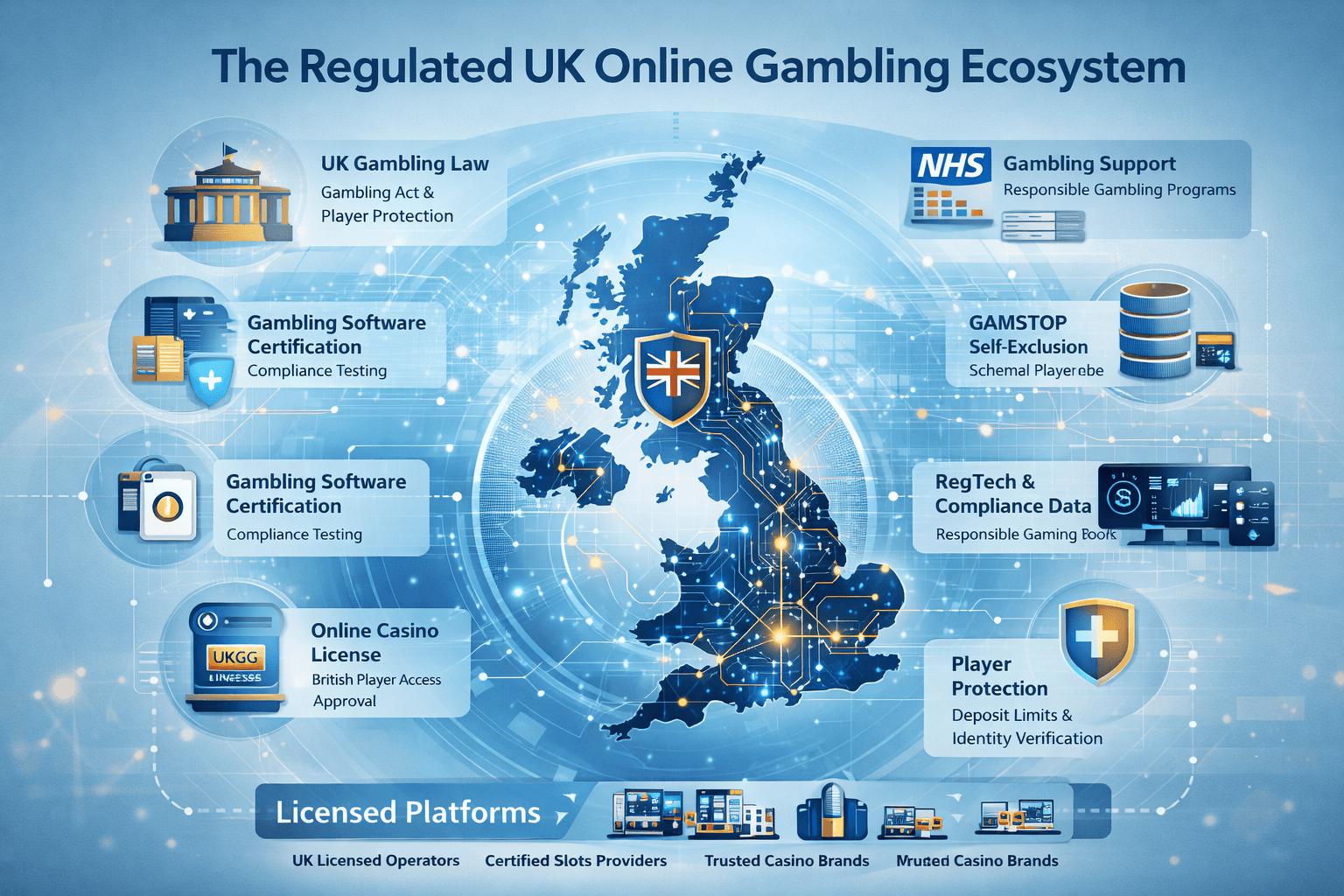
The United Kingdom boasts a regulated online gambling industry overseen by the UK Gambling Commission (UKGC). As a national regulator, the UKGC licenses operators, audits gaming software, and enforces player protection laws. An online casino UK that accepts British players must hold a UKGC licence under the Gambling (Licensing and Advertising) Act 2014. UKGC’s regulations now shape almost every part of online casino design. New online slots UK follow strict product standards, with wagering limits effective as of 2023. Players aged 18-24 years can’t bet more than £2 per cycle, while it’s £5 for players aged 25+. Features like autoplay and turbo spin are banned. Player protection rules have expanded in recent years. All operators must verify player identity before allowing deposits or gameplay, including both established and new online slots UK sites. Gaming sites are required to offer deposit limits, session reminders, and time-out tools to support responsible gambling. National self-exclusion is managed by GAMSTOP, which blocks registered players from licensed casino sites. Our UKGC regulatory system insights cover slot mechanics, casino software, and compliance rules governing British online casinos in 2026. The industry is seeing a significant shift toward transparency, driven by the adoption of regulatory technology (RegTech).
The article was prepared by an independent UK online slots platform with a huge library of reviews such as trusted casino brands, providers, and games.
This progress is most evident when comparing verified data on and against legacy standards, marking a transition from aggressive bonuses to a model built on data-driven safety and verified fair play. It’s no longer about aggressive bonuses and quick gameplay, but about ensuring a sustainable and transparent environment for all participants.
The Core Authority: UKGC and New Slot Sites UK
Regulation of online casino sites in Great Britain is overseen by the UK Gambling Commission (UKGC). The regulator licences operators authorised to provide legal gambling services to players in the UK. Obtaining regulatory approval requires certified gambling software, business audits, and compliance with consumer protection law. Legal standards derive from the Gambling Act 2005 plus the Gambling (Licensing and Advertising) Act 2014. The complexity of these rules has led to a rise in independent market analysis, helping players navigate the differences between various licensed platforms. According to the official gambling reform reports, the focus remains on ensuring that the digital transition of the industry does not compromise the safety of vulnerable participants.
Licensing Requirements for New Slot Sites
New slot sites UK face demanding entry requirements to obtain a UKGC licence. The application requires submission of ownership records, financial records, compliance plans, and software test reports. UKGC-approved testing labs check slot algorithms, payout structures, and system security. Random Number Generator (RNG) results must match declared mathematical models, and Return-to-Player (RTP) should be transparent for all new slots in the UK. Web systems undergo rigorous security reviews. UKGC examines payment processing channels, data encryption, and player account protection tools. Other aspects under review include internal risk controls, complaint handling, and customer support processes. The best new slot sites UK meet all requirements satisfactorily. Weak compliance can delay approval or prevent licence issuance entirely.
AML Monitoring/Consumer Protection
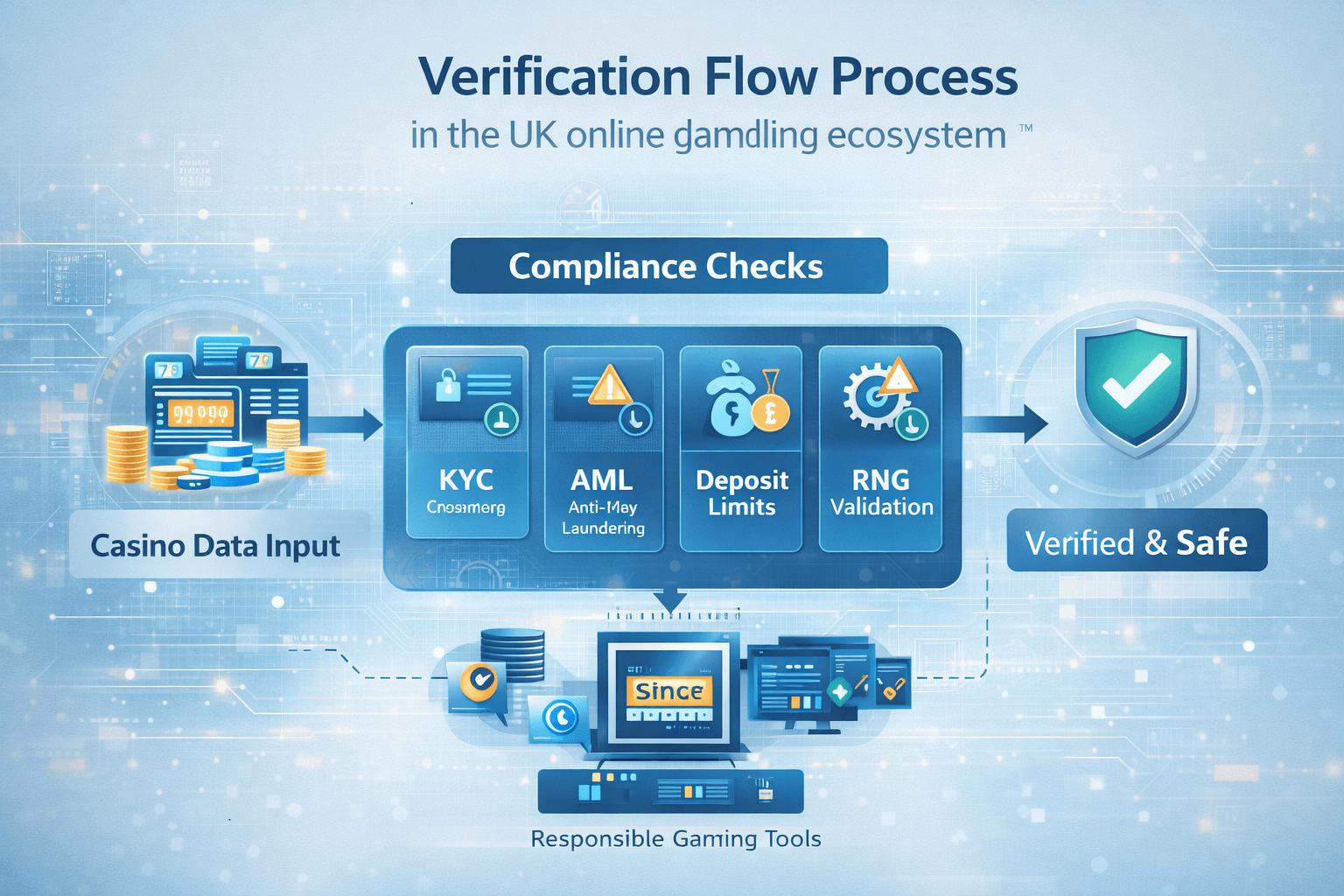
UK online casinos must verify player identity as part of anti-money laundering (AML) and Know Your Customer (KYC) standards. Verification is automated during registration, but players may still be required to upload documents manually on new online slot sites. Operators track deposit, wagering, and withdrawal transactions, and any questionable activity is reported to the National Crime Agency through Suspicious Activity Reports. All procedures align with the UK’s anti-money-laundering rules. Defaulting operators face hefty financial penalties, amounting to multi-million-pound sums. In 2022, the UKGC fined 88 UK Limited £9.4 million after an investigation revealed failures in relation to self-excluded players. Similarly, a report on William Hill Group resulted in a £19.2 million penalty for AML weaknesses and social responsibility breaches. Both are major companies in the UK’s online gambling industry. Licence suspension is the strongest possible sanction. UKGC can order an online casino to cease operations immediately following significant compliance failures, removing the platform’s access to the British gambling market. New online slots sites that have received such revocation find it challenging to return to the industry without making monumental improvements. Subsequent assessment by the UKGC will be more rigorous and extensive before reapproval.
Responsible Gambling Protocols and Deposit Limits
Safe gaming rules within UK online casinos shifted from reactive control to proactive monitoring. The UKGC requires operators to implement built-in protection systems before real-money play is permitted. Responsible gaming systems operate inside a casino’s backend architecture rather than simple front-end settings, which players can bypass. Integration occurs through automated API connections linking gaming software to national protection services, and the following tools are mandatory for brand new slot sites in the UK.
Deposit Limits
New online slot sites UK must offer customisable deposit-limit tools to help players control their spending. UKGC’s standards mandate deposit limits during account registration and at any time later via profile settings. Limits fall into three specific intervals: daily, weekly, and monthly. Each features a fixed maximum amount, and a player can assign some or all of it. Once deposit limits activate, UKGC-licensed online casinos block payments above the specified threshold. Gaming systems can’t raise limits instantly, as UKGC regulations require a brief delay before a higher limit takes effect. In contrast, adjustments to lower thresholds apply immediately after submission. Deposit limit tools connect with casino cashier systems through backend controls. Payment methods and transaction databases reference the threshold before approving deposits at any new online slots UK platform.
Reality Check & Session Monitoring
Casino platforms employ reality checks as another mandatory control layer. The sites track session duration using software once gameplay begins. After fixed intervals (30 or 60 minutes), they send players a notification. The notification shows the time spent gambling and the total money spent during that session, offering real-time insights into gameplay. Play only continues after players confirm the message on new slot sites in the UK.
GamStop Synchronisation
National self-exclusion for British players works through GAMSTOP. All brand new slot sites UK must connect to the service’s database before obtaining UKGC approval or licensing. Registering with GAMSTOP blocks access to all regulated online gaming sites for a specified period. Casino platforms query the database records automatically during account registration and login. A positive match forces account suspension.
How Mobile Billing Supports Responsible Play
Mobile carrier billing ranks among the most-used payment methods at UK online casinos. Mobile billing charges deposits to players’ mobile phone bills, not a debit card or bank account. They add another layer of responsible gambling for British players by requiring telecom operators to enforce strict transaction limits. Everything still corresponds with UKGC standards involving player protection protocols for new online slots. UK telecom providers such as EE and O2 apply a £30 daily limit to most slots pay by phone bill payments. Deposit attempts exceeding the amount won’t work, as the limit is hard-coded in the telecom billing system. Casinos can’t bypass the threshold, since it’s not built into their software. Players can’t increase spending limits, so telecom caps reduce the risk of impulsive deposits during losing sessions. Mobile payment casino systems integrate with telecom services via secure gateways. When players choose mobile billing, the transaction request routes through network providers for confirmation. Network providers check available billing balances and users’ identities before approving or declining the payment. If daily spending already reaches the £30 threshold, telecoms cancel the deposit. When combined with deposit limits, reality checks, and national self-exclusion systems, the UK’s gambling market ranks among the safest worldwide.
Strict Age Verification for Free Slots UK
UK online gambling regulations now prohibit anonymous demo play on free slots UK. Licensed sites must verify players’ ages and identities before they can access even a virtual balance, indicating tight controls. Per UKGC standards, KYC checks are mandatory for every player, eliminating the possibility of no-registration play on licensed platforms.
Full KYC Requirement
During registration, UK online casinos collect government-issued ID details such as name, date of birth, address, and phone number. Verification systems cross-check KYC details in real time when a player submits their sign-up form. Operators who skip the KYC step breach UKGC regulations, resulting in fines or license withdrawals. Once verified, the player can then access UK slots free in demo mode or deposit to play real-money slots. Failed automated verification means the user must upload KYC documents manually.
Protecting Minors
The primary goal of mandatory verification is to prevent underage UK players from gambling. Games, in demo or real money mode, only appear if a person is confirmed to be at least 18 years old. Protecting minors eliminates loopholes that previously allowed them to spin free online slots in the UK without financial risk. Even if the purpose is to learn game mechanics or have fun, the UKGC’s rules classify it as unsafe for underage players. Verification systems integrate into online casinos’ backend. Starting sessions, activating payment methods, or launching games all depend on successful KYC confirmation. Attempts to bypass verification automatically block access to the site and send compliance alerts. Responsible gaming systems link to national self-exclusion and AML databases, so protection applies across different account activities on new online slot sites.
The Legal Status of Demo Slots UK
UKGC-compliant rules govern free demo slots. They must match real-money versions exactly, which means using the same software and math models. RNG outcomes, payouts, and volatility ratings shouldn’t change to maintain uniform odds. When players switch from demo mode to playing with GBP, nothing appears foreign. Operators can’t change odds or variance in demo slot games to attract players. Approved testing labs review the RNG sequences to confirm fairness and randomness, removing room for bias. If a site increases small wins or adds inconsistent jackpots in demo modes, it breaks UKGC rules. That results in fines or licence revocation. Another severe violation is using altered odds to make wins in free slot gameplay easier. Such practice is misleading because it gives users a false sense of how demo slots UK behave, which may create misleading expectations about gameplay outcomes. Players may then encounter a different experience when playing with real money. UKGC’s compliance standards ensure demo slots remain a medium for real practice.
Navigating UK Online Slots New Releases
UK online slots new releases reflect modern player protection standards. New slot titles can’t include features that encourage fast or high-risk gameplay, keeping players in control of their sessions.
Ban on Bonus Buy Features
Bonus Buy options let players purchase bonus rounds, such as free spins, at a multiple of their wager. Alternatively, a player would wait until they match Scatter symbols randomly to activate the bonus rounds. The UKGC classifies Bonus Buy as a high-risk feature and prohibits it on all licensed slots. Regulated operators must remove mechanisms that allow players to skip normal gameplay to access high-volatility content immediately in new slots in the UK.
Restriction on Auto-Play
New slots UK sites don’t include auto-play or auto-spin, which lets players spin automatically for consecutive rounds. UKGC’s regulations ban the features for safety reasons. Every spin in an online slot must be deliberate, not self-activating, to prevent loss of gameplay awareness. Auto-play restriction reduces time spent per session and slows down the increase in problem gambling.
Minimum Spin Speed
A 2.5-second minimum spin speed applies to all UK online slot titles. Fast slots are associated with higher risk-taking, which fosters problem gambling. Keeping the spin speed at a natural pace allows players to make conscious in-game decisions. Approved slot software developers hardcode a 2.5-second limit into their logic, so reels don’t move faster than players can keep up.
Certified Providers: Pragmatic Play Slots UK
Holding a valid UKGC licence, Pragmatic Play is a renowned casino slot provider. Many of the brand’s titles are available on UK casino sites, and the company adapts them for compliance. This developer’s portfolio highlights a commitment to mobile-first design, ensuring that even complex mechanics function smoothly on smaller screens. Pragmatic Play slots UK removes prohibited features such as Bonus Buy and auto-play/auto-spin, but the game mechanics and high-volatility math models don’t change. Examples are Gates of Olympus and Sweet Bonanza. Both support Bonus Buy internationally, but that button is unavailable on UK-licensed online casinos. Pragmatic Play slots UK approach means British players get the same experience as users in other markets without violating UKGC regulations. Multiple recognised labs test RNG systems, including Gaming Laboratories International (GLI) and BMM Testlabs. RNG certification implies that game results, payout percentages, plus volatility are fair.
Game Mechanics Permitted in the UK Market
Several modern slot mechanics, including Megaways and Cluster Pays, are permitted on UKGC-licensed casino platforms. They operate under strict rules mandating that all features function as tested before approval. To maintain total transparency, the technical standards for gaming software require that every mechanic is clearly explained to the user within the game’s help files. Regulations prevent mechanics in UK new online slots from bypassing existing spin speed limits, wagering thresholds, or other safety rules.
Megaways and Cluster Pays Mechanics
Megaways changes the number of symbols per reel each spin, creating up to 117,649 ways to win. Meanwhile, Cluster Pays replaces traditional paylines with groups of adjacent symbols for payouts. Both mechanics are volatile, which calls for full, precise regulatory audits on new slot games. Their volatility rating, hit frequency, and RTP must meet licensing requirements, and modifications that affect fairness are prohibited.
RNG and Server Side Synchronisation
All slot outcomes at licensed casinos rely on a server-side RNG to ensure randomness, including both real-money titles and the best free slot games. Server-side RNG means that software providers generate spin results on secure servers, not the player’s device, so there’s no chance of tampering and outcome probabilities remain legitimate.
Identifying Safe and Legal UK Casino Platforms
Before registering with new online slot sites, UK players must verify their safety and legal status. We advise using our checklist below to confirm:
-
Valid UKGC Licence: Check licences on UKGC’s public register, not just the online casino footer section. Only listed gaming sites are legally allowed to offer games in Great Britain.
-
SSL Encryption: Protects data in transit from third parties, so it’s essential for security. Look for HTTPS in the URL and padlock icons to confirm.
-
Transparent RTP: Regulated online casinos must publish their RTP percentages for all slots and table games. It reflects fairness, confirming that slots follow approved math models. Average RTP rates in the UK’s gambling industry are 95-97%.
-
Open Banking API Integration: Platforms that use Open Banking enable instant ID verification and compliance checks during registration. They facilitate secure deposit/withdrawal transactions with encryption to prevent fraud.
-
RNG Certification: Check for lab tests for RNG systems at potential UK online casinos. Independent bodies must use certifications that comply with UKGC standards.
-
Responsible Gambling Tools: A safe gaming site will offer deposit limits, session reminders, and reality-check tools. It’ll integrate GAMSTOP systems for national self-exclusion.
The Future Landscape of British iGaming Safety
Regulatory Technology (RegTech) reshapes UK online gambling in the coming years. In 2026, the best new slot sites are experimenting with AI-driven systems to monitor player behaviour in real-time. Algorithms track session length, bet amounts, and loss patterns to trigger reality checks when signs of a problem appear. When issues get identified early, they’re easier to resolve. AI systems could support automated safety tools, such as personalised daily limits and cooling-off periods. A player may be able to assign limits to their account with simple prompts. Artificial Intelligence can handle account suspensions by analysing millions of data points in real-time. That eliminates manual work, which consumes more time and energy for casino staff. UKGC’s commitment to online gaming safety sets the country’s market as a global benchmark. Many regions now look up to the UK’s regulatory models for casino sites and new slots. As RegTech advances in 2026, British iGaming will become fairer, more transparent, and safer for players. It shows that a technology-based approach supports a sustainable and responsible online gambling industry.