Review: Pokémon Pokopia (Nintendo Switch 2)
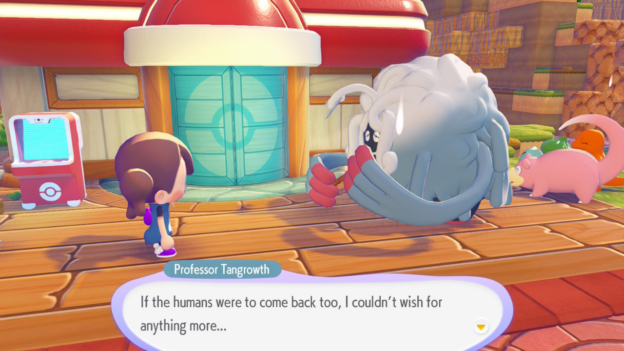
Pokémon Pokopia is a simulation title developed by Omega Force and published by Nintendo. If you enjoy virtual life sims and Pokémon, then this title won’t disappoint. However, you can still enjoy this game without knowing too much about Pokémon.
I’m a Pokémon fanatic and I also love simulation games that are low-key and cozy. While business simulations have a hold on me, Pokémon Pokopia doesn’t involve the goal to make money and budget. It’s all about survival–figuratively and literally.
You play as Ditto, who transforms into what they remember their trainer looking like. The game opens with Ditto waking from the PC and all the humans on Earth have disappeared. Thankfully, with the guidance of Professor Tangrowth, Ditto isn’t quite as alone in the desolate area of what seems to be the Kanto region. All of the Pokémon have seemed to disappear as well, but as Ditto is able to bring life back to the town, Pokémon begin to come back. Together, they rally to rebuild the town in hopes that humans will also come home. It’s a wholesome tale, albeit a little sad, but in a bittersweet sort of way.
The main plot is to figure out what happened to the humans to entice them back home. As you play the game and explore more areas, Ditto will find various “human records” and you’ll slowly be able to piece together the puzzle of what happened to the beloved region and the humans.
Human records are but one of the many items you can collect in this game. Ditto can also find CDs, fossils, decorations, and even artifacts. Artifacts are items that Pokémon fans will recognize as soon as Professor Tangrowth identifies the item for Ditto. All of these items are used to bring back some Pokémon and decorate the many areas to increase their respective environment level.
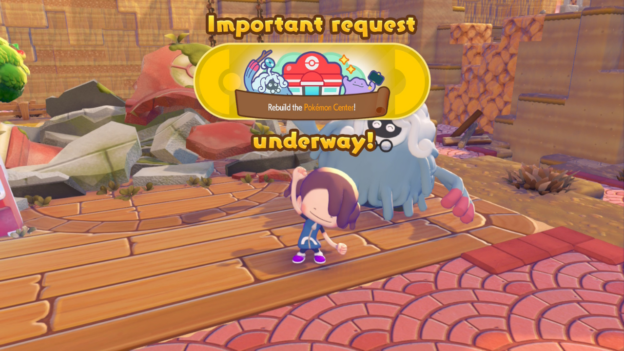
Pokémon Pokopia is a vast game with a total of six territories to explore, but only five of those areas carry the storyline. Each part of the region allows further exploration, additional Pokémon to befriend, new power-ups to learn, and more items to discover. Each zone is “complete” by the story’s standard when the Pokémon Center is rebuilt and the place reaches environment level five.
Increasing the environment level is the main point of the gameplay. It means rebuilding the area and is done by doing just about anything in the game. For example, rebuilding the town from terraforming, fixing roads, and adding buildings and decor. Also, creating habitats and adding more Pokémon to the area increases the environment level.
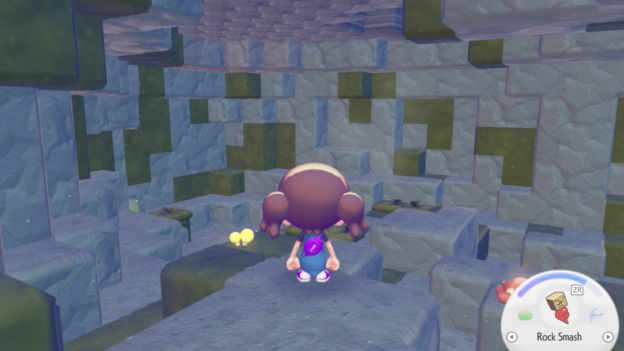
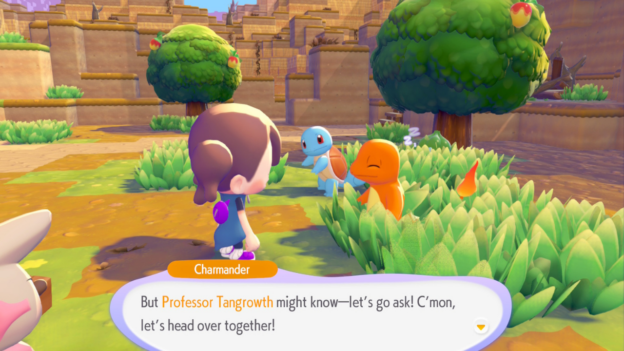
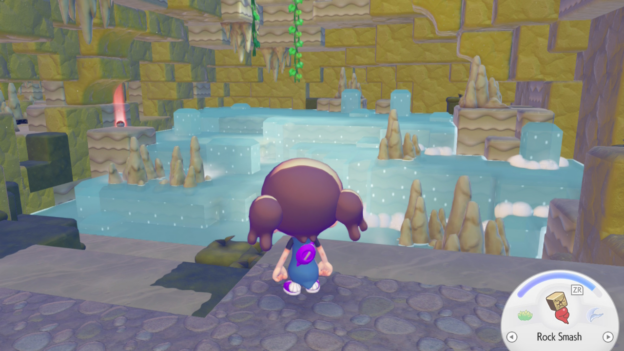
First, let’s talk about Ditto’s power-ups. This adorable pink blob has trouble fully transforming into other Pokémon, but they can take on certain powers if another Pokémon teaches them. For example, Squirtle teaches Ditto Water Gun, which helps add humidity to the area and allows you to water the grass, flowers, trees, and farm to bring them back to life. Bulbasaur teaches Leafage to add patches of grass, Hitmonchan teaches Rock Smash to help knock down walls and terraform. There’s a lot more Ditto can learn to help liven the place up a bit.
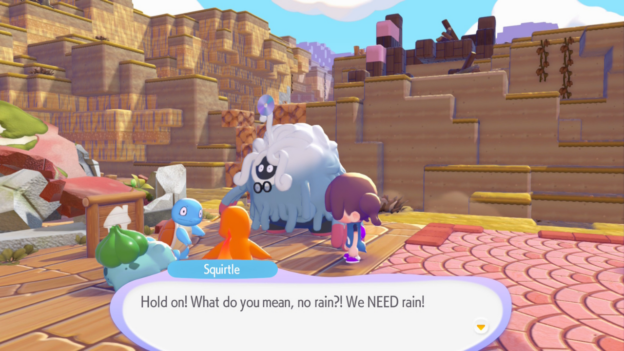
Not only do these power-ups help Ditto improve the quality of the area as a whole, but they can also help Ditto create habitats. Habitats are what draw new Pokémon into the zone. For example, using Leafage to create a two-by-two spot of tall grass is simply called a Tall Grass habitat, which can be home to Bulbasaur, Squirtle, and four other types of Pokémon.
There are many other combinations of habitats, such as Hydrated Tall Grass (which is the two-by-two tall grass beside water), Shaded Tall Grass (which is the same but by a tree), and so much more. It’s not all tall grass, either. Habitats can be made from anything, including flowerbeds, trees, boulders, and many of the decor items.
One feature I love about Pokémon Pokopia is that this game follows a real-time clock. Some of the Pokémon will only appear during certain times of the day, and each day is broken up by morning, afternoon, evening, and night. The newer mainline Pokémon games don’t follow a real-world clock anymore, and it’s something I’ve missed. I always enjoyed eagerly waiting for nighttime to turn on my game and hope to find one specific Pokémon.
Ditto’s Pokédex contains a Habit Dex. When you learn a new habitat, it’ll show how many Pokémon can be found in that habitat, their rarity, and what time of day and weather they’ll show up. Based upon the Pokémon you might already have in the game, it’s sort of like a puzzle to figure out who might show up next, and it’s always a delightful surprise no matter who it is.
There are about 300 Pokémon in the game to befriend, but only about thirty can appear in an area at a time. If you have more than thirty Pokémon in one zone, some at random will despawn. I learned this the hard way when I couldn’t find a certain Pokémon, only to then realize I hadn’t seen a few others for a couple of days. I had to defer to the Internet to see what was going on.
Honestly, this was my one downside to Pokémon Pokopia. If I’m allowed to have 300 Pokémon roaming around, I want to have access to all of them and watch them interact. The game runs so smoothly on the Nintendo Switch 2 and the controls are super simple to navigate. I have not come across any hiccups or lags. So, why can’t I have all 300 Pokémon around?
Well, I assume it’s to help keep the game running as best as possible. I discovered that using honey in a Pokémon’s habitat will spawn them right back immediately. So, even if I can’t see them all at once, I can easily get certain ones back without hassle.
The graphics of Pokémon Pokopia are crisp and vivid, really showing off how adorable all of the Pokémon are. The music is serene and the Pokémon interact with each other and items around the area on their own. I sometimes have the game up as background music and enjoy watching the Pokémon roam around while I work.
Basically Pokémon Pokopia is cuteness overload. The many Pokémon you befriend are simply happy to be there and, even though they all miss the humans, they’re making the best of a lousy situation. You can play minigames with some of them, such as jump rope with Bulbasaur’s vine whip. Some decor are classified as toys, such as building blocks or a sandbox. I placed a sandbox down and the next thing I knew, there was a sandcastle built in it. Finally, while eavesdropping is frowned upon, you can listen in on their conversations. Listening to Machamp and Machoke boast about their muscles was hilarious.
Overall, I can’t recommend this game enough. It’s a perfect blend of Pokémon and Animal Crossing with a little bit of Minecraft mixed in. If you’re unfamiliar with Pokémon, but enjoy this style of game, you’ll still have fun with this title. Even though it follows the time of a real clock, there’s never a shortage of things to do in the game. Between the story, exploring, building, and collecting, there’s always something to do in Pokémon Pokopia.