Does Becky Lynch Actually Hate the Name ‘Becky Lynch’? Women’s Intercontinental Champion Explains Why She Prefers Rebecca Quinn
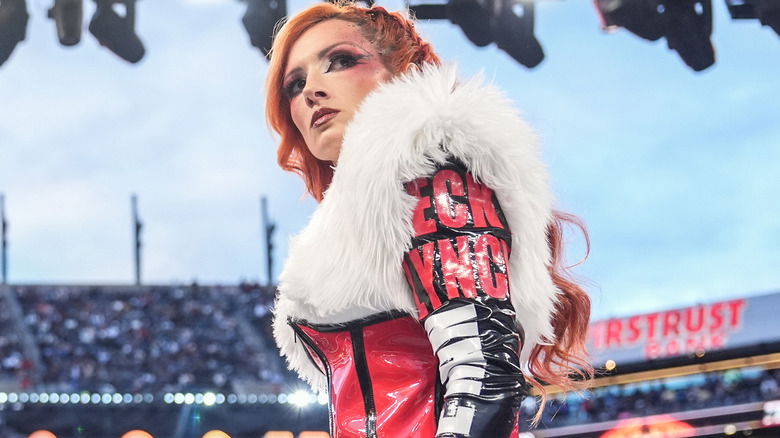
For more than a decade, “Becky Lynch” has been a brand.
It is the name attached to WrestleMania main events, record-breaking merchandise sales, and the Women’s Intercontinental Championship. It is the identity behind “The Man” and the swagger of “Big Time Becks.”
But behind the spotlight, the woman portraying that character has a different favorite name altogether.
While discussing her career alongside Seth Rollins, Lynch made an unexpected confession about her WWE persona. “I’m a big fan of a moniker because I hate my name,” she admitted. “I love Rebecca Quinn. Rebecca Quinn rocks. What a great name. Lynch, it just doesn’t roll off the tongue.”
That distinction is not just about phonetics. It speaks to the complicated relationship wrestlers often have with the names assigned to them once they sign with WWE.
According to Lynch, her ring name was not her first choice. Early in her run, she pitched alternatives she felt better represented her personality and heritage. “I was way more often on the chopping block,” she explained, referring to the uncertainty of her early WWE tenure. “So, I came up with names that I thought were super cool and then they kept saying no.”
Eventually, the company approved a hybrid approach that kept part of her real identity while attaching an Irish surname. “They just got like a combination of Becky and an Irish name and Lynch was one of the ones that they approved,” she said. “And I kind of wanted to keep a bit of my own name… I didn’t feel like I could push back. So I was just like, okay.”
For a performer who later transformed into one of WWE’s most influential stars, that early lack of leverage highlights how dramatically her standing has shifted. Today, “Becky Lynch” is synonymous with women’s wrestling at the highest level. At the time, however, it was simply the name that made it through the approval process.
Seth Rollins echoed that reality from his own experience. He revealed that WWE’s preference has long been to control every element of a superstar’s presentation, including ring names. Rollins attempted to bring his well-known independent identity, Tyler Black, into the company, believing it would benefit from existing fan recognition. The pitch was declined.
The philosophy is clear. WWE wants ownership over the intellectual property attached to its performers. That includes names, nicknames, and branding. While monikers like “The Man” or “The Visionary” enhance character work, the underlying legal framework ensures the company controls the commercial rights.
For Lynch, adopting monikers became a way to create distance from a name she never fully embraced. If “Becky Lynch” felt imposed, then “The Man” became self-defined. “Big Time Becks” allowed her to lean into reinvention. Each nickname gave her more agency within the confines of a corporate structure.
The broader implication is how identity functions in professional wrestling. A ring name can become larger than the person behind it, shaping legacy and marketability. At the same time, performers must navigate the reality that their most famous monikers may not fully belong to them.
Lynch’s comments do not diminish the power of the Becky Lynch brand. If anything, they reveal how much intentional effort went into transforming it. In an industry built on character ownership and brand control, the tension between Rebecca Quinn and Becky Lynch may be one of the most relatable aspects of her journey.