Is Tony Khan Too Focused on AEW Ratings? His Minute-By-Minute Obsession May Tell a Bigger Story
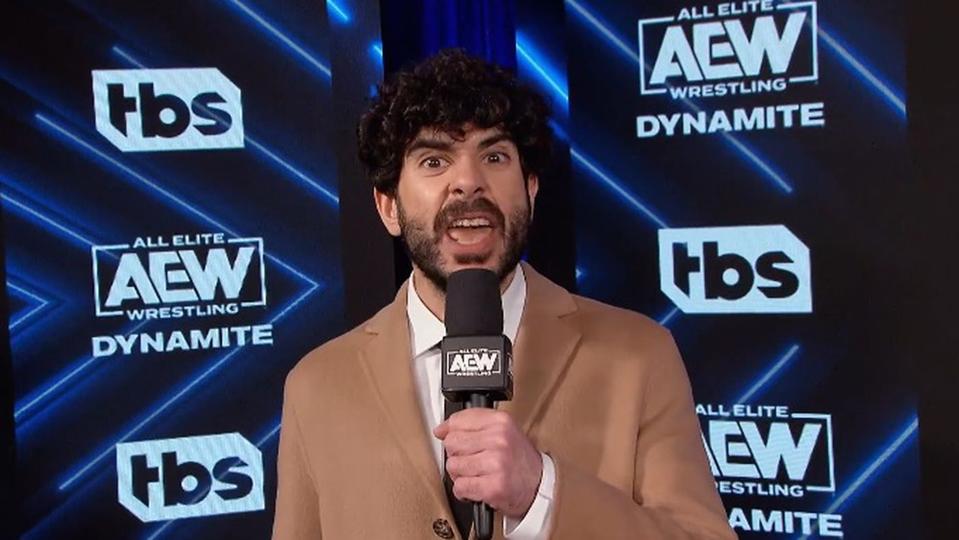
For years, critics have argued that Tony Khan books with one eye on the wrestling ring and the other on the ratings spreadsheet. Supporters counter that any promoter in modern television would do the same.
Now, Khan himself has given that debate new fuel.
As AEW’s flagship shows post their strongest numbers in months, the company president has openly acknowledged that he tracks viewership on a granular level, particularly for Dynamite. Not just overall averages. Not just quarterly breakdowns. Minute by minute.
“I’m obsessed with ‘Collision’ being a great wrestling show that the wrestling fans love,” Khan explained, while also addressing a perception among some viewers that Dynamite is the only essential watch. “I don’t want there to ever be a perception like even though I know some fans think that ‘Oh I can watch ‘Dynamite’ and I’ll get everything,’ that’s not the case.”
That comment reveals more than programming strategy. It underscores an ongoing identity battle within AEW itself. Dynamite remains the prime-time centerpiece. Collision, meanwhile, has been fighting to establish its own rhythm and audience since launch.
Khan’s framing suggests he views the shows as complementary rather than hierarchical. He wants fans evangelizing Collision as appointment viewing. “I hope for ‘Collision,’ people spread that virus with it and say like, ‘I love wrestling and you should watch this because they put so much great wrestling on.’”
At the same time, he admitted that Dynamite carries a different kind of pressure. “I think ‘Dynamite’ is that, but with that obsession of knowing that weeknight, prime time, minute by minute viewership is balanced with the great wrestling because there’s some of the best wrestling and best wrestling matches are on ‘Dynamite.’”
That “minute by minute” focus is not accidental language. It reflects how modern television deals are evaluated. Network partners scrutinize retention patterns, commercial quarter growth, and audience drop-off. For a company negotiating renewals and long-term stability, those metrics matter.
The timing of Khan’s comments is also notable. Over the past two weeks, Dynamite has drawn over 650,000 viewers per episode, marking its best stretch since September. Collision’s January 31 broadcast delivered its most-watched episode since Nielsen’s Big Date + Panel system was introduced, with last week producing the show’s second-highest rating of the year.
Those numbers give Khan leverage. But they also raise questions.
Is the creative direction being shaped by those minute-by-minute graphs? Are match placements, promo lengths, and surprise returns engineered primarily around retention spikes? In wrestling, where momentum and storytelling thrive on long arcs, that tension can be delicate.
From a business standpoint, Khan’s transparency signals accountability. He is not pretending ratings do not matter. From a creative standpoint, it reinforces the balancing act between delivering “great wrestling” and satisfying corporate analytics.
The broader implication is how wrestling promotions now operate in an era dominated by data. Gone are the days when a promoter could simply judge crowd reaction in the building. Today’s success is measured in live gates, streaming metrics, DVR adjustments, and digital engagement, all of which shape how talent is presented and how storylines are paced.
Khan’s admission does not confirm that AEW books solely for ratings. It does confirm that ratings remain central to his philosophy. As Dynamite and Collision attempt to carve distinct identities within the same brand ecosystem, that minute-by-minute obsession may be less about panic and more about precision.
In a crowded wrestling landscape, precision can be the difference between a hot quarter-hour and a cold product.