
Mara Sade Explains Why Her WWE Release Didn’t Stop Her Momentum
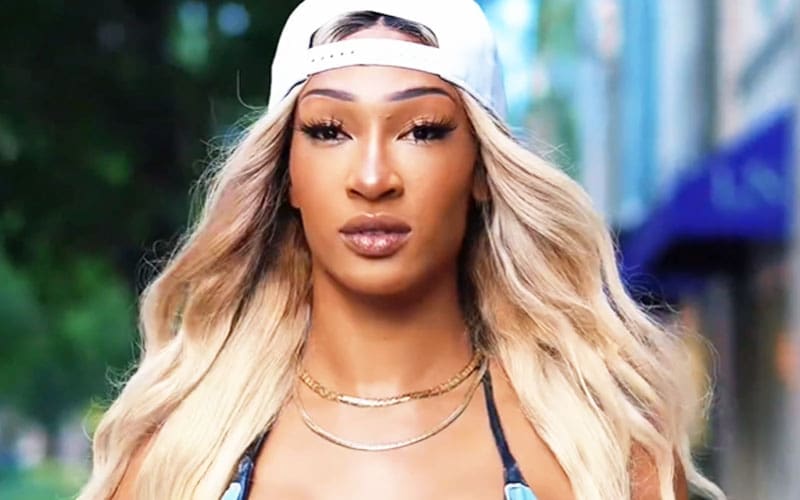
Wrestling releases are often framed as endings, especially when they arrive suddenly and without warning. Fans tend to assume the fallout is immediate discouragement or uncertainty, particularly for talent still early in their national television run. Mara Sade’s exit from WWE, however, complicates that narrative in a way that speaks to how modern wrestlers are increasingly prepared to pivot rather than pause.
The timing alone made the situation jarring. Within the span of days, Sade had worked WWE NXT Stand & Deliver and then crossed over to TNA Rebellion 2025. Shortly after, the call came that her WWE contract had been terminated. The moment hit hard, not because of wrestling, but because of real life colliding with it.
“It’s like anybody who gets a phone call that they lost their job, I was stuck for a second,” Sade recalled. She was in the middle of planning her niece’s birthday celebration when reality cut in. “I get this phone call and I’m like, ‘No way.’ I had to listen to myself and be like, alright, let me take a moment to feel these feels because I don’t feel good right now.”
Rather than rushing to put on a brave face, Sade allowed herself a brief pause. That choice, she explained, was intentional. “I took a day to myself. I let it all sink in and I let it be what it was,” she said, framing the release not as a failure, but as something that needed to be processed honestly before moving on.
What followed was not isolation, but connection. Friends and peers across the industry reached out, checking in and offering support. That outreach mattered. It reinforced that her value was not tied to a single contract or logo. With that reassurance, Sade began making calls of her own, treating the situation less like a setback and more like a transition period.
That approach paid off quickly. Less than three months after her release, Sade signed with TNA Wrestling, stepping into the Knockouts division with momentum still intact. At the same time, she continued to build visibility on the independent circuit, working for promotions such as Jersey Championship Wrestling and 4th Rope Wrestling. The throughline was activity, not retreat.
“I’m not just going to sit here and wallow in my sorrows,” Sade emphasized. “I’m gonna keep it moving because I’m a multifaceted woman. There’s nothing stopping me, so here we are.” The statement was not framed as defiance, but as self-definition.
Sade’s experience highlights a broader shift in how wrestlers navigate career volatility. With multiple platforms, promotions, and audiences available, releases no longer automatically signal disappearance. They often create redistribution. Talent that understands this can maintain relevance by staying visible, adaptable, and proactive.
In an industry where stability is never guaranteed, Sade’s response reflects a growing mindset among performers who view movement as part of the profession rather than a disruption of it. Her path since leaving WWE underscores how resilience and initiative increasingly matter as much as opportunity itself.