Natalya’s Latest Reinvention Raises a Bigger Question About Longevity in WWE
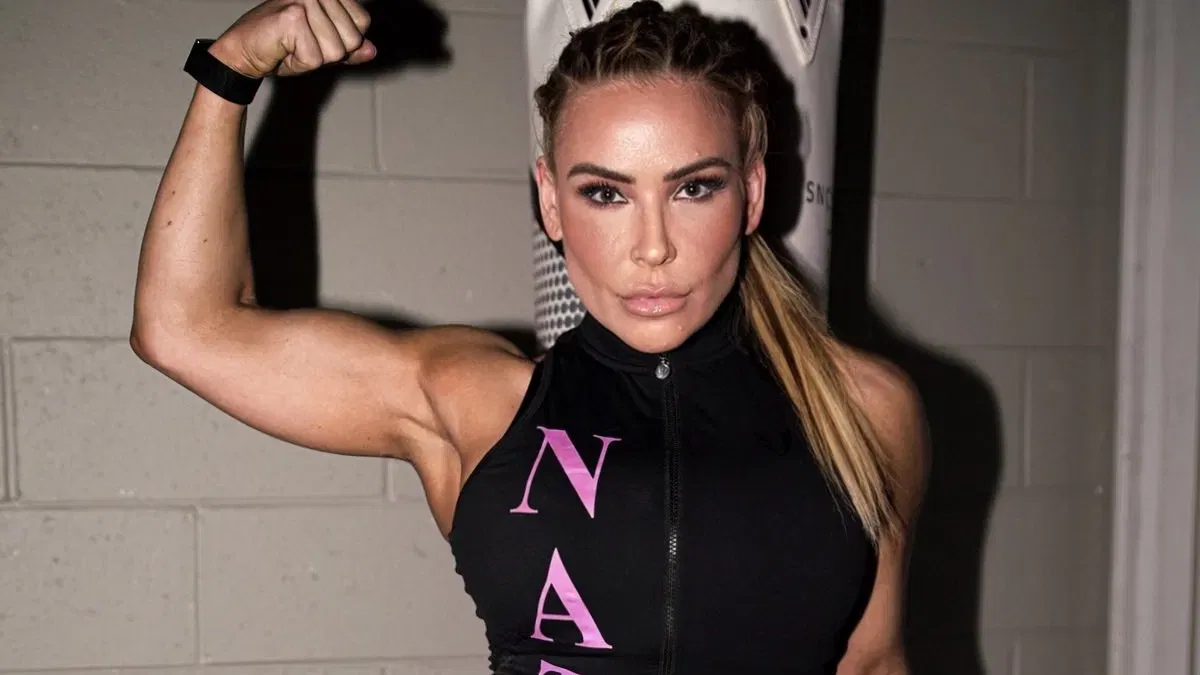
Few WWE careers spark as much quiet debate as Natalya’s. Fans often argue whether she has been underutilized, miscast, or simply overshadowed by louder personalities. What rarely gets questioned, however, is her durability and her willingness to adapt in an industry that routinely leaves veterans behind. That conversation has resurfaced following her recent heel turn on Raw and the sharper edge she began teasing on the independent scene last year.
For Natalya, the shift is not about desperation or chasing relevance. It is about refusing to settle into a version of herself that feels finished. While speaking about her current mindset, she framed her career less as a timeline and more as an ongoing choice. “I love my career, I love what I do, I love the people that I work for, and that I work with,” she explained, emphasizing her connection to the locker room and the process itself. “I’m just so grateful and lucky.”
What stands out is how firmly Natalya rejects the idea that time alone should dictate her role. Rather than scaling back, she stressed how physically capable she still feels. “My body feels incredible,” she noted, making it clear that her motivation is not nostalgia but momentum. That confidence has fueled her interest in projects beyond weekly television, including writing a book and pursuing creative outlets that exist alongside wrestling rather than replacing it.
Her philosophy traces back to lessons absorbed early in her WWE tenure. Natalya pointed to an internal standard that has shaped how she approaches reinvention. “Never get comfortable,” she recalled being told, adding that the mindset applies whether someone just had a career match or a forgettable night. “Don’t ever rest on your last match.” In her view, WWE’s longevity as a company is tied directly to that refusal to coast.
That outlook reframes her recent heel turn as something more intentional than a simple character tweak. Instead of signaling a final act, it reflects a veteran adjusting to a modern roster that demands constant evolution. Natalya described her career arc as a series of peaks and valleys that ultimately built resilience. “All those highs and lows, they’re part of my story and they’ve made me strong,” she said.
Within the larger wrestling landscape, Natalya’s comments tap into a growing discussion about how veterans remain valuable without becoming static. As younger talent cycles in faster than ever, longevity increasingly depends on adaptability rather than tenure alone. Wrestlers who continue to redefine their purpose can extend their relevance in ways that titles alone cannot.
Natalya’s current run may not yet have a clearly defined destination, but her mindset fits a broader trend among experienced performers who refuse to fade quietly. Rather than framing reinvention as a last stand, she treats it as a responsibility to herself and to the craft. In an industry that rewards constant motion, that approach may be as important as any storyline payoff.