Dragon Quest VII Reimagined Review – Review
The longest Dragon Quest is charmingly remastered and noticeably trimmed, but loses a bit of its heart in the process.
The announcement of 3DS remakes for Dragon Quest 7 and 8 was the motivator I needed to finally get into the long-running RPG series. Ahead of their 2016 and 2017 releases in the West, respectively, I would find my way to acquiring Dragon Quest 4 through 6 on DS, spending months on end in classic, turn-based heaven. After having finished each of these aforementioned titles, I was quite firmly in the camp of actually loving Fragments of the Forgotten Past, the seventh mainline Dragon Quest game. I have fond memories of putting that world back together and finding its individual stories and peoples quite endearing, to the point of feeling emotional during certain story moments. As a result, I was delighted by the sudden announcement of Dragon Quest 7 Reimagined, which comes on the heels of HD-2D remakes for the first three games in the series. While I adored basically all of the changes made to those remakes, I’m more lukewarm on Reimagined’s approach.
The premise of Dragon Quest 7 is that you are finding puzzle piece-like fragments that allow you to return to the past to rebuild the world of the present. It’s a fascinating conceit and presents a clear objective to the player up until you find all of the fragments. It isn’t until more than halfway through the game that a more central antagonist appears, and so the earlier proceedings can grow tedious as you rinse and repeat the collecting of fragments, opening up of new islands, and then solving typically a singular quest on each before returning to the present day. What this means is that it can feel like you’re going on dozens of hours of fetch quests before a more focused plight rears its head and compels you forward.
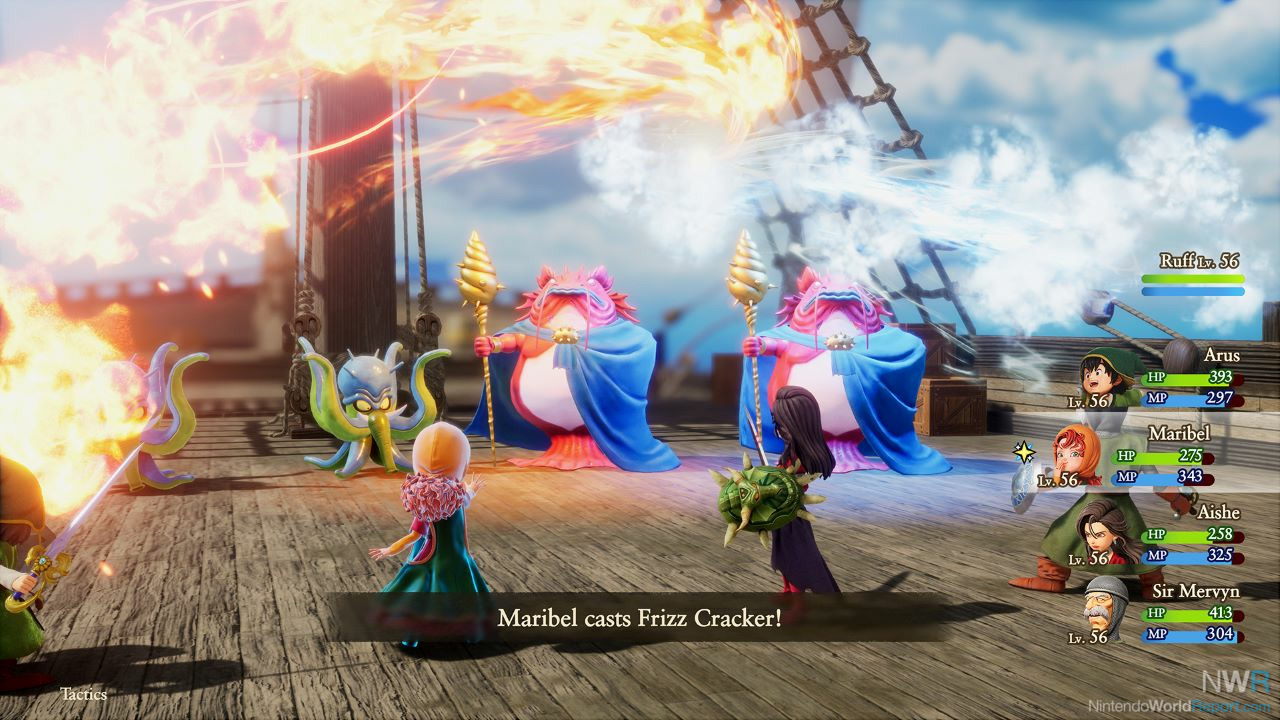
While most will certainly appreciate Reimagined’s streamlined approach to the structure of Dragon Quest 7, as someone more fond of the original than others, I do feel like part of its heart is missing. For sure, the addition of helpful mini-map markers to guide you towards fragments works quite well; the fact that it doesn’t take 20 hours to access the job system is undeniably a feather in the hero’s proverbial cap. The removal of The Haven, the casino, and a number of regions can be seen as trimming the fat, but I was somewhat put off by the sheer amount of streamlining. For reference, I reached the credits in under 30 hours, albeit without working my way through all of the optional content. I have to give partial credit here to the revamped battle system, which includes an automated feature that’s great for grinding or running through dungeons, and the speed-up options we’ve seen in more recent Dragon Quest releases.
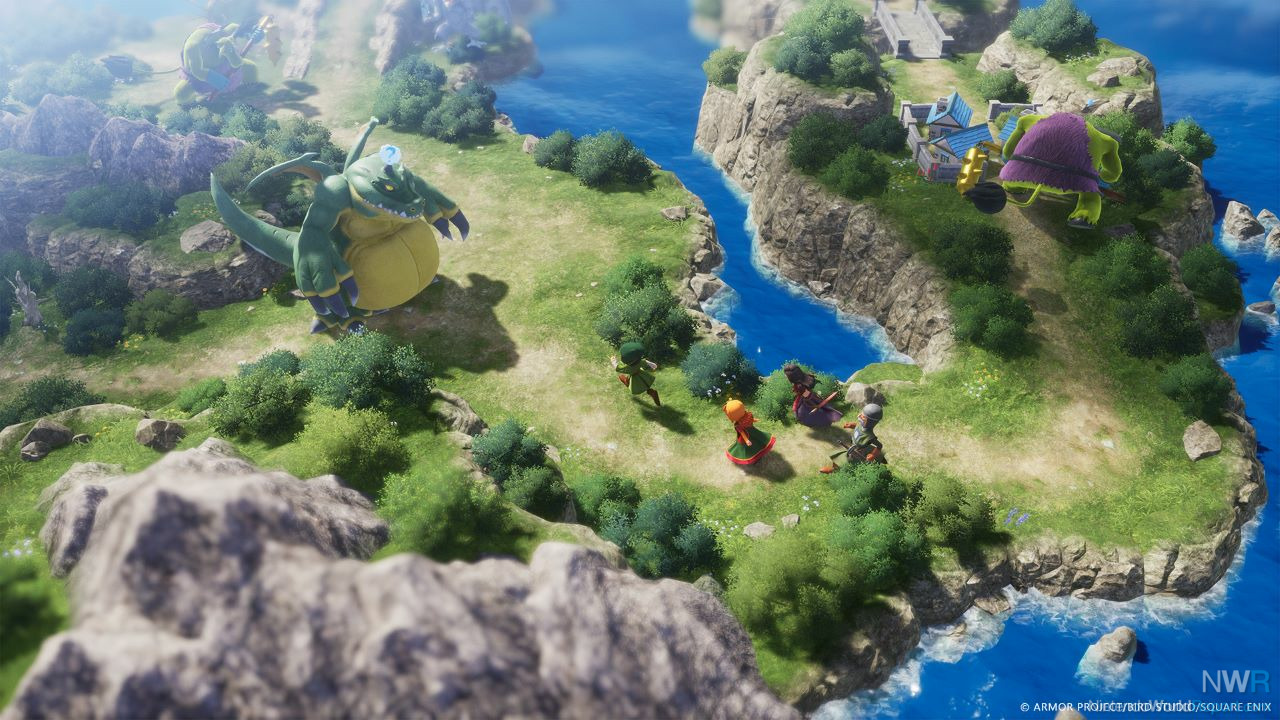
Dragon Quest 7 Reimagined adopts a beautiful, diorama-style look that complements the Toriyama art exceptionally well; it reminds me of Sakaguchi’s Fantasian. The aesthetic is absolutely one of the highlights of the remake. Added voicework brings another level of depth to the characters; Roly Botha as Kiefer is particularly excellent. Seeing your party running around the overworld map can only be described as cute, and from beginning to end I never tired of what I was seeing on screen. There aren’t many of them, but the CG cutscenes were an absolute delight. I’m gushing about the art style, and for good reason: I’d love to see Dragon Quest 8 given the Reimagined treatment, too, but maybe with fewer edits.
Another major positive is the job system, which allows you to eventually have two vocations at the same time, like Mage and Warrior. Mastering certain classes opens up more advanced ones, but I did find that on the normal difficulty, I didn’t need to go any further than having only one or two of the intermediate classes opened up. The head of Alltrades Abbey even gives you a device so that you can switch vocations at any time, even within dungeons, which is perfect for creating a specific party composition before a boss encounter. Although it’s a bit annoying that mastering a vocation doesn’t allow you to retain your learned spells, working towards the higher-tier classes and the ability to switch on the fly do ease that frustration to an extent.
One of my takeaways during the review period of Dragon Quest 7 Reimagined is that the game may be more enjoyable in short bursts, even with all of the streamlining that’s been put in place. Because the gameplay loop is so repetitive, so perfectly circular, longer gaming sessions really magnify the shallowness of how you put the world back together. The characters you meet are interesting for a moment, but because you have somewhat fleeting interactions with them, it’s harder to see each one as memorable. Once you finish their basic requests of you, it’s on to the next questgiver on a different island. It feels like I’m complaining about some standard RPG tropes and mechanics, but the structure of Dragon Quest 7 seems to accentuate the negatives built into these elements.
In terms of performance the Nintendo Switch 2 version runs steady. With minimal load times and a smooth 60fps, it is a delight to play through. The one noticeable oddity is that there is a clearly visible “rendering line” that makes textures and smaller obstacles load in a few frames late. It’s probably something you will only start to notice many hours into your adventure, especially at the beginning of combat encounters. Other than that the Switch 2 version comes highly recommended. The Switch 1 version offers a steady and smooth 30fps itself. Though it is a shame that for physical lovers, the Switch 1 version cannot be upgraded and the physical Switch 2 release is restricted to a Game Key Card.
The question I have to ask myself, and perhaps one that will be asked by others who love(d) an earlier version of Dragon Quest 7: Why does Reimagined not quite strike the same chord as the original or the 3DS remake? Has it been pared down too far, or have the dozens of RPGs to come in the intervening years driven our tastes towards something else? Normally, I would be fairly eager to dive back into a Dragon Quest game to explore the post-game content or seek out side quests left incomplete, and even though I know there’s a good bit more I can do here, the drive to compel me back just isn’t there. After four remakes in less than a year and a half, I may be Dragon Quest-ed out, and I’m surprised to even think such a thing.
Dragon Quest 7 Reimagined is a beautifully designed turn-based RPG that is much more approachable to new players than the 3DS remake in 2016, but it may leave fans of earlier versions feeling slighted. Small changes like enemy weaknesses or immunities being highlighted in battle can make combat less challenging, so RPG veterans may want to consider a higher difficulty and avoid auto-battling entirely. I can’t recall the last time I defeated a Dragon Quest final boss on the first try, but such was the case with Reimagined despite doing little grinding, and the result left me feeling deflated, rather than triumphant. Even though there aren’t any glaring problems with this remake, it never felt as satisfying to play as the HD-2D games or Dragon Quest 11, so be prepared for a noticeably different experience compared to those RPGs.