WWE, AEW tournaments missing their dramatic “hooks”
If I hopped into a time machine, early 1988 brought us two big WWF moments. I vividly remember the “Main Event” special that 33 million people saw on TV. I remember watching that Hulk Hogan and Andre match for the old WWF winged eagle title, and I vividly remember the three count, the dual Hebners and the act of granting the championship to Ted Dibiase that kicked off the WrestleMania 4 tournament for the soon-to-be-vacated WWF World Heavyweight Championship.
In case you’re not familiar, the narrative back then was that Dibiase believed everyone could be bought, everybody had a price, and he believed he could become champion simply by paying for it without actually earning it. That’s why Andre was stripped, and Dibiase was never actually champion.
This was what the bracket looked like:
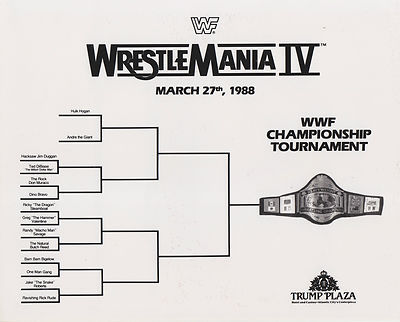
Some of those results I’m still salty about even now despite understanding the politics behind something like Ricky Steamboat losing, but to whittle this down to the essential points the narrative of this tournament beyond personal rivalries is the difference between working hard and getting what you earn, and believing you’re entitled to the result you desire without working for it. It’s how we got there in the first place.
The tournament finalists were obviously on opposite sides of the bracket. On the one end, Dibiase beat Jim Duggan and Don Muraco, but then got a bye into the finals because Andre and Hogan — the two previous champions who had got byes into the quartefinal round — wrestled to a double DQ and eliminated each other to pave Dibiase’s way to the end of the night. He beat two lower card talents, and avoided the biggest threat to his run.
On the other side with Savage, he defeated Butch Reed, Greg Valentine and One Man Gang (who got a bye in round two because Jake Roberts and Rick Rude went to a draw). Between the two finalists, Savage wrestled for 14 minutes total and had to wrestle two fresh bodies, whereas Dibiase wrestled 10 minutes. It doesn’t sound like much by today’s notions of most matches needing to be longer, but for a long show with plenty of matches woven in between tournament contests, this was the time they were allotted.
The point is this idea that Dibiase believed from the start he could buy the title, and then tying into his gimmick, got the finals handed to him while Savage worked through the entire tournament without a break, without a bye and nearly didn’t win if not for Hogan fending off all of Dibiase’s lackeys (including Andre). Savage won in the end, got “what he earned,” and as we know it kicked off the year-long Mega Powers story, their break-up, and the inevitable clash between them at WrestleMania 5 one year later.
This was my first exposure to a tournament in wrestling.
Modern Tournaments
Over the years a number of tournaments have been held for different reasons. Simple title vacancies, or the King of Ring itself before it went on a hiatus for some time, or Round Robin-style tourneys among many others. To this day I still enjoy watch NJPW’s G1 Climax, and I still hold AEW’s first Continental Classic in high regard for how they built the story around Eddie Kingston and executed it flawlessly.
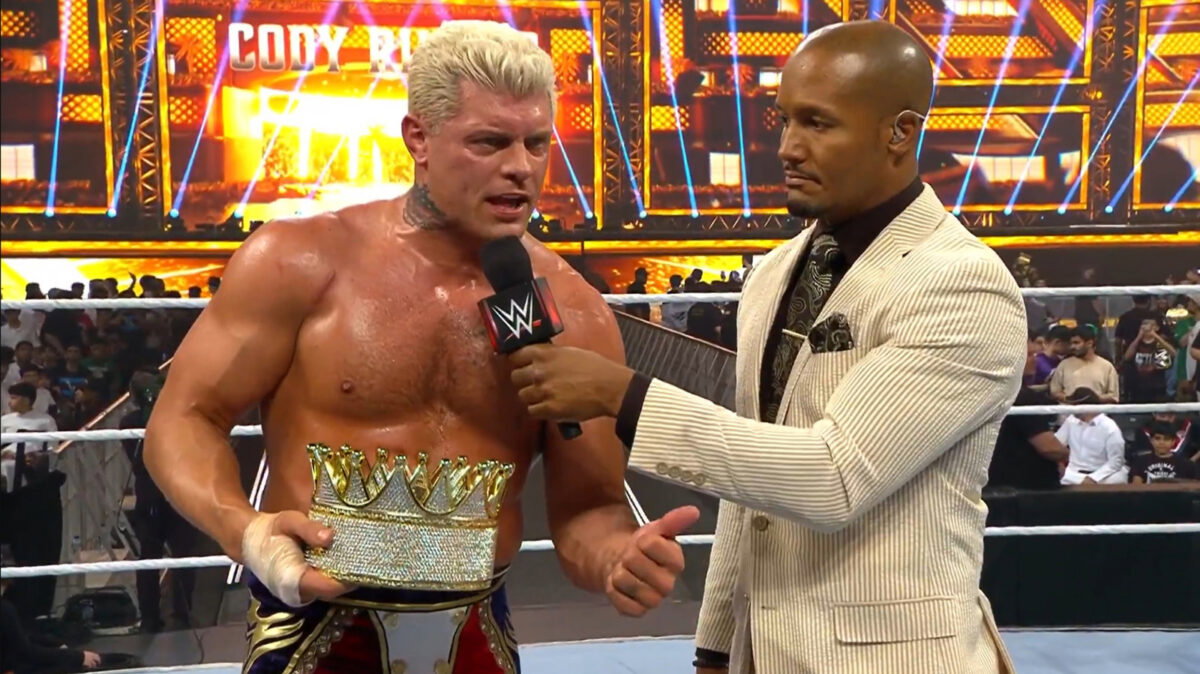
There are certainly other great examples of tournaments being used in both AEW and WWE to push stories forward, such as Hangman Page winning last year to secure a shot at Jon Moxley, Cody Rhodes winning his throne and crown to secure and earn a rematch with WrestleMania opponent and then-champion John Cena at SummerSlam, and to this point I’d argue the Queen of the Ring tournament in WWE hasn’t really produced a standout moment other than arguably Jade Cargill getting pushed into the spotlight ahead of her eventual WWE title win over Tiffany Stratton. Whether it was effective or not doesn’t diminish its own effect. The same is true in AEW, where two of the three women’s brackets of the Owen haven’t amounted to much on the back end. Do we remember outright that Britt Baker won the first one? And with last year’s, while Mercedes Mone is arguably the most notable winner of that tournament, the narrative behind it is flimsy and really only served to degrade her mental state when she failed to win.
The outlier for the women, and to Tony Khan’s credit, much like Page last year, the women’s Owen Hart Cup in 2024 was built with the Toni Storm and Mariah May/Blake Monroe epic as the backdrop. May won it and immediately turned on Storm, eventually winning the AEW championship, and capping off her run in AEW in spring 2025 by dropping it back to Storm. I’ve said this before, but May’s AEW title run is one of my favourite of the championship’s history because of how she carried it, the matches she had, the story it was built around, and frankly, she did it while Khan’s focus — to his utter imbecilic discredit — was more focused on Mone through May’s entire reign.
(Still have some salt here. I retain salt where appropriate.)
Tournaments in 2026
If it’s not clear, I love tournaments. In wrestling when they’re booked well, remain unpredictable and are logically constructed with endings that catapult to the next beat, they’re one of the best showcases you can have. The dramatics make it worthwhile because you’re being rewarded. The same is true for me in older MMA tournaments like Pride FC’s annual Grand Prix that would kick off with “Total Elimination” then “Critical Countdown” and ultimately “Final Conflict.” It’s where Wanderlei Silva destroyed Quinton Jackson for the first time. It’s where Quinton Jackson destroyed Chuck Liddell before doing it again in the UFC. The Pride GP is where Fedor Emelianenko and Mirko “Cro Cop” Filipovic fought for the Pride Heavyweight title, and one year later in the final Grand Prix in Pride’s history, where “Cro Cop” redeemed himself after his 2005 title loss to Fedor and won the 2006 Pride Grand Prix in an open weight event and finally won “the big one.”
Yes, MMA is not pro wrestling. It’s very real, very volatile and unsanitized, but the human element of storytelling is still there. It’s glaring actually because the stakes are that real. The emotions and realities are real, and when wrestling hits those beats, that’s when you get the best tournaments in wrestling.
That’s where I take issue with the 2026 tournaments currently being held in both AEW and WWE. All four ongoing tournaments feel listless, and if not listless, predictable to the point where I’ve basically called the men’s bracket of the Owen Hart Cup.
AEW
Swerve Strickland and Will Ospreay in the finals was obvious from the start, and because of that, including the domino that fell into place once Swerve beat Bandido and then Brody King, the men’s tournament has plodded along to the eventual ending. Certainly we have to acknowledge that there’s an opportunity to capitalize on Swerve and Ospreay’s own history, but with All In heading back to the U.K. Ospreay winning the Owen and then the AEW title feels like a foregone conclusion. And for someone who likes Ospreay and loves tournaments it’s disheartening because it feels like a disservice to Ospreay, the concept itself, and to the fans watching it. Have the matches been good? Sure. That’s only a small piece of it though.
I actually find the women’s Owen more entertaining right now because while I can guess the finals, it doesn’t feel like you KNOW the finals for certain. Could we get Mone and Athena in a finals rematch from their semi-final bout in the 2025 Cup? Probably? I think that’s a better option than Hazuki definitely losing to Athena, or Maya World getting crushed by Mone in the finals. That feels like the build, and as a viewer I’m hoping this is finally the time Athena punches through in AEW beyond her ROH notoriety. The question and overarching problem I’m having with it though is that I’m maybe 70-30 on Mone repeating, and the ending of a match with Thekla at All In feels as foregone as it does on the men’s side. The only saving grace I keep coming back to is that Mone is Willow Nightingale’s replacement, and unless they shifted plans, I doubt that Willow was going to win, and therefore why would her replacement? The same argument applies to Maya World replacing Sareee.
WWE
Similarly to AEW, I’m finding the Queen of the Ring more watchable than the men’s side. While I don’t like the fatal 4-way chaos to launch into the semi-final rounds other than maybe letting those not taking pins to save face and standing, the final four of the women’s tournament has multiple narratives that build on active history and stories that cohere together to create multiple scenarios and options.
Liv Morgan feels underappreciated? She wants to win and will have to get through Charlotte, her best friend or Iyo Sky to get a crack at Rhea Ripley (or however that works). Charlotte wants to re-cement her status to get to Ripley? She needs to get past the women’s world champion, her best friend and also Iyo Sky. To her credit, Iyo could just route Judgment Day and call her shot at Morgan, or maybe Raquel Rodriguez takes out Sky and either takes on Charlotte for that shot at Ripley, or maybe she wants to prove to Morgan they’re equals. Those are the scenarios cooking on the women’s side, and that’s at least fun to follow and watch.
Of course there are scenarios where people can interfere in any one match that will affect the course of the bracket, you can’t say with certainty just by looking at that bracket who’s going to win, and that matters. Conversely on the men’s side, the only way Oba Femi doesn’t win this tournament is if Brock Lesnar interferes in either the semi or finals match to prevent Femi from winning. Otherwise, what are we even doing here if not to feed into their trilogy match? That can be equally accomplished by Femi winning and saying he wants not a title but Lesnar’s head as the ultimate prize. Either way I think the endgame is those, and I’m not going to be shocked whether Femi wins or Lesnar keeps him from winning King of the Ring. The other three just feel caught in the crossfire.
Considering how strongly Femi has been booked, he’d need to be removed from the board to have any other winner make sense. And maybe that happens. Potentially that’s how Dominik Mysterio gets to fight another day, simply by having another big strong dude take out the wrecking machine Femi has become. Because then on the other side, I can’t see Je’Von Evans winning the tournament at this point, and if Femi is still in play, Jey Uso certainly shouldn’t be the one to beat him. What happens with him is the key domino in the tournament, so if he beats Mysterio and gets to the finals, no one on the other side should win unless Lesnar interferes. And if the interference happens sooner, then the winner matters less because the value is diminished without him there. I’d ask the question, “what are you really winning and what did you accomplish?”
Circumstances are circumstances, and wrestling dramatics are what they are. The swerves can be the fun part of all of this, but the juggernaut of Femi somehow both makes the men’s side predictable and devalued at the same time with everything hinging on what happens with him. If he wins? Wow, I’m shocked. If he’s screwed, not really surprised as Brock does that. And so with that, the story becomes Femi being eliminated with the finals winner being an afterthought either way. That’s the problem with it and is where I think there are structural problems with how both companies tournament’s have been constructed and how they’re being executed. Some are better than others, but I think they’re a far cry from either company’s best efforts when it comes to running tournaments.
When tournaments are just events without any real purpose behind them, they lose value. This goes beyond the simple equation of obtaining a title in these cases, or just the act of competition itself. There needs to be a degree of care, because in doing so the trajectory of it and the paths the players take are taken care of. There’s a specific type of story you can tell with them, or there are ways to augment a story to build to something bigger.
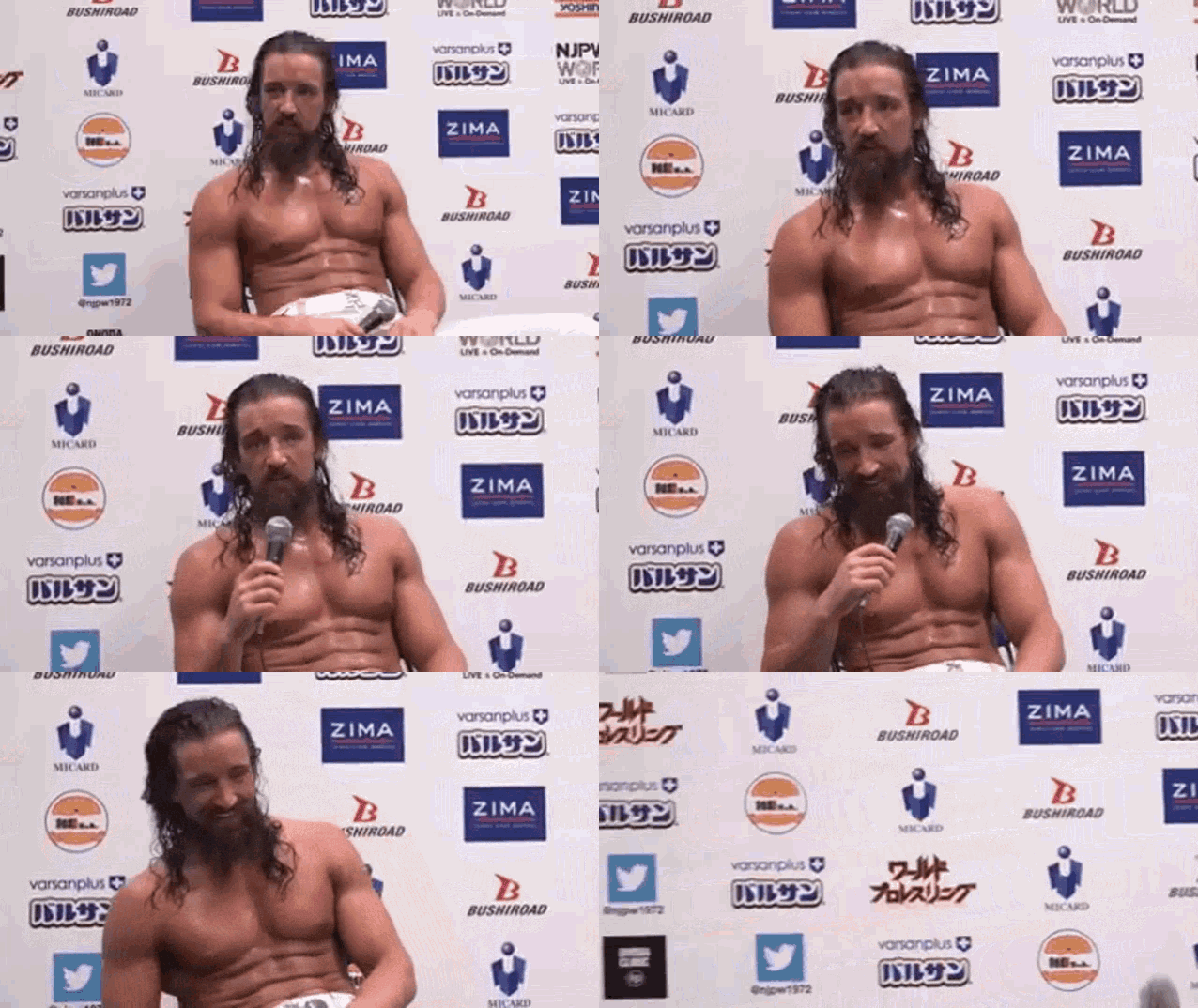
On top of all the examples, another one that comes to mind is one year in NJPW where Jay White completely terrorized Kota Ibushi. He beat him all year, and even defeated him in the G1, only to lose when it mattered to allow Ibushi a pathway to win the tournament. From there, White continued to terrorize him, claimed he was the true G1 champion, defeated him for the briefcase and challenged for the IWGP title amid the double gold dash at Wrestle Kingdom. Ibushi reached the pinnacle by annihilating White in a near 50 minute epic that sent the latter spiralling downward for a short time. The good guy prevailed in the end, and White’s brain broke:
That’s just another example of what tournaments can accomplish or become a component of. There are shreds of story in each current tournament right now, but I’d argue the care to ensure their purposes and storylines are clear are not entirely present. I’d also argue they mostly lack the integrity needed to avoid be easily predicted, and all of these things together take away from the experience.
When you can watch a tournament and not necessarily fully care about the endgame, or when you can look at a bracket and pretty accurately guess how it plays out, the people behind them have done something wrong. Tournaments can be great, but they can also simply exist if you can look at it and guess the finals, presume a favourite, or simply look at it and not necessarily even care about the purpose. Prestige comes not from tournaments existing on their own, but from the merits and work that goes into making sure they’re worthwhile.