What The GTA VI Delay And Take-Two’s 18-Month Slip Actually Tell Us About AAA Development In 2026
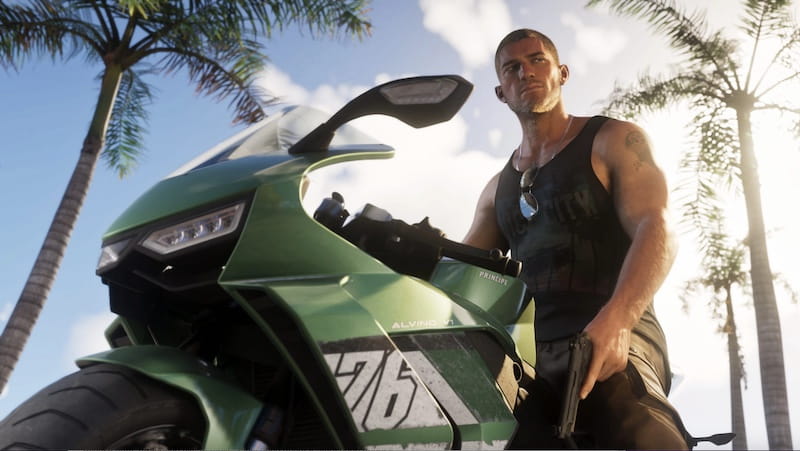
Strauss Zelnick admitting that Grand Theft Auto VI sits roughly 18 months behind its original schedule represents one of the most significant industry confessions of the current console generation. The acknowledgment lands during a period when Sony has posted a $765 million impairment on Bungie, Saros stumbled to a lukewarm 300,000 unit start despite Housemarque’s pedigree, and Square Enix announced it needs an entirely new framework just to release its franchise games faster. The pattern is too consistent to dismiss, and what it reveals about how AAA games are being made in 2026 deserves more attention than the individual headlines suggest.
For context on how player engagement patterns are shifting during this extended release cycle, a recent attention-tracking study referenced by the Betstrike platform examined session length and return-visit patterns across digital entertainment categories and found that users in 2026 demonstrate measurably less patience for delayed content compared to 2022 levels, with abandonment rates climbing sharply when promised release windows slip beyond six months, suggesting that the industry’s tolerance for extended development cycles may be eroding precisely as those cycles continue lengthening.
The Cost Structure That Made The Old Model Break
AAA game development costs have crossed a threshold that fundamentally changes the economics. Saros reportedly may struggle to break even at 300,000 units, despite being a critically acclaimed Housemarque title backed by Sony’s marketing apparatus. That sales number would have generated comfortable profitability for similarly scoped releases a decade ago. The math has changed because the inputs have changed, with development teams sized in the hundreds, production timelines extending past five years, and marketing budgets that often match or exceed development costs.
This is the real story behind the GTA VI delay. Rockstar is not late because the team lacks talent or because management failed. The game’s scope has expanded to meet expectations that were themselves shaped by GTA V’s decade-long performance and the cultural anticipation that built up across that period. Meeting those expectations requires resources and time that simply do not compress easily, regardless of how aggressive the original schedule looked on paper.
Mike Bithell, founder of Bithell Games and frequent industry commentator, has spoken about this dynamic across multiple interviews. His core argument is that the AAA model has been quietly transforming into something closer to filmmaking economics, where the franchise tentpoles carry enormous risk concentration and the broader release calendar increasingly relies on mid-budget productions, indie hits, and platform exclusives to fill the gaps between major launches
Why Sony’s Strategy Shift Makes Sense In This Environment
Hermen Hulst reportedly confirming that PlayStation’s single-player games will no longer come to PC connects directly to this economic pressure. Sony has spent the past few years experimenting with delayed PC releases of God of War, Horizon, The Last of Us, and Returnal. The strategy produced meaningful revenue but came with strategic costs that have apparently outweighed the benefits in internal evaluations.
When development budgets reach $200 million and above, every percentage point of platform exclusivity matters for the underlying business case. A PS5 exclusive that drives hardware sales while also generating software revenue creates compound value that a multi-platform release cannot match. The PC port revenue is real but it dilutes the primary value of building a console ecosystem that the rest of the strategy depends on.
The decision also reflects what Sony’s data is telling them about consumer behavior. PS5 shipments at 93.7 million worldwide indicate that the install base is large enough to absorb most economically rational sales targets without needing PC expansion. The marginal PC buyer is increasingly the buyer who waited specifically because they expected the port to arrive, which trains future behavior in ways that hurt PS5 attach rates over time.
The Capcom Pattern Versus The Sega Cancellation
Capcom posting record profits for the ninth consecutive year while Sega cancels its ambitious Super Game project captures the strategic divergence playing out across the major Japanese publishers. Capcom’s approach has emphasized franchise nurturing, with Resident Evil Requiem and the broader catalog continuing to generate sustained revenue years after individual releases. The publisher has identified Devil May Cry, Dead Rising, and Dragon’s Dogma as dormant franchises worth reviving rather than chasing entirely new IP creation.
Sega’s Super Game cancellation reflects the opposite calculation. The ambitious project demanded resources that the company eventually determined would not produce returns justifying the investment, particularly given the broader shift toward free-to-play economics that the publisher is now prioritizing. Both decisions can be correct simultaneously, depending on which franchises a publisher controls and how their existing portfolio responds to the current market environment.
The Lies of P sequel entering full-scale development, Stellar Blade 2 progressing smoothly at Shift Up, and Crimson Desert receiving sustained post-launch updates from Pearl Abyss demonstrate that the AAA model still works for studios with the right combination of franchise positioning and execution capability. The problem is not that big budget games cannot succeed but that the conditions for success have narrowed considerably.
What 007 First Light And Hellblade 2 Reveal About Platform Optimization
IO Interactive’s commitment to PSSR 2.0 from day one on 007 First Light, including reduced shimmering and better temporal stability under motion, shows where serious development effort is being allocated. Platform-specific optimization has become a meaningful competitive advantage at a time when raw computational power increases have slowed. The studios investing in PS5 Pro features, including 60 FPS modes that match what 007 First Light is demonstrating, are creating tangible differentiation that justifies premium pricing.
Ninja Theory characterizing Hellblade 2 on PS5 as a success reinforces the same point from a different angle. The game generated strong reviews and critical attention, but the business case ultimately rested on whether the production cost could be recovered within reasonable timeframes given the focused single-player experience. The success characterization suggests yes, which validates the model of mid-budget AAA productions with platform-aligned development priorities.
Why The Insider Reports On Sony’s IP Revival Pipeline Matter
Reports that Sony is exploring revivals of older IPs, including the speculated inFAMOUS remake without Sucker Punch involvement, point toward how PlayStation plans to fill the gaps that extended development cycles create. The strategy of remaking established franchises offers several advantages over greenlit new IP. Brand recognition reduces marketing risk. Existing creative templates accelerate production. Audience expectations are clearer, making scope decisions less speculative.
The decision to potentially remake inFAMOUS without Sucker Punch reflects the studio model that has emerged across the past five years. Sucker Punch is currently focused on Ghost of Yotei post-launch support and presumably the next major Ghost project. Remakes can be parallelized across different studios, expanding throughput without requiring the same creative leads who shipped the originals to return for the new versions.
This pattern will likely continue accelerating. The 120 projects Sony has reportedly funded across this generation, as confirmed by the PlayStation VP of second and third-party content, represents an enormous pipeline that fills the windows between major first-party releases. Some of these will succeed dramatically. Others will quietly disappear. The portfolio approach distributes risk in ways that the previous reliance on tentpole launches did not.
What This Means For Players Through The Rest Of 2026

The next 12 to 18 months will likely produce more delays, more mid-cycle pivots, and more impairment charges as publishers continue adjusting to the cost realities of AAA development. The games that do ship will increasingly cluster around platform-defining moments rather than being spread evenly across the calendar. May 2026 has already demonstrated this pattern, with 007 First Light, LEGO Batman, and Hell Let Loose Vietnam clustering toward late spring and early summer windows.
GTA VI when it finally arrives will likely justify whatever delay it requires through sales figures that vindicate Rockstar’s choices. The interim challenge for the broader industry is generating enough mid-tier and indie momentum to sustain audience engagement during the extended waits. Mixtape earning a 9.5 review score, Constance scoring 7.5, and Mouse PI For Hire recouping its full investment at 700,000 units sold demonstrate that the mid-budget segment still has the production capacity to deliver memorable experiences while the AAA franchises take their time.
The Talos Principle III hitting 2027, Werewolf Apocalypse Rageborn arriving in 2027, and Gallipoli pushed to summer 2026 add to the picture of a release calendar that is increasingly defined by what is not arriving as much as by what is. Players who develop tolerance for this pacing will find plenty to play. Players who expected the old release rhythm to persist will likely feel underserved across the next 18 months.
The Production Model Has Permanently Changed
The combination of higher development costs, longer timelines, increased platform exclusivity pressure, and audience expectations shaped by previous generation tentpoles creates conditions that will not reverse anytime soon. The industry that emerges on the other side of this transition will look different from the one that produced the PS4 era. Fewer launches per year, larger gaps between major franchise releases, and more reliance on mid-budget productions to fill the gaps will become the steady-state pattern rather than the exceptional one.
Take-Two acknowledging the 18-month slip is significant not because the delay itself is surprising but because the public admission signals that the industry has accepted this is the new normal. The companies that adapt their strategies to match these realities will outperform those that continue planning as if the old model still applies. For players, the practical implication is that the next great PS5 game is probably not the one currently in your wishlist but one that has not been announced yet, scheduled to ship at a moment your favorite publisher considers strategically important rather than the one your patience would prefer.