Review: Bluey’s Quest for the Gold Pen (Nintendo Switch 2)
Is Bluey’s Quest for the Gold Pen just another licensed tie-in, or something more?
Like most parents of young children, I haven’t managed to escape the Bluey phenomenon, and nor would I want to—the show is refreshingly grounded and a genuine pleasure to watch regardless of your age. With Bluey’s Quest for the Gold Pen, the real question is how it stacks up against this reputation, being one of just a few video-game adaptations published so far: how does being able to interact with the world of Bluey feel? Does this title complement the existing storylines or expand upon the lore? Let’s find out.
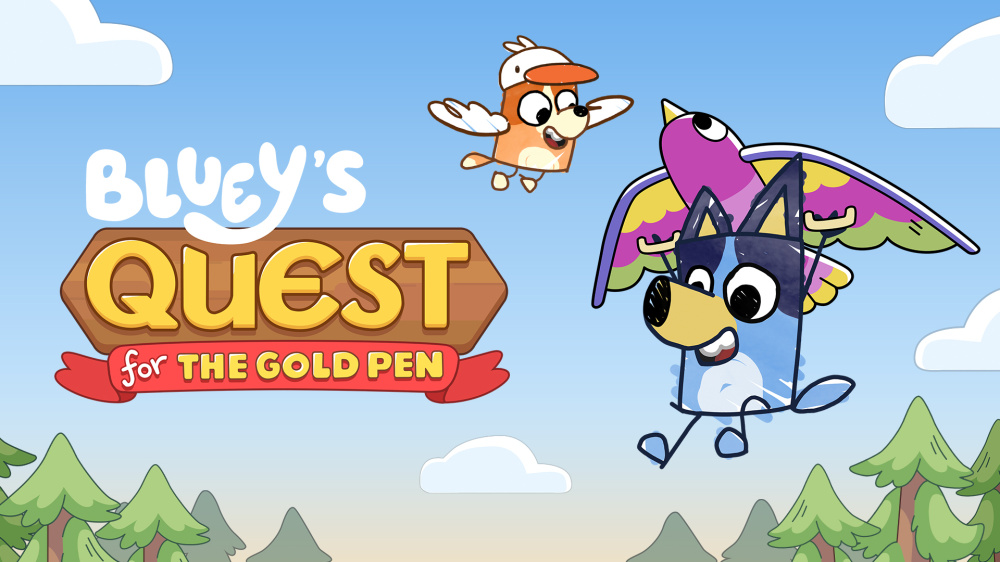
Right off the bat, avid show-watchers will recognize that the game shares its visual aesthetic with the Dragon episode in which the Heeler family draws its way through an imagined adventure. While it may seem bold to depart from the show’s signature art style, you can’t deny that this twist gives the world and its characters a fun, whimsical feeling befitting of the imaginary adventure that it is. Rather than following the plot of Dragon, the game presents you with a new storyline based around—this isn’t a spoiler, come on it’s in the title—the quest for a golden pen, held by Bluey’s dad who acts as the antagonist, drawing up new challenges as you progress.
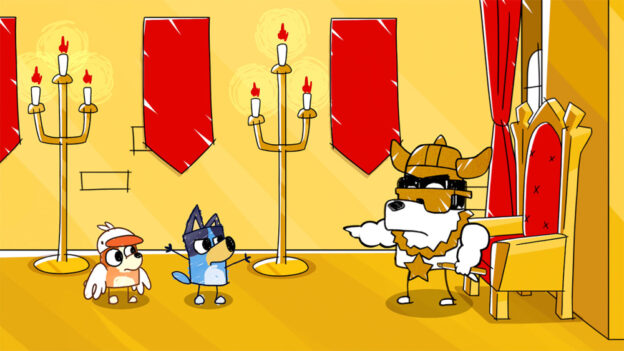
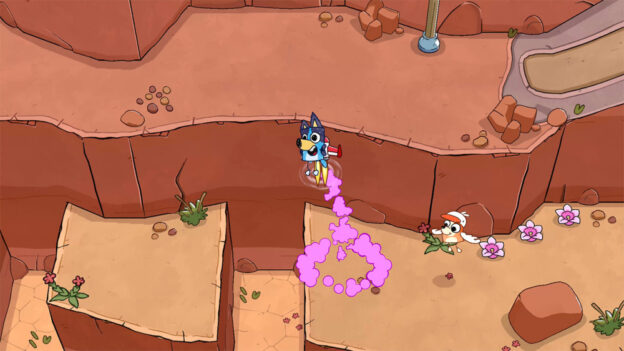
The game world itself consists of a series of zones containing puzzles, collectibles, and short animated sections which progress the story. Playing as Bluey (alongside the flying “Bingoose”, your assistant – a non-playable character, I might add) you use a variety of abilities to traverse and interact with the environment and obtain items in order to progress. This includes completing plenty of puzzles which, while I’m happy to say didn’t trouble me (still got it Clinton, still got it), will be a delight for younger children to try out. Beyond the main food item in each zone, item collection is largely optional and wasn’t something I felt compelled to do, although some may enjoy this completionist aspect.
Unfortunately, what you see in the first zone is more-or-less what you’ll experience throughout, with some changes to your abilities and the puzzles you solve. The abilities themselves rarely impact how you navigate the world, with even something like gliding (a stand-out feature of games like Zelda: Breath of the Wild) failing to noticeably improve your ability to navigate the environment. Plenty of content gets reskinned and repurposed, and you’ll see new iterations of the same game mechanics, sprites and animations time and time again, even in places you wouldn’t expect—at one point, minecart tracks from a previous zone reappeared in space, of all places! While you could argue that this simplicity is ideal for younger children, I still don’t think there’s enough variance or depth to keep them engaged, and my young daughter (who really should be credited as a co-contributor to this review) was noticeably less interested in the title than others we’ve recently played together, outside of a few stand-out moments close to the end.
For a game based off such a narratively dense show, there is also a surprising lack of impactful moments, both in the gameplay and sparse animated clips from the show. Besides a few moments at the tail-end of the game, the stakes felt consistently low and unclear, and while there’s charm to galivanting about the worldscape, it’s not enough to carry the experience. Nor does the ‘drawing’ aspect of the narrative ever become a significant gameplay mechanic, something that seems like a lost opportunity given the main appeal of the Dragon episode was witnessing the Heeler family draw their own characters and environments. It turns out you’re just questing for a pen, not using it, I guess.