OPUS: Prism Peak Review – Review
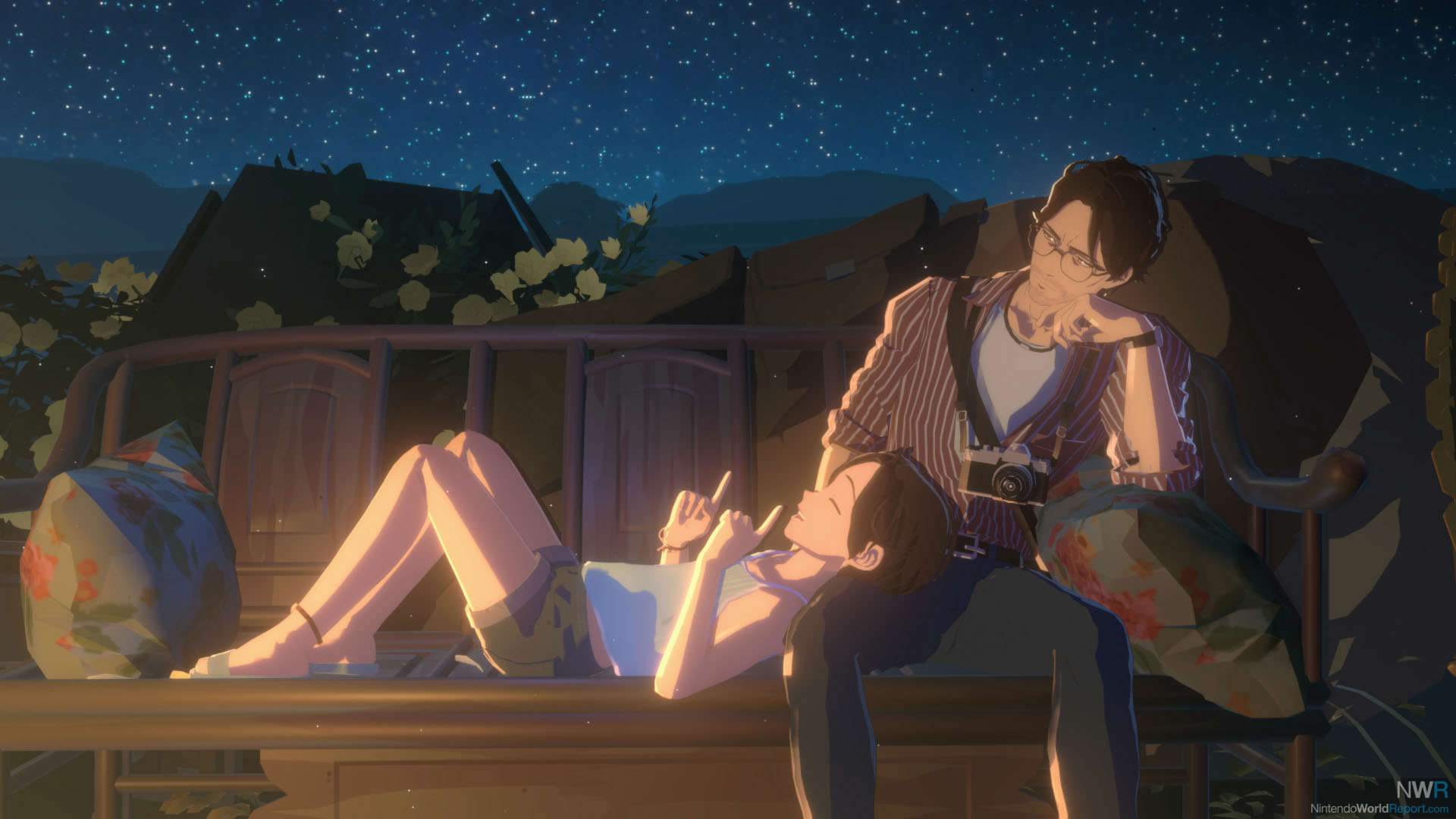
The OPUS series has been knocking about in 2D/2.5D space for a while now, most memorably with Echo of Starsong back in 2021. SIGONO’s latest outing, Prism Peak, ditches both the cosmic setting and the dimensional plane, instead opting for a very earthy, 3D, first-person photography adventure that plays less like a sequel of any kind and more like a complete 180. It’s a very pretty, affecting, and frustrating spiritual successor that trips over its own ideas and ambition.
You play as Eugene, a photographer from a broken family whose grandpa handed him his first camera and, with it, a lifelong passion. After an accident, he is now stranded in the Dusklands, a spirit-dwelling mirror of a Japanese mountainside, and Eugene finds himself travelling alongside a child who needs to reach a distant peak before she fades away. His grandpa’s old analogue camera is his only tool, and also the only thing keeping ‘the shade’ that’s stalking them both at arm’s length.
For the most part in Prism Peak, you point your camera and click. That’s it. What’s odd, though, is that Prism Peak isn’t really interested in whether your photos are actually good. There’s an ISO dial, shutter speed, and a rotating set of filters to play about with, but as long as your subject is roughly in the frame and you’ve not blown the exposure, the game nods and moves on. While some people sold on the photography aspect may be let down, the lack of skill needed is deliberate. This isn’t a photography simulator; it’s a game about photography as a metaphor for memory.
Where Prism Peak really shines for me is its journal system. It acts as a living record of every conversation you’ve had, every memory you’ve recalled, and every dialogue choice you’ve made, with your word picks highlighted so you can look back and see exactly where you landed on things. Eugene’s internal monologue choices usually have you picking one of two paths. A cynical read or a more generous one, and those small choices stack up over time. Every so often the game pulls you back into this headspace and prompts you to complete sections with what feels true to you, rather than what’s factually accurate. I found myself pausing on these for longer than I thought I would. Most games with narrative or dialogue choices lean toward the truth or put you under a timer, but here? It’s quiet; it’s calm. I like it.
Outside the camera mechanic itself, interacting with the world around you rewards you with seeds, which act as a kind of spiritual currency. You can cash them in at various points to pick up camera upgrades, accessories, and photography tips. Collecting these is easy, so picking up the camera upgrades and such feels less like a task and more of a natural course within the game.
Scattered throughout are Sacred Firebowl shrines, and here is where most of the puzzle work lives. These totem-style altars demand specific photos in exchange for insights and progression. After a brief or obscure clue, you find the right subject out in the world, snap it, bring the picture back, and drop it into the fire. The loop works well in isolation. Whether it works at the pace the rest of the game wants is another question (more on that below).
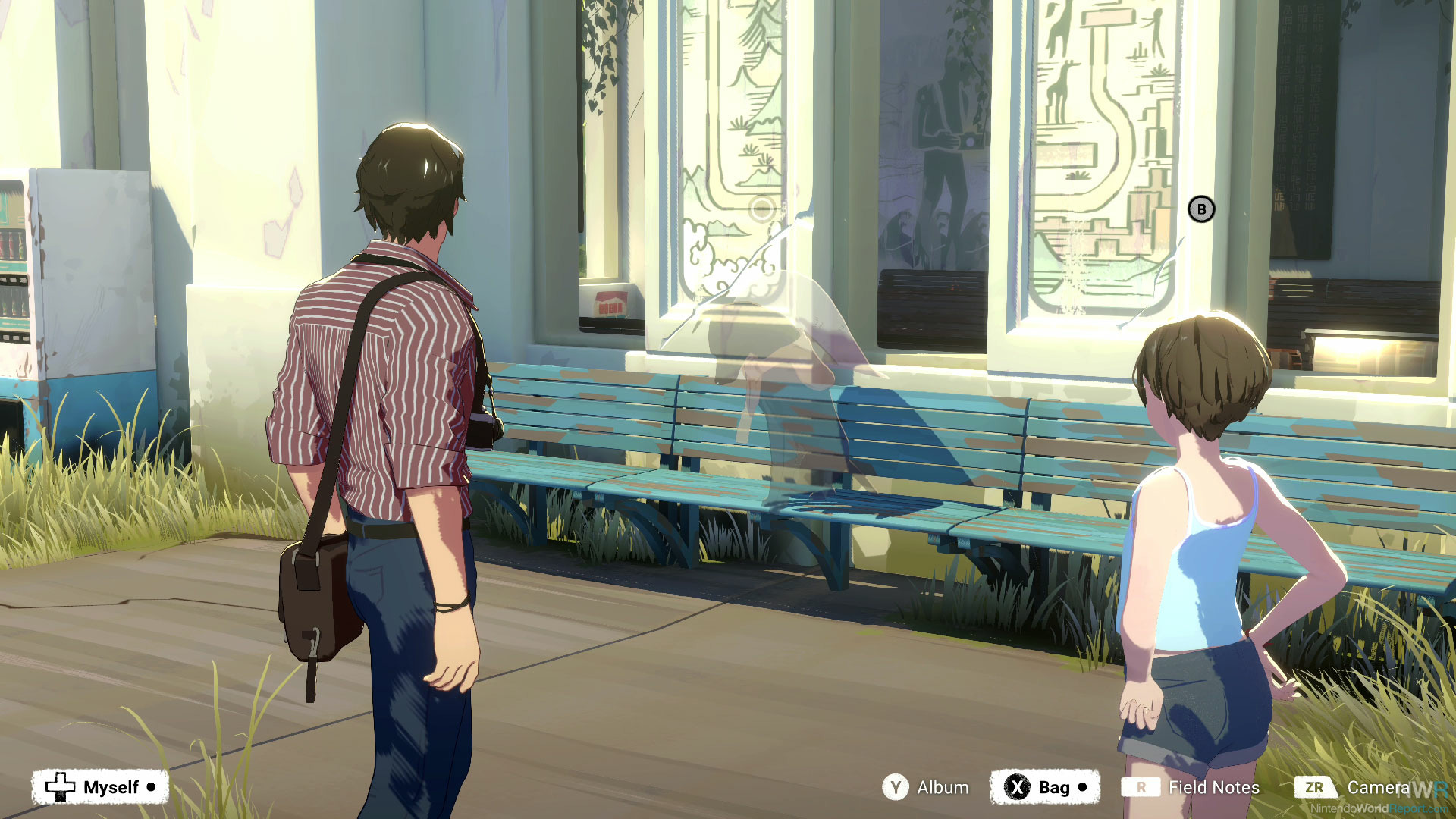
Despite exploration being rewarded, Prism Peak is essentially a linear journey with semi-open zones, and it wants you to take your time. A run clocks in around 10 hours depending on how deep you go into the lore and exploration. It’s definitely a game better savoured than sprinted through.
While the story was decently written and had me engaged at times, the puzzle elements became a bit of an issue. Every new area throws more totems at you, more memories to unlock, more ash to hunt down, and the main plot almost begins to feel like a side-story while the puzzles take centre stage. t’s a pretty significant pacing problem that doesn’t feel severe all of a sudden; it wears on you as you progress deeper into the game.
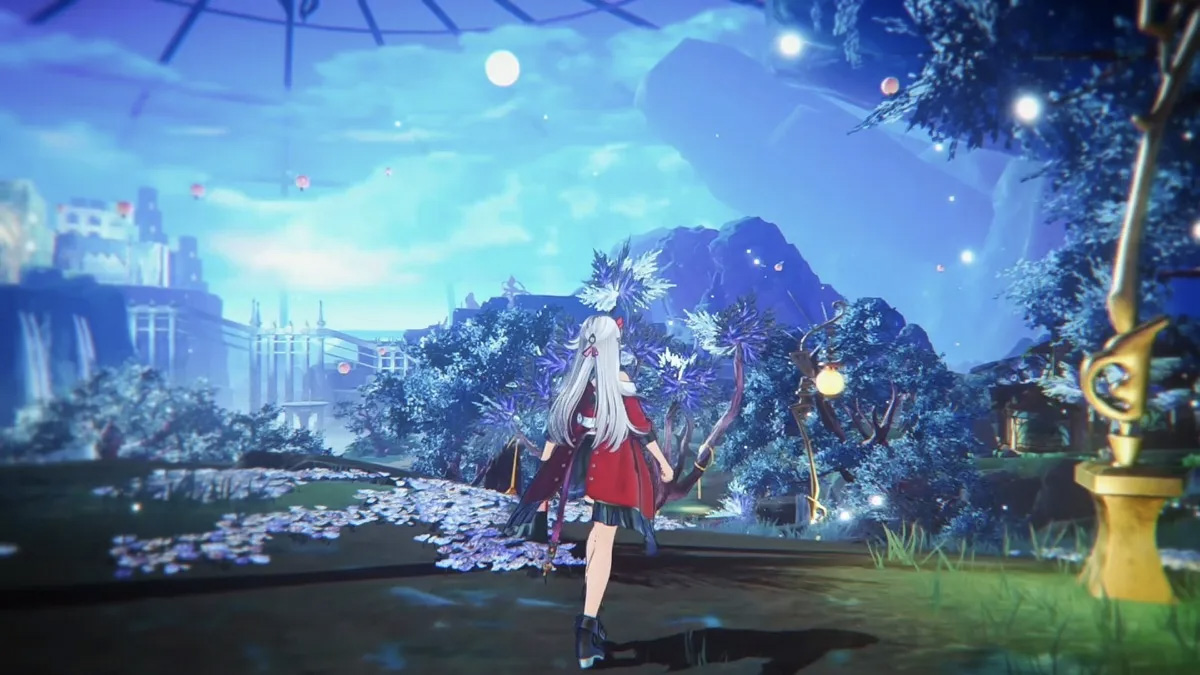
As a lead, Eugene is a well-crafted character: he’s quiet and run down, carrying the weight of a family that never quite worked. His relationship with his grandpa, dripped in via flashbacks through the camera, gives the whole thing its emotional spine. The shade chasing him and the child is an effective if wholly underused antagonist. When it appears, it turns the game on its head, inviting chase scenes, and the usual bright colours and light suddenly become dark and red. No matter the scenario or setting, though, Prism Peak is a delight to look at.
This is a game built around stopping and looking, and handheld is an absolutely legitimate way to experience it, especially if you’ve got a quiet evening with headphones on.
Being nice to look at is great; however, it’s not enough to carry some of the narrative issues it has. There seems to be this incessant desire to pile metaphors on metaphors without always cashing them in. By the final stretch, there were so many motifs like spirit-animals standing in for what I assume represents people from Eugene’s past, and carved glyphs in place of “important” names that never quite resolved. Some of this is intentional, and the ending does pull it all together, but the haze of metaphors gets in the way of a handful of emotional beats actually landing.
While looking like it was ripped out of a cute, slice-of-life anime, you get a choice of English, Chinese, or Japanese dubs. Given the game’s aforementioned, unmistakably anime style, Japanese is probably the “correct” vibe choice if you pick this up, but I played in English for review purposes and didn’t feel short-changed either way. The voice acting is solid, and the soundtrack is wispy and ambient. It fits the world beautifully.
Prism Peak is a game I liked being a part of, even when I was frustrated with its odd pacing and metaphors. It’s pretty, thoughtful, and more emotionally honest than most games that wear their hearts this visibly. But it’s also a game that crams too much into a single frame. Too many puzzles, too many metaphors, too many systems and ideas layered on top of a core loop that didn’t need them. Trim some of the fat, and this is a standout. As it stands, though, it’s a flawed gem.