Review: Trash Goblin (Nintendo Switch)
Trash Goblin starts with you, a goblin, being given a shop from your cunning (but totally enthusiastic) friend, Aimon. Taking place in an old fantasy-style environment, it’s up to you to care for and run the shop by collecting, cleaning, upcycling, and selling antiques and rustic tools and trinkets.
Aimon teaches you the way of the shop with a little chisel and sponge. You’ll start off with smaller objects gifted to you, and learn how to chisel away at the dirt and rocks encasing the objects. Once freed, you’ll learn how to clean the said objects of residue and sell them to travelling humans, mushroom folk, lizard people, frogs, and more. You’ll even learn how to upcycle items to sell for a greater cost. This process is fairly easy, but a little repetitive, and very slow before you upgrade your tools. I recommend doing so as soon as you can, especially the sponge. However, the process is done at your work desk, where each activity uses up a time slot. You have six to use in a day.
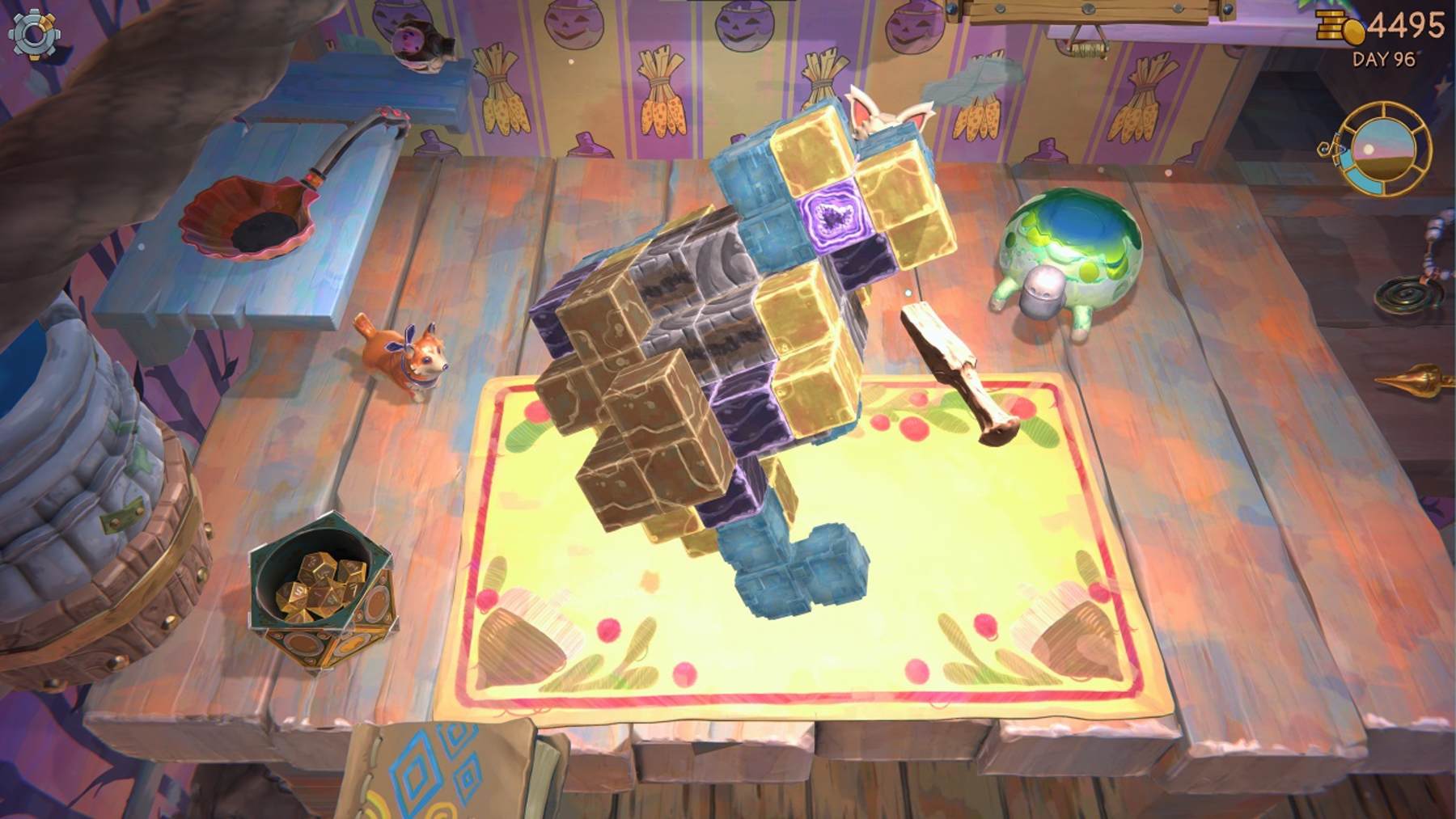
Chiseling is the activity I found myself doing the most, especially in the beginning of the game. It’s a mini-game in which you’re shown a pile of blocks resembling dirt and stone. The goal is to break off all the unwanted pieces by clicking or holding down A or ZR, leaving only the blocks resembling the object.
Some blocks break with one tap, others multiple. On some, only one side can break, and some don’t break at all. It’s like a little archeology puzzle which, although repetitive, I found fun. Depending upon the size of your discovery, the block sizes and shapes differ as well, making some excavations a little longer or more challenging than others.
Cleaning is done with the sponge, and feels the most tedious. You have to turn the trinket with the left stick, and move the sponge around with the right. You hold A or ZR to use the sponge. This is the activity I found quite boring, as the start of the game gives you a small sponge and a lot of residue.
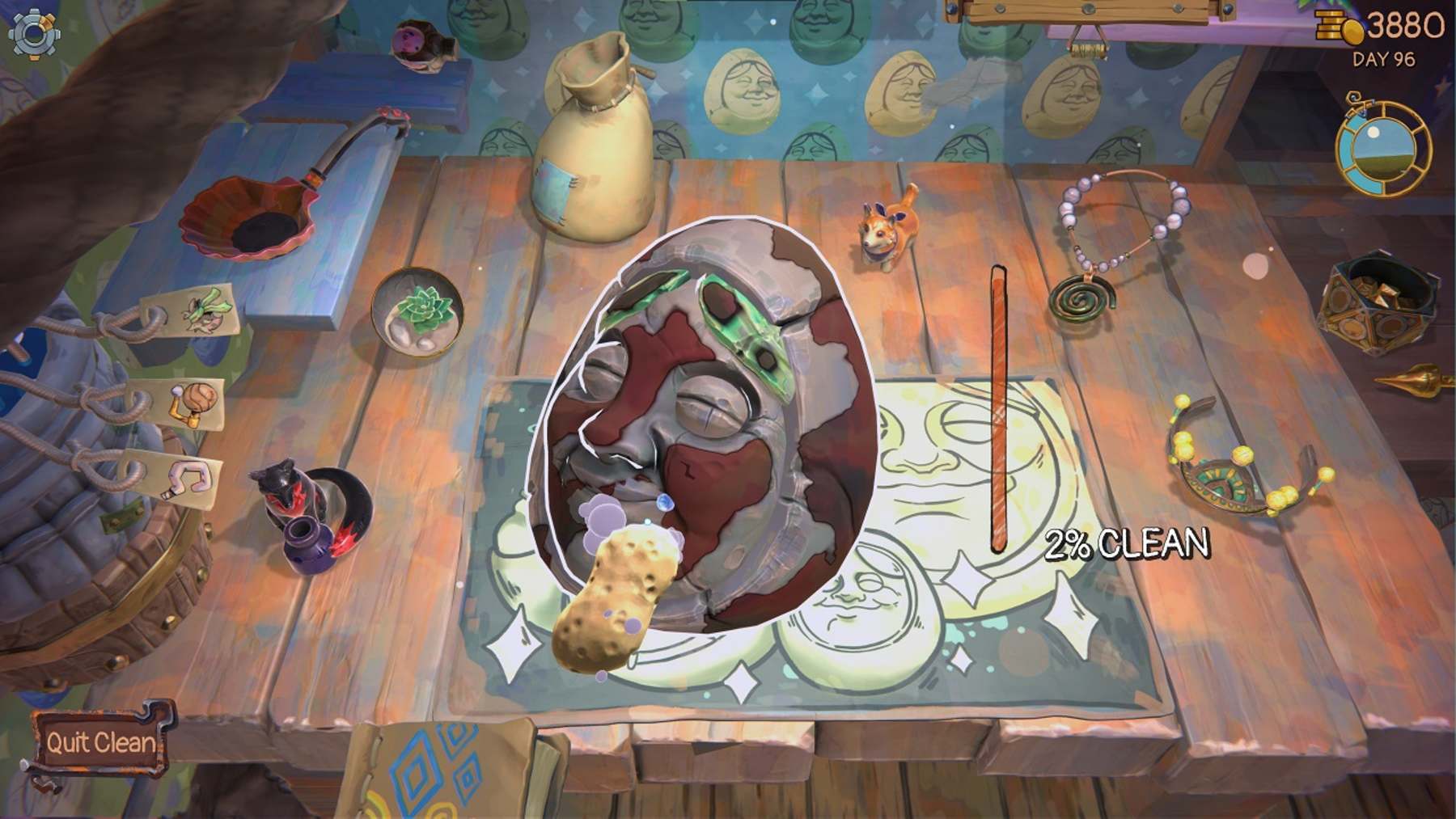
However, even just the first upgrade to the sponge helped a lot in making that process go by more quickly. Plus, it’s not always a requirement for the trinkets to be clean. Sometimes customers will ask for their items to be clean, but otherwise they won’t care. However, giving a customer a clean trinket no matter what they asked for will give you more money.
Upcycling is what makes the game feel personal, especially during the current rise of cozy management games. This activity involves the pliers which are unlocked a little after the chisel and sponge, and are also upgradable. They allow you to connect one trinket to another, resulting in your own beautiful creations, whether they be weapons, tools, dolls, containers, or décor.
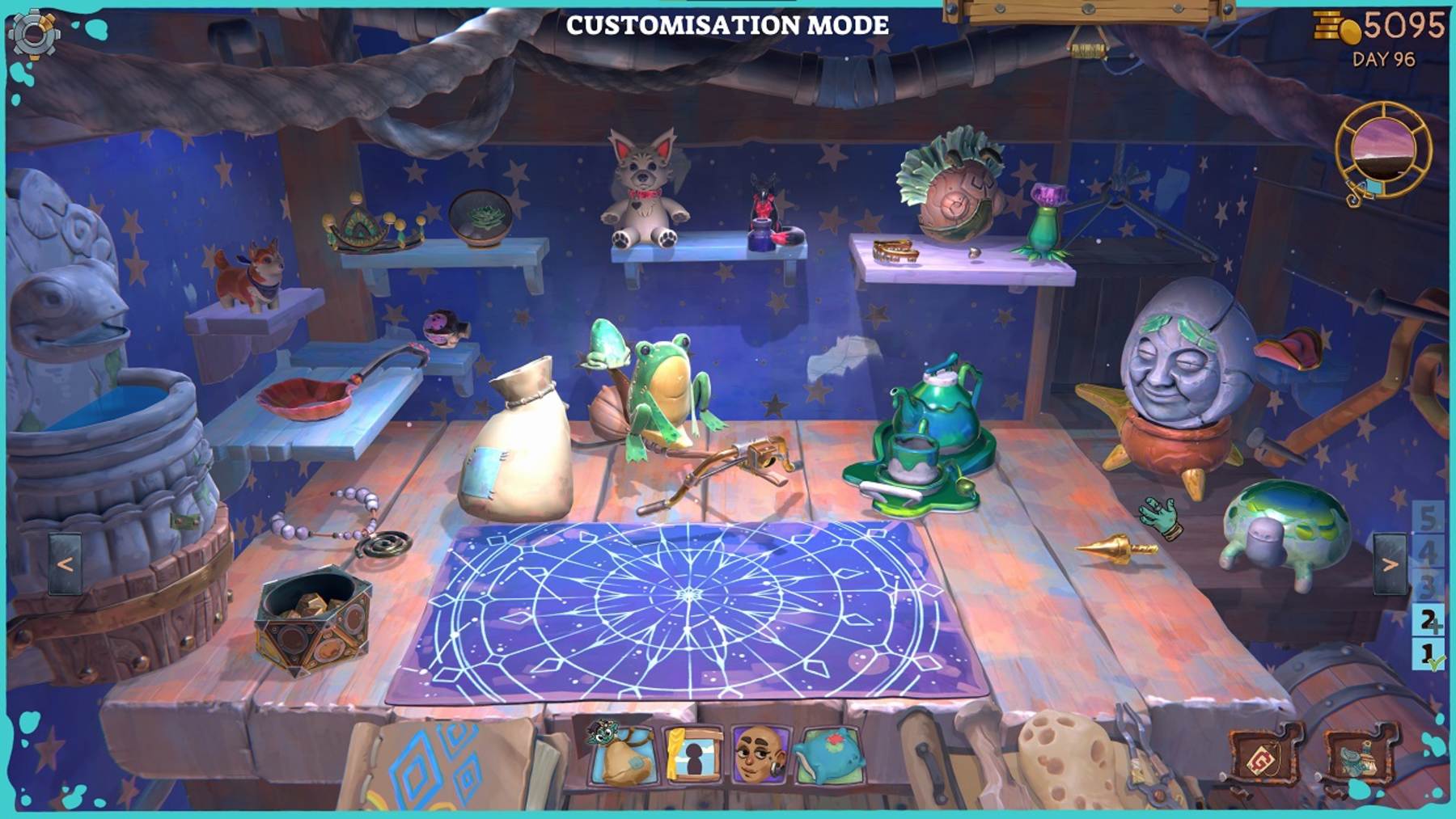
Some items are meant to be placed together, and fit perfectly, while others are standalone objects that can be used anywhere. This allows for a lot of creativity to restore pretty antiques or create weird and goofy sculptures or tools. As you upgrade the pliers, you unlock the ability to attach more items to one trinket, as well as the ability to rotate the items you add.
Selling is the final step in managing the shop. This is the easiest and most rewarding part of the process, as it not only grants you money, but also helps build connection with each race, giving you a higher possibility to receive tips. The window where you sell your items is also where you’ll communicate with most characters, meaning a lot of the story is developed here. You’ll get an icon at the bottom of your screen if a customer appears. They’ll tell you what they want, and if it’s an unimportant character and you don’t have the item or want to spend time slots looking for or cleaning it, you can tell them “no luck,” and they’ll leave. No negative feelings, no damage done to you or your shop.
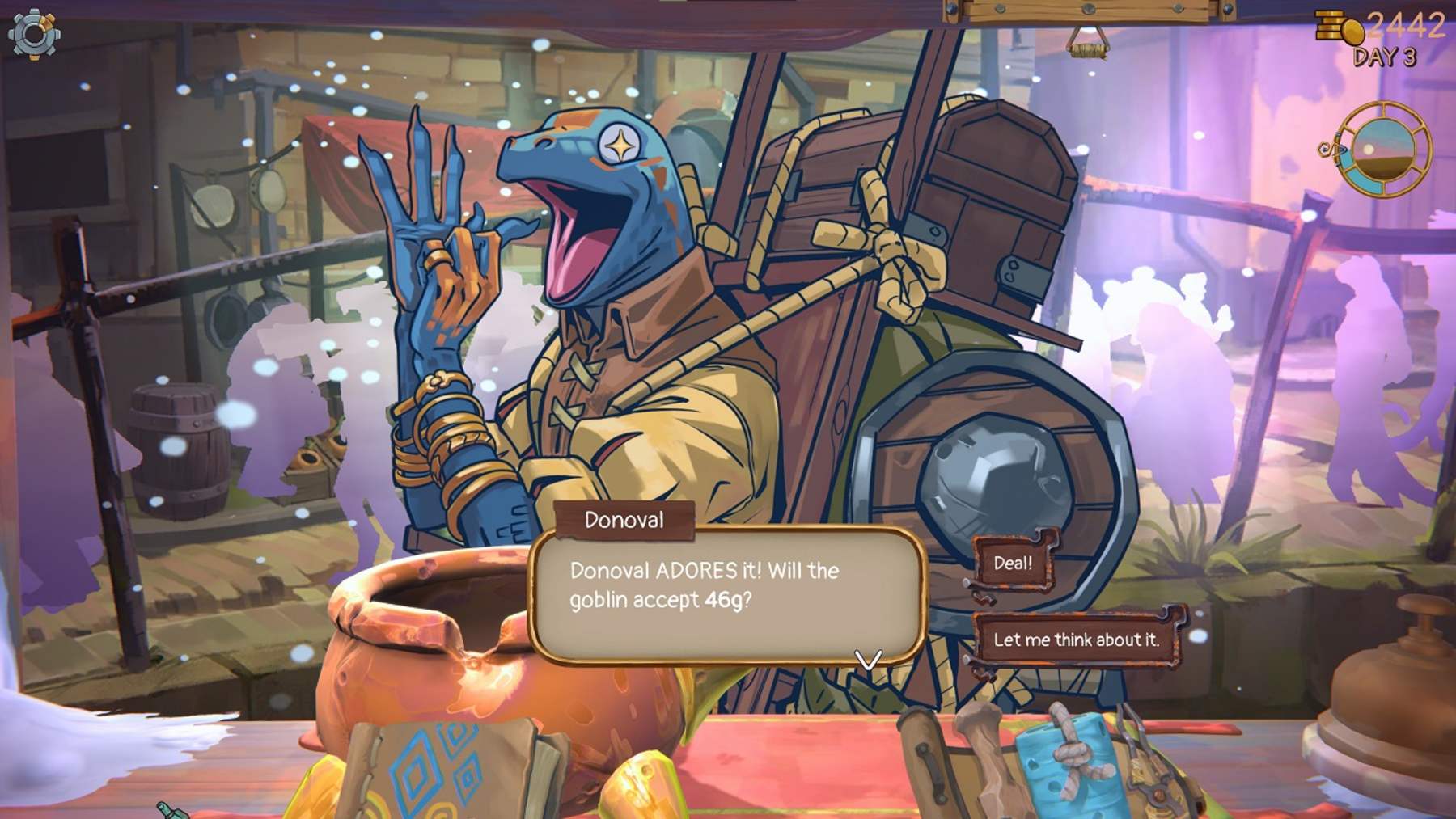
If you don’t have an item a named character wants, you can tell them to come back for it later, as most of the time their requests feel more like quests with meaning rather than a shopping list. Selling items and talking to NPCs doesn’t require any time slots, and they’ll wait outside for you all night if you’re out of time slots but know you have what they need.
Along with running a business through this cart, you also have the opportunity to travel with it and decorate it. Markets pop up every couple of days, allowing you to travel from place to place, with the guarantee to sell anything you bring. You travel by using the map and calendar by your bed.
Decorating the shop is just as important as the rest of the game, as certain furniture you buy allows you to have more storage or space to work. You can also buy upgrades to the shop that allow you to display items for sale. Other than that, there are shelves, plants, and other décor you can buy to spice up the place.
Although Trash Goblin doesn’t offer a lot of variety in its gameplay, it still feels incredibly charming. The art style is cute, and it does a great job of setting the whimsical, fantastical area known as Silver City. The characters are dressed in armor and robes, and the backgrounds show beautiful trees and scenery. The game also feels very hands-on, allowing you to express your creativity through any upcycling you do. It offers around 20 hours of gameplay. And although the technicality of it felt repetitive at times, it was still a lovely time, and many of the characters’ stories made up for it. I’d recommend this game to anyone who enjoys low-maintenance games with strong character personalities.