People of Note Review – Review
A music-themed RPG that definitely hits the notes, both high and low.
From Publisher Annapurna Interactive comes turn-based RPG People of Note, which dials up the volume to 11 with its musical theme, wordplay, and score. As protagonist Cadence, who aspires to bring her pop music to the world, you have to travel the world of Note to bring a band together from different musical genres to help Cadence eventually take center stage. Across a variety of environments and cities, Cadence and her crew fight not only to realize her dreams but also to ensure that Note’s peace and music survive. I just wish I had a better sense of who the bad guys are.
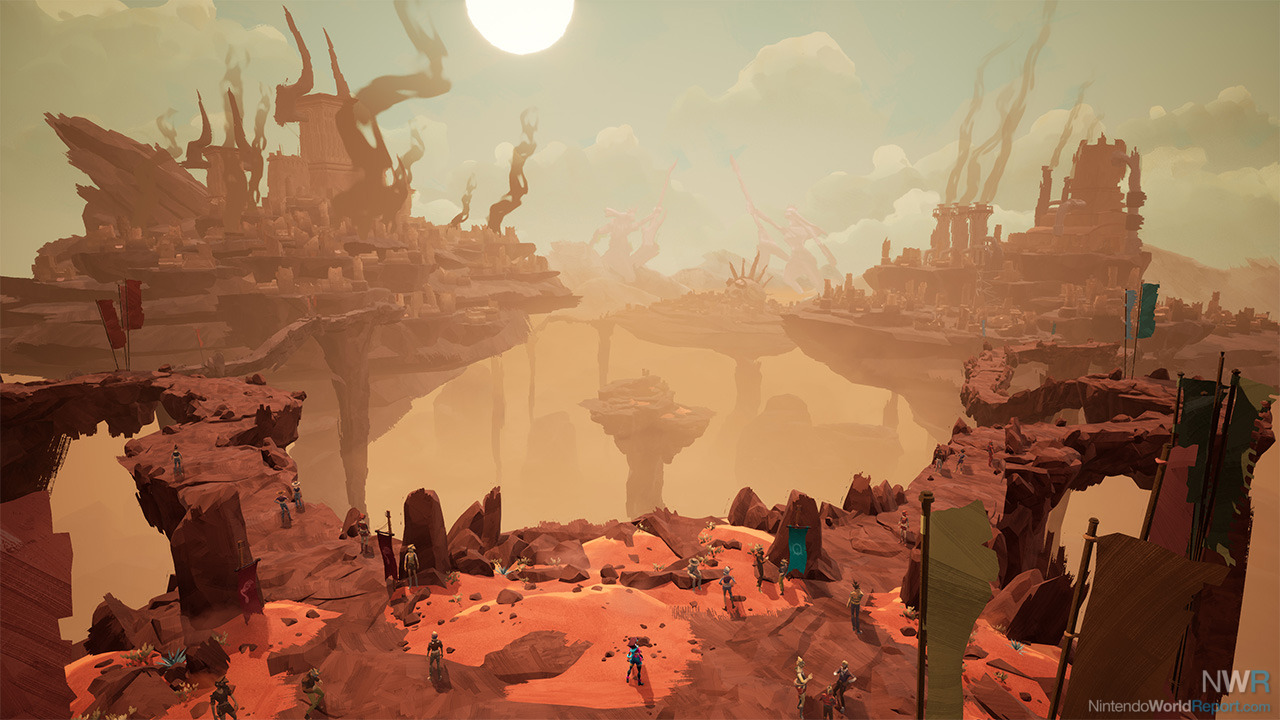
The story and voiced dialogue, including full music video-style performances, start slow but rise closer to a crescendo as the adventure progresses. I wasn’t sold on the heavy purple and neon theming of the game’s first chapter, but the color palette shifts with each new environment, which imbues the world with more life than the fairly flavorless NPCs manage to offer. As the cast grows, I had hoped to see more emotional beats among them, but only a handful ended up sticking with me. One pair I did enjoy was that of your first primary partner, Fret, and his old buddy-turned-nemesis Freq (or Quincy, get it?). The second major area of the game, a desert landscape, sees Cadence looking to recruit someone with a different flavor of music compared to her pop stylings, and after some convincing, rocker Fret joins the team. The first shared objective for the pair is to root out the trouble afflicting Fret’s home, which leads to a confrontation with Freq and a charged walk down memory lane for the pair of guitarists.
My impressions were more pronounced for the dungeons, combat, and progression. People of Note largely plays the same beat throughout its runtime when it comes to its plot line, with a city visit, key character encounter, and then a dungeon dive as the order of operations. Familiar button and switch puzzles offer some light brainteasing in conjunction with a handful of out-of-combat abilities. One of the more interesting mental tests is puzzle battles that require you to eliminate all enemies within a set number of turns; these essentially require perfection and thus a mastery of your party members moves and the combat system itself.
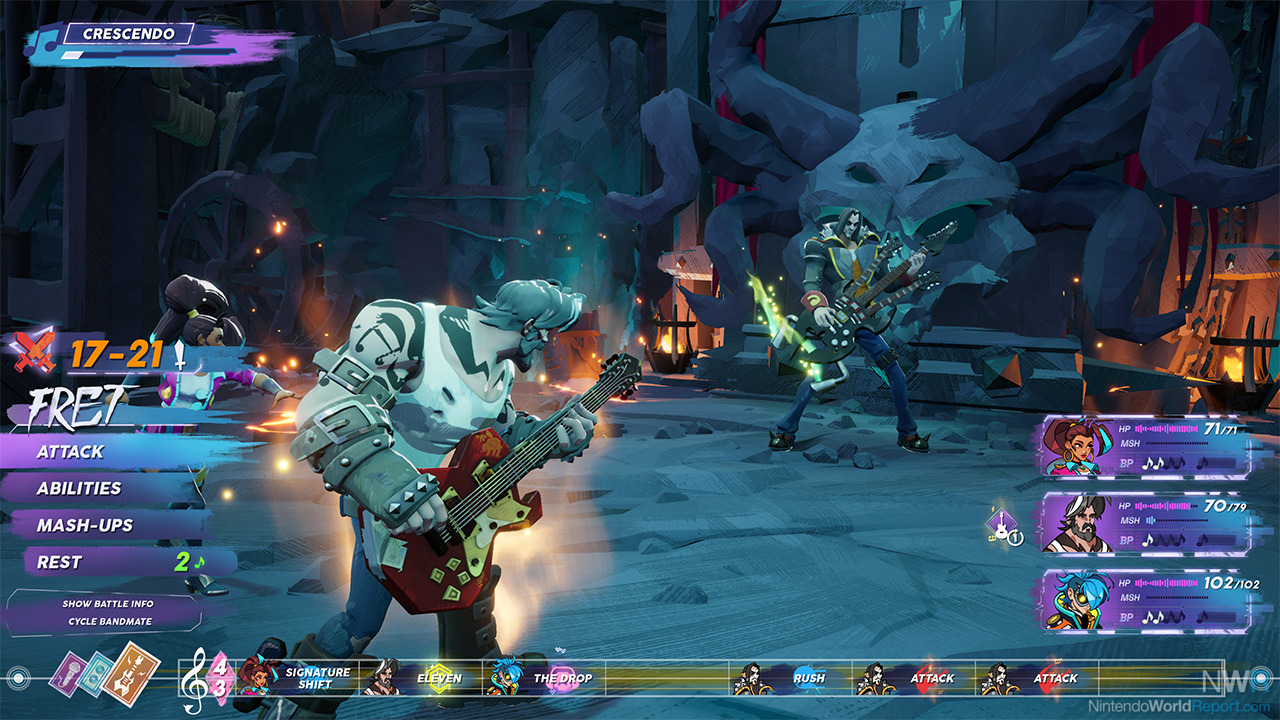
The turn-based battles involve a number of neat quirks that employ musical staff, including time signature, stanzas, and bars, which represent turns and can be manipulated by your party and the opposition. My relatively lapsed knowledge of musical composition put me at a bit of a deficit; People of Note throws a lot at you in short order, and I did find myself perusing the tutorials from the menu as a way of trying to figure out what was holding me back. Fortunately, if and when you do lose to one of the damage-sponge bosses, you can quickly grind a few levels for your party with the generous EXP awarded and the ability to summon a random encounter at the press of a button.
Unfortunately, even though there are timed button presses for attacks and special attacks and all of the musical presentation elements, the combat drags. Other than powerful mash-up moves that become available once a pair of characters have their meter filled up, it just takes too long to do the way too much damage needed to secure victory. Winning a fight feels more like it depends on your stats/level and having the best gear than it does effective strategy and decision making. The lack of timed defense is an odd omission, and the way that certain rounds benefit some party members over others feels like an unnecessary complication. There are some genuinely good ideas around the battle system, but the end result is more of a cacophony than a symphony.
Although it may strike a chord with those who really love its theme and aesthetic, People of Note plays it a bit more monotone than I had hoped. The few high notes aren’t able to fully compensate for the safe storytelling and narrative design, and the combat waffles too much between tedious and novel. That said, I couldn’t help but feel taken by the game’s commitment to being a music-themed adventure; constant puns and shake-ups to the combat mechanics gave me a genuine sense of joy. There wasn’t enough momentum, however, to sustain those positive vibes, and I was left wanting to just roll credits in double time rather than slowing down the beat and soaking it all in.