Rotwood Review – Review – Nintendo World Report
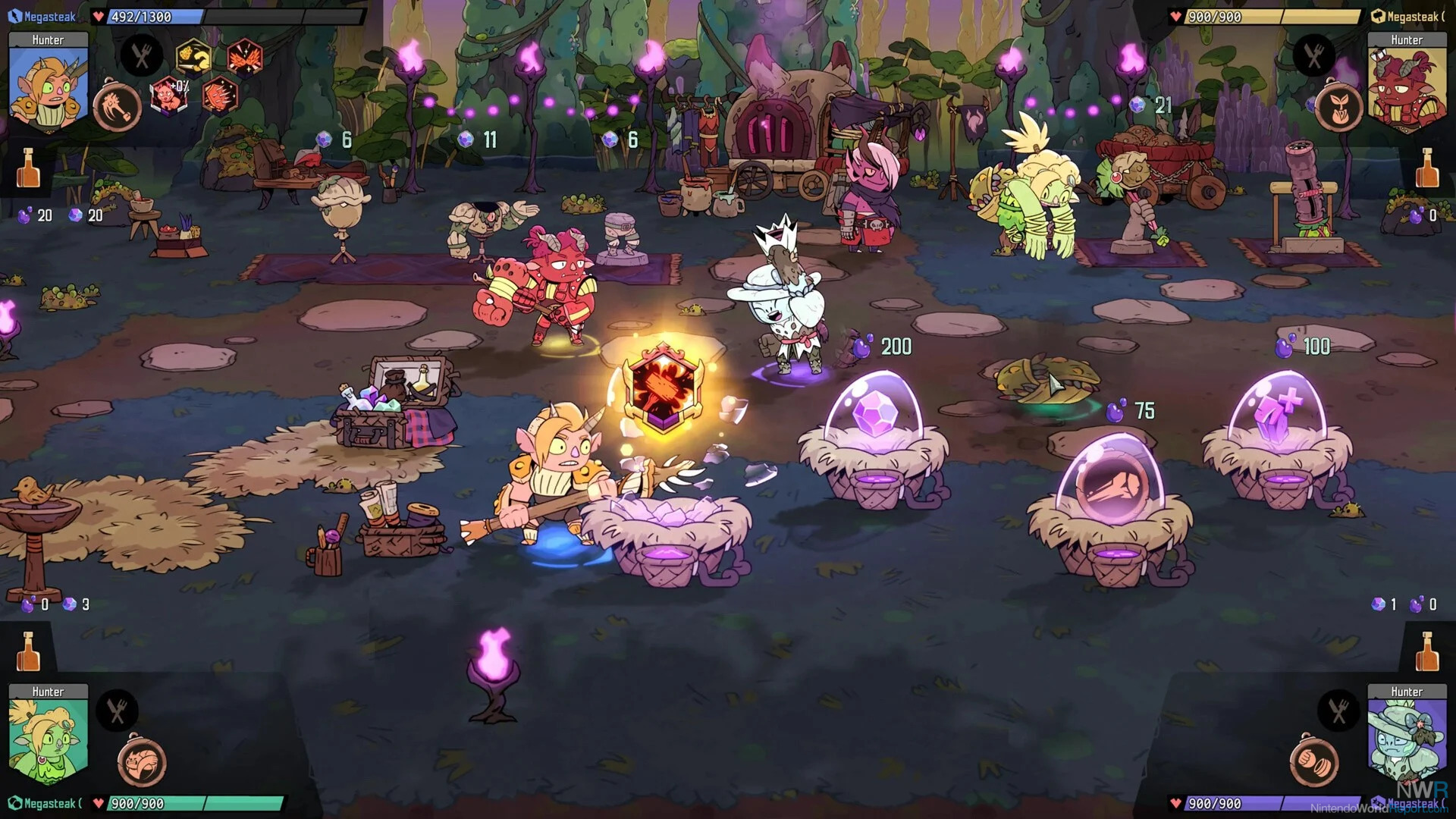
I get by with a little help from my friends.
Someday, I’ll get back to reviewing games that aren’t roguelites, but I’m at least happy to say that Rotwood is a fun roguelite. It’s also one of the few multiplayer-focused games I enjoy playing in multiplayer, although solo play is perfectly cromulent as well. Rotwood is trying something different, and I appreciate that. In this Klei Entertainment joint, you create an adorable goblin-esque character called a “Hunter” and go out to free the world of the Rot–purple goo that corrupts otherwise benign creatures.
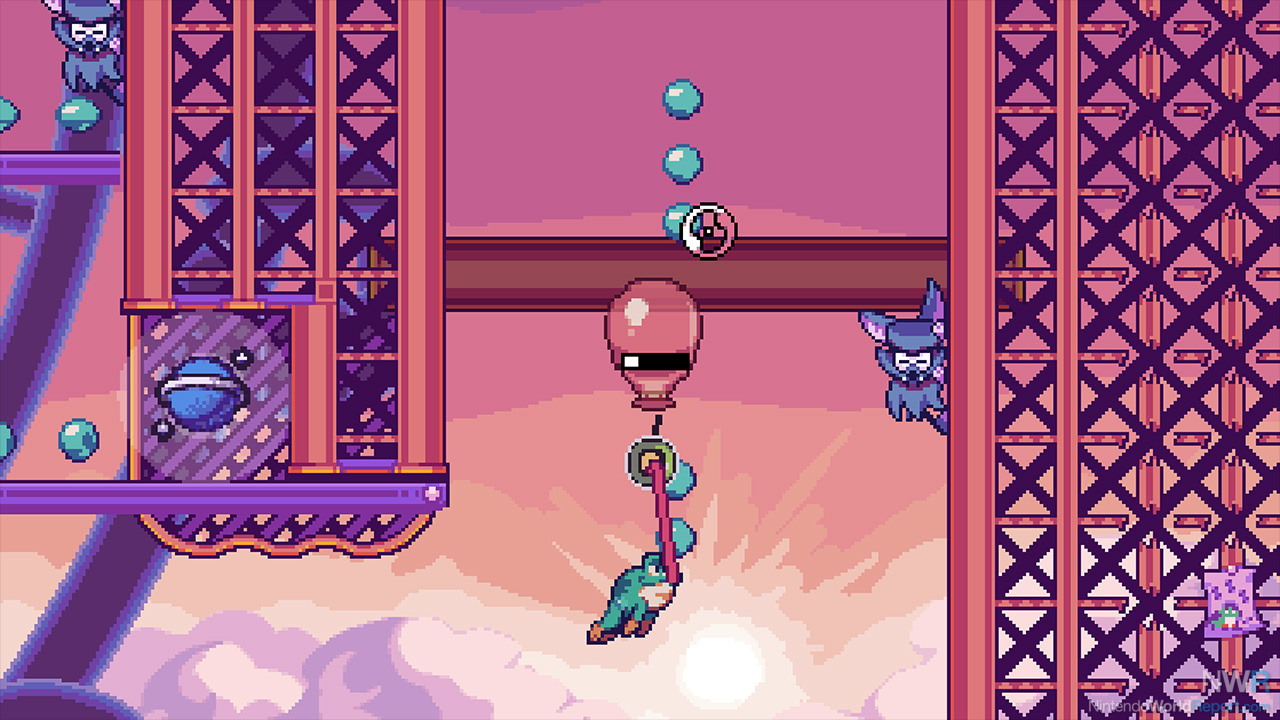
Unlike so many roguelites, Rotwood is stage-based. The goal is simply to get through a given area, which is generally pretty manageable, beat a boss, and return home with your loot. This is essentially a weapons-based 2D brawler, and you’ll pass through a series of combat rooms and shops on your way to each boss. Like any modern roguelite, different rewards are shown on the room exits: get a new power, or a potion refill, or a power upgrade, or materials, etc. Rotwood has run-specific currency (Teffra) and home base currency (gemstones and materials). There are a lot of materials, though, which I don’t love.
I could tell that Klei tried to find some unique power implementations for Rotwood, which I imagine is hard given the broad spectrum of roguelites out there. A few examples include a faster run speed, a permanent damaging aura around your character, or health bonuses for perfect dodging. The powers fit the brawler combat very naturally.
Rotwood’s combat is surprisingly deep and enjoyable. There are five weapon types: hammers, bows, spears, “strikers,” and canons. Each feels wildly different to use, and within each weapon type, there are a lot of variations (which must be purchased and upgraded). Armor is similar, with three basic types–hats, shirts, and pants–which generally have specific buffs which can be upgrades. All upgrading is done with materials found during runs. When I started the game, I really favored bows, which can pierce multiple enemies with the right button release timing, but I’ve learned to love spears, which give me some distance but hit pretty hard (once you learn the tricks). There’s something for everyone, which is great because Rotwood is primarily a multiplayer game.
I’m not saying you have to play multiplayer, because the game actually does a pretty good job of scaling enemy encounters based on how many people are in your party. However, there will be times where you’re alone against an enemy or a boss who doesn’t match your weapon style. With bosses especially, it’s nice to be able to multitask, with one or two people going after minions while the others focus on the big bad. Rotwood offers local and online multiplayer and the local option includes GameShare, although everyone will need a Switch 2. I was able to test local co-op (on one system) with two other people, and it was a good time.
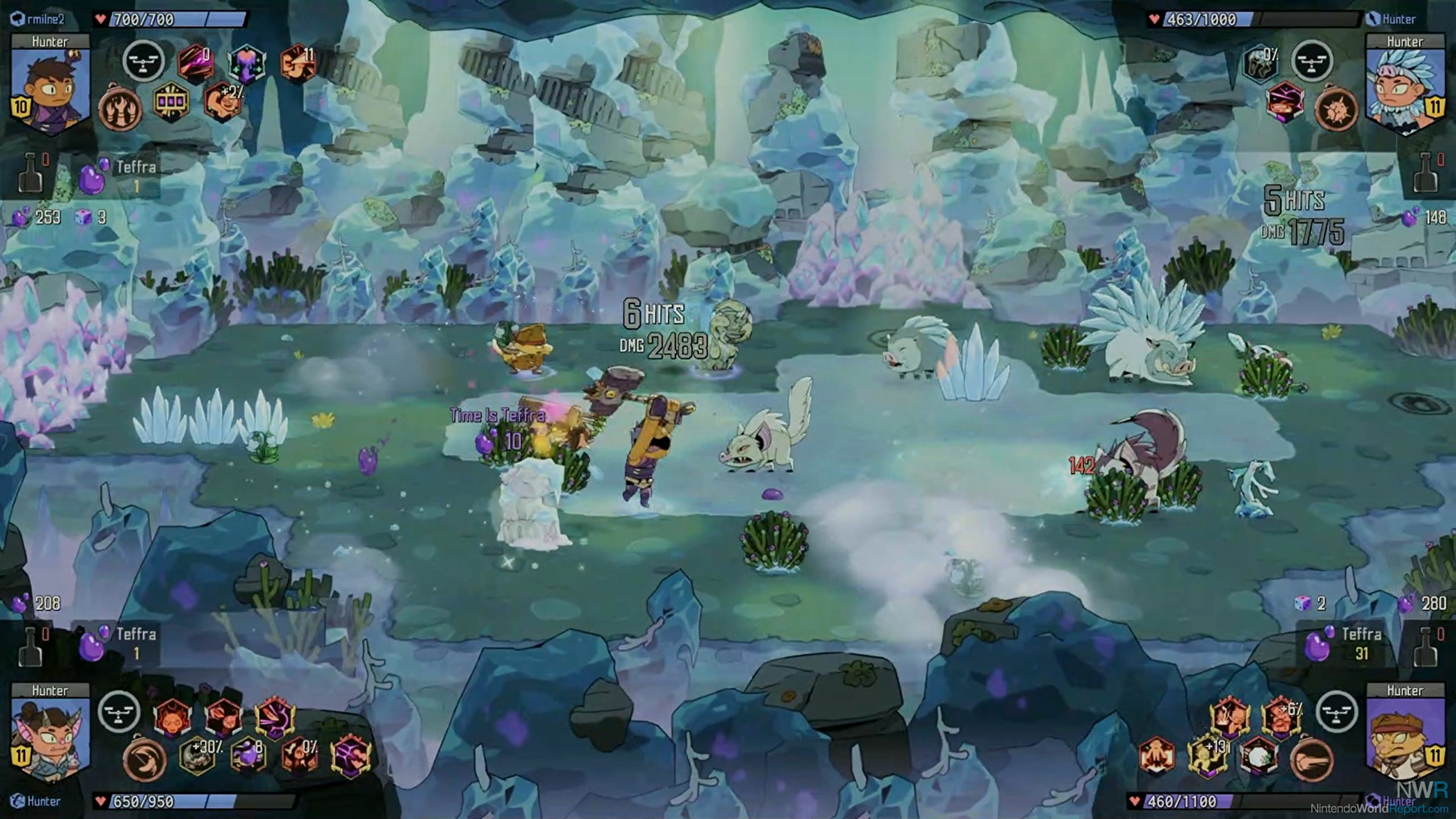
Everybody gets their own powers and an equal share of materials. Online play is a little more chaotic–if you join a random session, you’ll usually be plunked into the middle of an in-progress run with people who may be wildly over-leveled compared to you (or the reverse). Rotwood doesn’t do a great job of finding parties with comparable levels to yours, but hey, you get loot either way. I found that runs go much faster in multiplayer–which makes sense, because you can clear a room real fast with four people, and boss fights are often over before they really start.
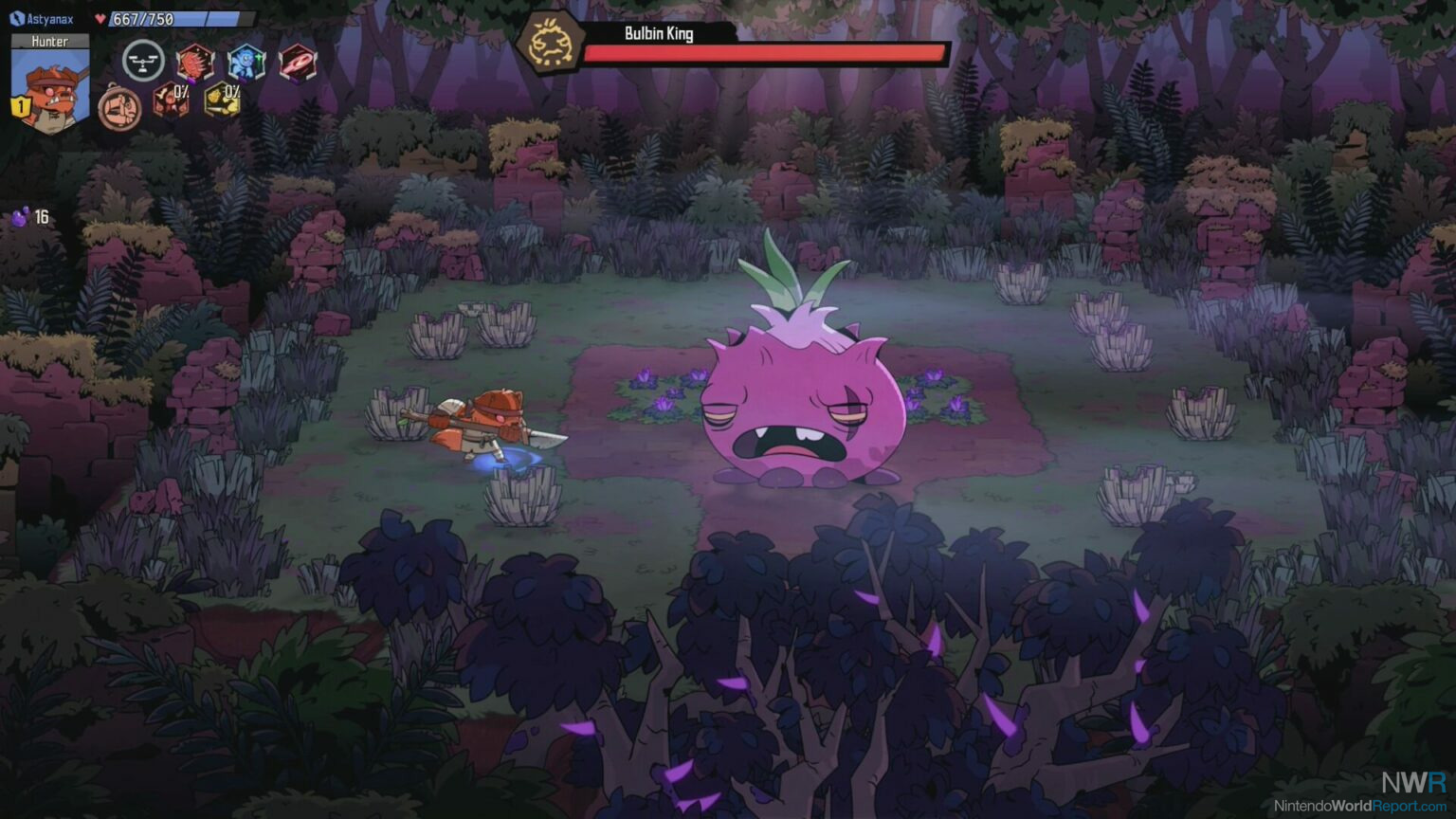
The thing I like most about Rotwood, however, is its aesthetic. This game is stunningly animated, beautiful beyond compare. It looks like a cartoon. Every character and every enemy has big expressions and funny reactions and you’d think you were watching something hand-drawn. I think the best comparison would be to something like Cuphead, but modern. Imagine a future where Don Bluth made a video game. The colors pop; each environment is filled with subtle decorations and danger zones that are gorgeous. I can’t say enough about the look of this game. The writing is also often funny without being “jokey.” Each NPC has a clear personality, and even the selectable responses of your own character (during dialogue) are impressively varied. The only thing I don’t like are the “talking” sounds that characters make. It’s not as lively as Animal Crossing–it sounds more…industrial, I guess, unnatural.
I don’t love the soundtrack, which almost immediately fades into the background. I need something peppier in my 2D brawlers. I’ve been playing this game for two weeks and I couldn’t even hum the home base tune with a gun to my head.
Your home base is a charming outdoor village, where different characters will offer their services for various materials and gifts. Gifts bring to mind Hades or Hades II, in which Zagreus and Melionöe can give Nectar, Ambrosia, and other “indulgences” to NPCs and gods to win their favor. In those games, however, that doesn’t actually do anything for you (it should damn well give you better Boons, but it doesn’t and that pisses me off). In Rotwood, gifts unlock new NPC abilities. For example, the armorer will let you upgrade your clothing, or the gardner will let you plant seeds in her fields. Sometimes, you’ll have to find a unique item (like the gardener’s tools) in a particular map before you can start giving them gifts, which I don’t love, but in general this is a better NPC system than in Hades. The downside is that gifts are surprisingly rare finds during stages. Similarly, there’s a gardening system, where you plant seeds and water them (don’t forget) every time you come back to the village. The nice thing is the plants produce materials with each watering and then MORE after they’re harvested. This is, again, a better system (to me) than in Hades.
If there is one system that consistently grinds my gears, however, it’s the “Talent” system. Each time you defeat a boss, you get a big gemstone. When you’re in the village, you can spend those stones on various stat boosts. Things like total HP, runspeed, how many potions you take along, whether you get a dodge bonus, whether you can heal your friends, etc. The problem is that each time you defeat one of the bigger bosses, you open up new stats to boost. And there are just so many. It’s not as glacially granular as Towa and the Guardians of the Sacred Tree, but it’s…pretty granular, especially considering that a single stat boost often requires two or more gemstones. I don’t love this, and the game likes to remind me that I have unspent gemstones before going on a mission and I’m like, no, I just don’t have ENOUGH.
All that said, Rotwood is doing a whole different thing from other roguelites I’ve been subjected to recently and it’s doing it well. I do feel like the game ratchets up in difficulty once you reach the second major area, at which point a multiplayer approach becomes more advisable, but you can also farm resources in previous areas to upgrade your stuff beyond whatever recommended level a given stage recommends. I still think the industry is oversaturated with roguelites, but Rotwood is one of the good ones.