Damon and Baby Review – Review
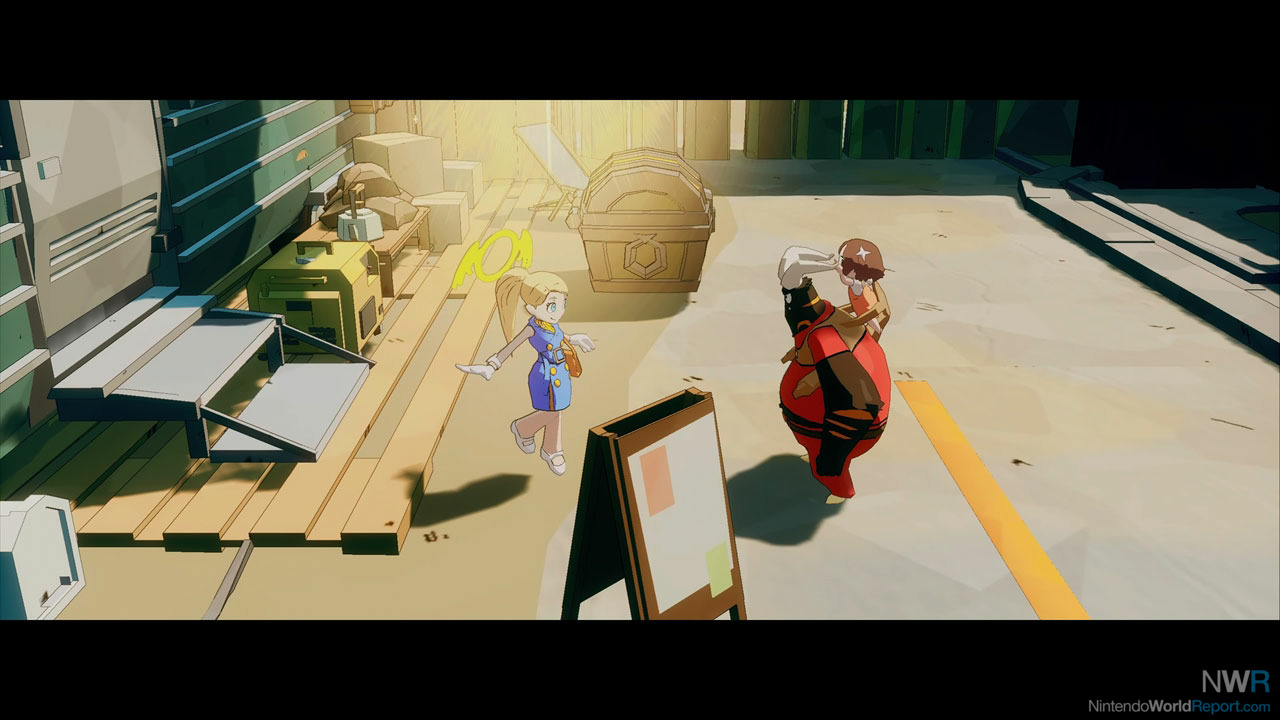
A little angel and her demon protector.
From Arc System Works comes a quirky Zelda-like with twin-stick shooter gameplay and a vibrant art style. DAMON and BABY feels something like Oceanhorn or TUNIC but with the aesthetic that Arc System Works is known for, and after some initial friction with the controls, I found myself compelled to push further into this unique action-adventure. It will come as no surprise that the premise of a baby riding on the shoulders of a demon invites a healthy dose of comedy, which shines through in the game’s dialogue, but there’s a novelty to the world and a mostly effective sense of progression that’s pushing me forward. At present, I’m about 5-7 hours into DAMON and BABY, so here’s what I think so far for this review-in-progress.
The story centers on a prospective demon overlord named Damon who has grand aspirations to become a leader of the demon realm. After the father of a young baby passes away, Damon is entrusted with the child’s safety, but there’s more to her than meets the eye, and this appears to be one of the central mysteries of the game. Immediately after the tutorial dungeon, you end up in a small desert town where the story unfolds a bit more and you’re charged with finding out why demons are running amok and figuring out what’s happened with an individual referred to as the Lord. Damon himself never shies away from cracking a joke–many of the 4th wall-breaking variety–but the humor fits well in this pseudo-real world setting. Eventually you meet different human shopkeepers and mapmakers, and then monstrous creatures also that seem imposing but end up introducing new mechanics and abilities.
In true Zelda fashion, especially titles like the original Legend of Zelda and A Link to the Past, Damon encounters obstacles on his path that require exploration to find a way forward. Typically, these involve gaining a new physical ability, like a stomp, double jump, or wall climb, but also familiar tools like bombs. In addition to a standard slash attack (which locks on to the enemy for easier sniping), the twin-stick shooting mechanics see Damon gain access to a machine gun and shotgun with limited ammo to complement his standard handgun with unlimited bullets. While it’s nice to have a few different weapons to choose from for the fights you encounter–machine guns do really well when trying to clear a room of weaker foes, for instance–the guns and their ammo represent one of the main issues with DAMON and BABY: itemization.
The world of DAMON and BABY is filled with closets, cabinets, dressers, and boxes full of items–these include ingredients for cooking, guns and gloves for combat, and tokens that you hold in your backpack to boost your stats. You’re constantly picking up new stuff, but you’re very limited in what you can carry as the starting backpack and the initial save room storage chest are incredibly small. Upgrades to both containers are costly, and having to pay for fast travel points ultimately means less access back to town to sell your extra goods. What this creates is an early-game cycle where you may have to just constantly drop what you’re holding to create space or ignore loot you come across rather than save it for later. In a survival game like Resident Evil, the tension of not having what you need and the strategy of managing your limited space fit with the genre; in an action-adventure that encourages exploration, these storage limitations are just plain frustrating.
Another problem is the survivability of Damon and the auto-save system. If you don’t have enough healing items on hand, you won’t be bailed out by picking up hearts or their equivalent from defeated foes (you will find more ammunition than you can ever carry, though!); so it’s more or less a necessity to keep ingredients with you for minor health restoration or make a point of gathering and hanging on to the food items you need for when you do end up in a kitchen space and can put on your chef hat. What may be worse is the auto-save system, which really only seems to save around the exact same time that you make a manual save. You would think that either resting at a bench to restore your health or sleeping in a bed to both restore health and spend accrued ability points would function as an auto-save activation; you would be wrong. There’s no real reason why the auto-save shouldn’t happen more often.
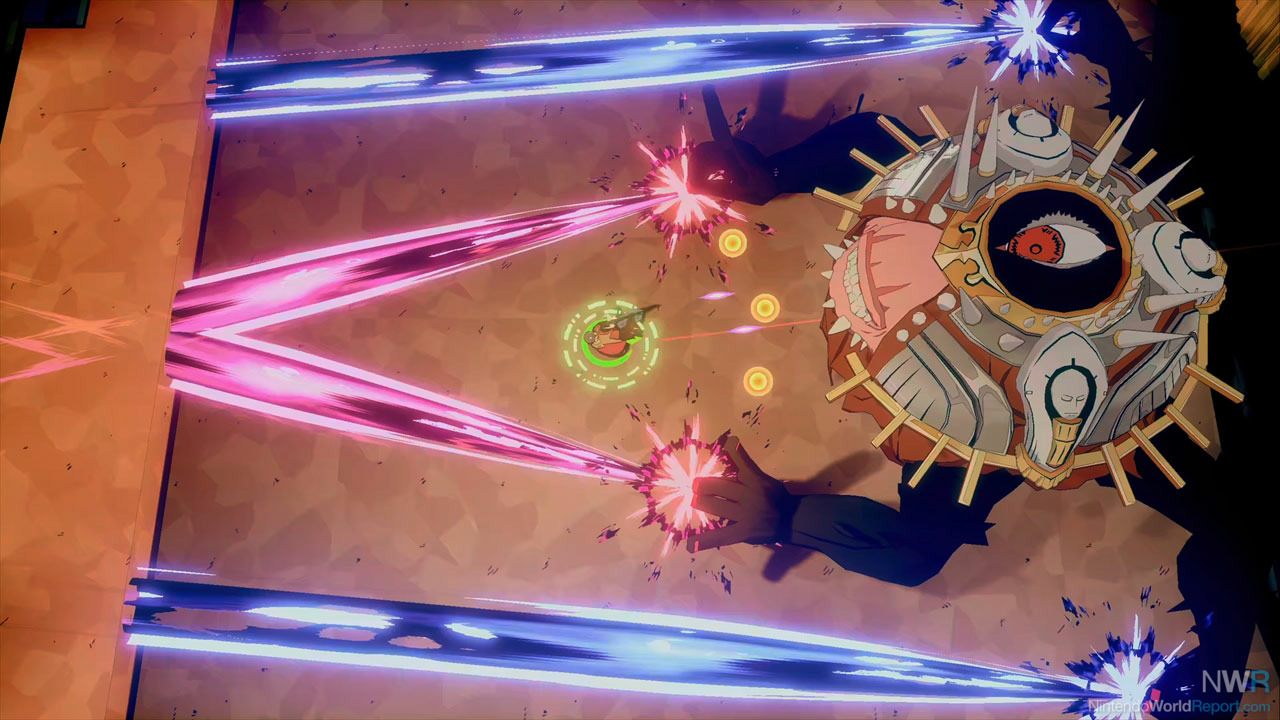
With regards to gameplay, combat and movement largely feel good, after you get over the initial learning curve. Damon can throw the baby to teleport a short distance away, which in practice functions like a dash to traverse gaps or avoid attacks. Switching between guns and reloading them is fairly quick, but it’s annoying to not have an on-screen indicator of your total ammo reserves. The boss fights offer a fun challenge and have so far been distinct and with more of a top-down perspective, which is another nod to the twin-stick genre. The dungeons themselves can be annoying to navigate because of the way the camera can obscure paths and doors; this means you need to be thorough about checking every wall and corridor before moving too far forward, lest you end up running in circles and feeling you’re trapped in a maze.
There’s enough I’m enjoying about DAMON and BABY that I’m curious to see the experience through to the credits. Its use of familiar mechanics in a novel wrapping and the enticing aesthetic and presentation do help to smooth out some of the rougher edges mentioned above. At present, I’m hovering around a lukewarm recommendation, but check out Nintendo World Report dot com closer to the game’s March 25th release date for a final score update. In the meantime, DAMON and BABY does have an eShop demo with progress that carries over to the full game, so check out for yourself how it feels to play as this devilish cute duo ahead of launch.