Rubato Review – Review – Nintendo World Report
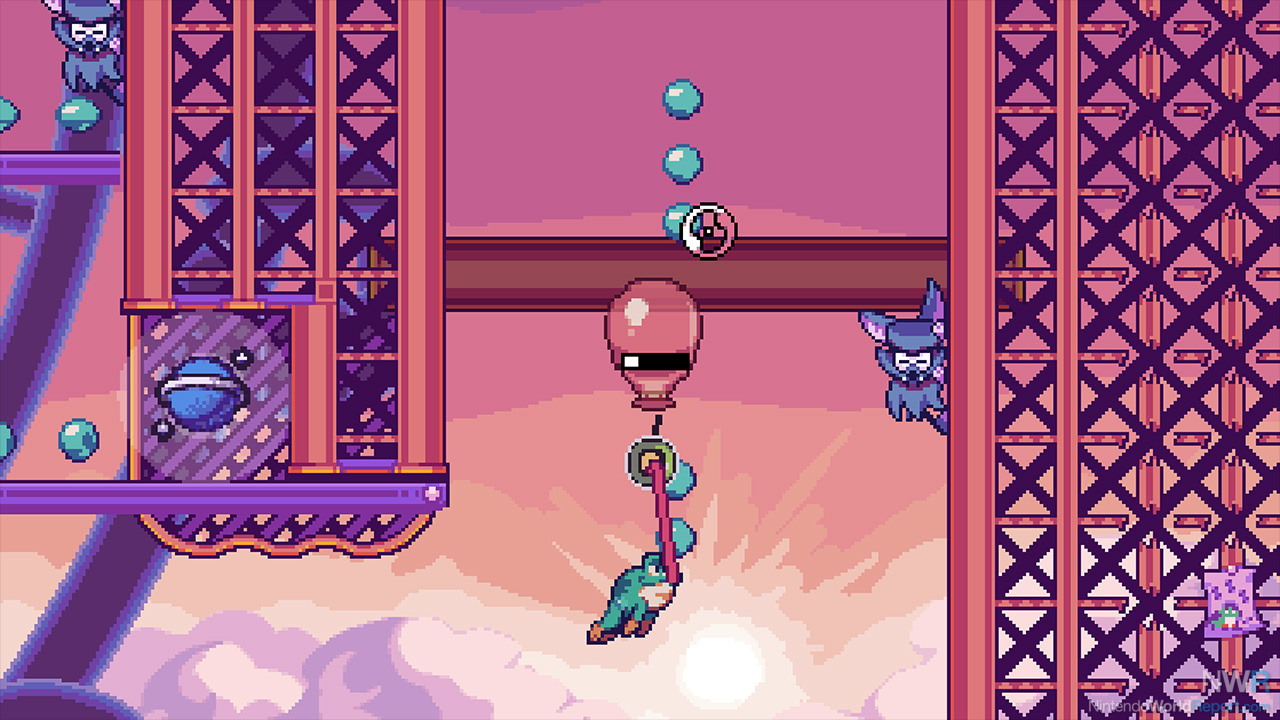
Rubato caught my eye while browsing the Nintendo Switch eShop for upcoming titles. While pixel-art platformers aren’t exactly uncommon, the large sprites–and in particular the usage of 3D-animated pixel art–was something I’m fairly sure I hadn’t seen since the old days of the internet. Rubato is a strange 2D platformer that leans into the experimental nature of games from the early 2000’s. I wouldn’t consider it a personal hidden gem to me, but it would not surprise me if it may end up being yours.
During a game of pool, members of mysterious The Company, manage to blow up the entire solar system. More afraid of what will happen to them if Higher Management finds out, Rubato is tasked with finding the planet bits that have scattered across the world. You will be exploring large, multi-part levels trying to gather these bits while meeting an eclectic cast of characters and finding yourself among a power struggle within The Company. I found the story of Rubato pretty difficult to follow–not just because it jumps in tone and visual style, but also because characters talk in strange sentences and have undefined powers or roles within the story. I found it easier to let it just wash over me and succumb to the strange world presented here.
Rubato, the game, is a 2D physics-based platformer. While you will be double jumping across platforms, the main mechanic is using Rubato’s tongue to pull and push objects, latch onto rings and take out enemies. Best described as a mixture between Yoshi’s Island and the Wario Land series, Rubato’s levels are large; enormous would actually be more apt. Their slightly confusing layouts and lack of straightforward navigation makes the game quite a challenge to get through: whether that is pushing buttons to open doors on the other side of a fairground or jumping on top of moving cars to reach higher platforms. Traveling between areas of the levels you may stumble upon subzones and challenges. These were some of my favorite parts of the game as they tend to use a singular mechanic but give the game room to breathe. At one point, I was guiding an endless stream of cars as part of a ‘city planner’ guide in first-person playing as a character named Guy Craft, destroying blocks to make sure they’d reach their destination. The weirdness of the writing just emphasizes that Rubato is a game unlike any other.
In the end this does make for a confusing mess at times. But I will commend it for sticking to its choices. Traveling between levels takes place on a 3D-rendered map, akin to Final Fantasy VII. There are so many Planet Bits to find in levels that it doesn’t really matter if you get lost, because eventually you will find another path to fall back on. It has an excellent soundtrack and that visual style doesn’t just remind me of some of the best the Game Boy Advance had to offer, but deploys plenty of unique stylistic twists such that no two levels ever feel the same. But the other side of that same coin makes the game hard to pin down and even harder to talk about. The platforming feels great, but within the sprawling and varied levels the game can get repetitive and disorientating. Rubato is both a provocative game in its presentation, but also a bit too obsessed with its drawn out story and strange characters. I had a good time, but was only really able to enjoy the game in shorter bursts. If you’re a platformer veteran and looking for something that is out of your comfort zone, you really cannot go wrong with Rubato. Even though I don’t think I’ll personally revisit it any time soon.