Fatal Frame II: Crimson Butterfly Remake review

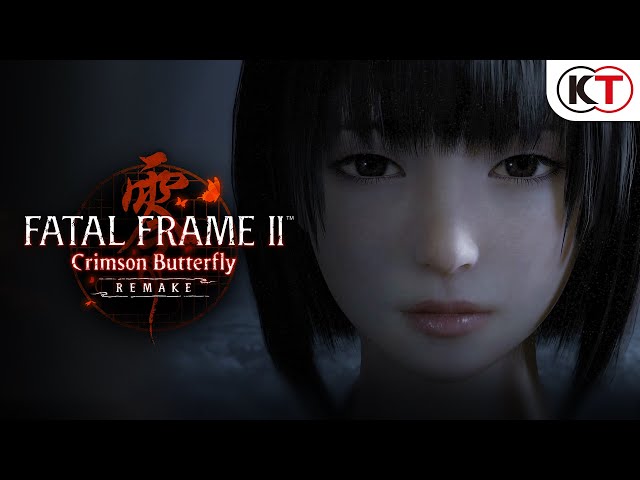
Recent years have seen two of the biggest series in horror gaming – Silent Hill and Resident Evil – step into the modern age with stunning remakes of their classic entries, and to great success. Now, a dark horse has risen from the same corner of the industry, and, like RE and SH, has also decided to start this new venture with the second game in the series. I am, of course, talking about the Fatal Frame II: Crimson Butterfly Remake.
Following the release of the first game in 2001, the original Fatal Frame II arrived on PlayStation 2 back in 2003, and later saw a unique remake for the Wii in 2012 under the name of Project Zero 2: Wii Edition. Despite critical acclaim, Fatal Frame II never quite reached the level of fame and popularity that its contemporaries enjoyed, but has since earned itself a cult status, and, to this day, Fatal Frame is revered as one of the best horror game series of all time, going on to spawn several more sequels and spin-offs.
Now, despite being a big fan of horror games and having a genuine interest in the topics it covers, I somehow completely missed the Fatal Frame games initially, and still haven’t gotten around to playing them. So, when I heard news of the remake, I was excited to approach it from primarily a newcomer’s perspective, curious as to how it would work as a proper introduction to the series.
Fatal Frame II: Crimson Butterfly follows the story of twin sisters Mio and Mayu Amakura, who find themselves spirited away to the lost town known as Minakami Village. This village is the site of a mysterious ritual that failed in the past, causing the gates of hell to open and causing the village to disappear from the region, trapped in an eternal night where the ghosts of the residents are destined to relive the events of the failed ritual forever.
Taking control of Mio, naturally, your main goal is to escape. However, you frequently find yourself separated from your twin, and must delve deeper into this dark and hostile place in order to save her each time. Along the way, you find yourself coming face to face with a multitude of angry, trapped spirits, each with their own woeful tales, and you quickly become entangled in this dark world that straddles the line between the past and the present.
Luckily, you also find a unique piece of equipment called the Camera Obscura while exploring the town, which you can use to capture spirit photographs. Snapping pictures of the angered spirits damages them and, after a few shows, eventually exorcises them, seemingly freeing them from this hellish cycle and, of course, saving yourself and your sister from meeting a similarly grizzly fate.
I’m not quite finished with the story just yet, but I absolutely love it. From what I’ve seen, it follows the original very closely, but it still holds up as an awesomely atmospheric experience that perfectly encapsulates the haunting world of Japanese folklore. In fact, a lot of elements feel very akin to Silent Hill f, so, if you enjoyed that one and are looking for something with even more lore to paw through, I’d highly recommend giving this one a try.

Additionally, while exposition dumps via notes can be a bit of a tedious and tired trope in even the best horror games, they feel very natural here. As you explore, you pick up notes and journals, slowly piecing together the individual stories of the people who lived here and how their actions contributed to the fate of the village. My favorite element of this is when you catch a glimpse of a specter reliving echoes of the past and quickly snap a shot, which sometimes triggers a document to appear in their place.
This, combined with the fact that the documents you collect are often out of order or incomplete, makes for an interesting narrative experience, as the lives of the people impacted by the central events slowly unravel around you, drip-feeding you information to keep you invested while also giving you room to theorize and try to work it out yourself.
Of course, collecting documents is just one facet of the gameplay. You spend much of your time walking around and exploring the haunted village as Mio, occasionally joined by your sister Mayu. You control Mio with an over-the-shoulder third-person perspective, with slow, cumbersome movements that almost feel reminiscent of tank controls. You can walk, “jog” (essentially, walk a little faster), perform a very slow and clumsy dodge, or crouch down to hide and reduce the sound you make.
As you explore, your time is split between collecting things like the aforementioned documents, consumables like herbal medicine and camera film, and items such as keys and memory stones that contain the thoughts of a spirit.

On top of this, you have your Camera Obscura, which you can unlock a variety of filters for, opening up different uses for it. While its core purpose is to exorcise wraiths, you can also unlock the ability to see spirit traces, re-materialize objects and doorways that were there in the past, and remove blood seals on doors and cupboards. The game uses these filters to create a range of different puzzles, and some of them are quite interesting, but they’re often very simple and rely more on you collecting the right objects to solve them. Instead, it’s the combat where the challenge really starts.
As you’re exploring, you’ll frequently find yourself locked in rooms or stuck in tight alleyways with one or more wraiths. These anguished spirits have a range of moves and dirty tricks, including teleporting, throwing their disembodied hands at you, jumping in front of your face to spook you and drain your willpower (essentially, sanity or stamina), and even spitting blood on your lens so that you can’t see them clearly.
Your primary goal is to take photos at the right moment with as many focal points in frame as possible to deal maximum damage, but there are also other factors to keep in mind, such as managing your film and focus, ensuring you trigger the special modes to wrack up more points and deal higher damage, and, if Mayu’s with you, making sure she doesn’t get hurt, because, if she does, it’s game over.
The combat is undeniably tough at the start, as you grapple with learning the mechanics, fighting the camera to ensure you’re consistently targeting the wraiths as they teleport around, and keeping an eye on your health and willpower. However, once you’ve gotten to grips with things and invested in a few upgrades for your Camera Obscura, combat get significantly easier.

For me, the turning point was in chapter 4, when I briefly got my sister back and also unlocked the first level of the Camera Obscura’s focal point upgrade, as well as the standard filter’s max attack. Suddenly, I was taking down most wraiths with a few shots, even when facing two enemies at the same time. Then, as soon as I’d finished those pesky paranormal entities off, I could just hold hands with Mayu to restore my willpower and health within seconds, no run to the nearest save lantern required. Of course, you can absolutely still get caught out, though, as the game introduces new types of enemies (including an undefeatable one) around this point, and you may find yourself running out of decent film, which has a massive impact on your damage output.
Speaking of which, this is a good time to bring up one of the differences between the remake and the original. I’ve seen online that in the original, the camera system saw you using the points you acquired from taking spirit photos to upgrade your camera’s accumulation, range, sensitivity, and individual lenses. In the remake, you use these points in the save shrines’ shop to purchase charms, specific items like herbal medicine, and stickers that you can use in photo mode. The latter are entirely useless in terms of gameplay, they’re simply there for taking nice screenshots and adding a bit of flair through the odd blood splatter and disembodied hand.
However, as you can probably guess from what I said earlier, there are still upgrades for your Camera Obscura in the remake – but, instead of using points, you upgrade them using an item called prayer beads. The upgrade options are different, too. Now, you’ve got focal point, which increases the amount of focal points, making it easier to take better quality photographs, zoom and focus, which give you more control over your camera, and film capacity, which is the equivalent of increasing your ammo capacity in other games.
Each filter also has its own categories that you can upgrade, including things like attack power, range, and the efficacy of the filter’s special ability. You can also reset your prayer beads at any point using an item called reversion beads, which you can purchase from save points for only 100 points. I really like this system, as it allows for some experimentation and freedom to cater things to your personal preferences without any long-term consequences.
Despite having the stunning visuals of a modern game, in many ways, Fatal Frame II: Crimson Butterfly Remake feels like an old game. This is both a good and a bad thing. On the positive side, though I’ve not played games from this series before, it really captures that sense of nostalgia I get from returning to older horror games. I love the way obtaining and investigating items appears as a pop up screen that really feels like a classic horror game, and the intricate, experimental mechanics remain intact. I’m also partial to a bit of old school jank and clunkiness so long as it doesn’t impede on gameplay, and this certainly has that.
On the negative side, it also maintains some of the more tedious and punishing elements of older horror games. And, while I do enjoy a challenge, this makes it a bit of a hard sell to modern horror gamers who may be less forgiving. Features are often obtuse and tutorials, if present at all, often leave much to the imagination. Sometimes, they even come late, appearing after you’ve already done the thing they’re trying to explain. This can also be a positive at times. I do enjoy a game that doesn’t feel the need to hold your hand and over-explain everything, as it can be very satisfying to work things out on your own. However, with Fatal Frame’s unique and often obscure mechanics, many features aren’t exactly intuitive, making it quite unfriendly to beginners unfamiliar with the series.

However, from what I can see, it’s quite a faithful reimagining of the original, while still bringing a lot of elements into the modern age to cater to a new audience. It still maintains some of the clunkiness and intricate mechanics that can be quite overwhelming for a new player at the start, but, in the process, it really manages to recapture the essence of what made Japanese horror games from the early 2000s and 2010s so special. I doubt it will have the same mass appeal as the recent remakes of the Silent Hill and Resident Evil games, but I feel it successfully preserves and modernizes a classic piece of horror game history and breathes new life into it without losing its identity, and I love that.
In terms of performance, I’ve been playing Fatal Frame II: Crimson Butterfly Remake on Nintendo Switch 2, and I’m very impressed with how well it runs and how gorgeous it looks. I love the balance between the more modern, realistic graphics and the slightly more stylized character models. The different enemy designs are also fantastic, even if the sheer quantity of enemies results in a bit of overfamiliarity that can make them feel a little less spooky.
There’s some texture pop-in that occurs from time to time, and a certain room with a large quantity of red lanterns made it quite obvious that there’s a lot of culling at play, which is likely what allows the game to look so nice on the Nintendo Switch 2, but neither of these were severe enough to detract from the genuinely beautiful graphics.

I will say, though, that I have encountered some bugs, especially when walking around with Mayu. For example, sometimes she’ll block you when you turn around in a tight corridor, and walking against her in an attempt to get her to move makes her jitter and slide around. Similarly, when you hold hands with her, things can get a little janky, with her pulling such classic moves as the ol’ “my people need me” levitation routine.
Still, this isn’t a constant thing, it always fixes itself quickly, and is honestly nothing compared to a new Bethesda game. I’ve not had any bugs impact my gameplay in any real, tangible way, so it’s more funny than anything, and I expect to see such issues patched out come launch.
Now, I still feel like I need to see a little more before confidently slapping a score on this one. I especially want to collect the different endings and see how they size up against the original, so I’ll be back later this week to update this review with my final thoughts. But, as it currently stands, I highly recommend Fatal Frame II: Crimson Butterfly to any fans of old-school horror games. As long as you can handle a little bit of clunkiness and the game’s pretty steep learning curve, anyone who has an interest in supernatural shenanigans and classic J-horror goodness should try the demo at the very least – I’m sure you won’t regret it.