After beating Slay the Spire 2 with an 8 year old deck, I’m starting to feel like this is more of a remake than a sequel
Slay the Spire 2 has some big shoes to fill. The original was a truly foundational game, setting so much of the template of the modern roguelike and spawning an army of deckbuilder imitators in its wake. The question is, can its long-awaited sequel live up to that legacy? Hmm. You know what, it might be living up to it a little too much.
Loading up the Early Access release for the first time, the wave of nostalgia is potent. Though the first game has never really left my hard drive for any length of time, it’s been years now since I last played it regularly. Seeing the Ironclad, the Silent, and the Defect again is like hanging out with old friends.
But during my first run, that nostalgia starts to give way to a feeling more like déjà vu. The three returning characters (of five total) begin play with the same starting decks and relics as they ever did, with their card pools largely familiar as well. Progressing across a familiar map, I find myself picking up more and more cards I recognise, supplemented by returning relics and potions.
Article continues below
Before I know it, I’ve beaten Slay the Spire 2 on my first run… using a deck and build pretty much exactly like one I used to beat the first game eight years ago.
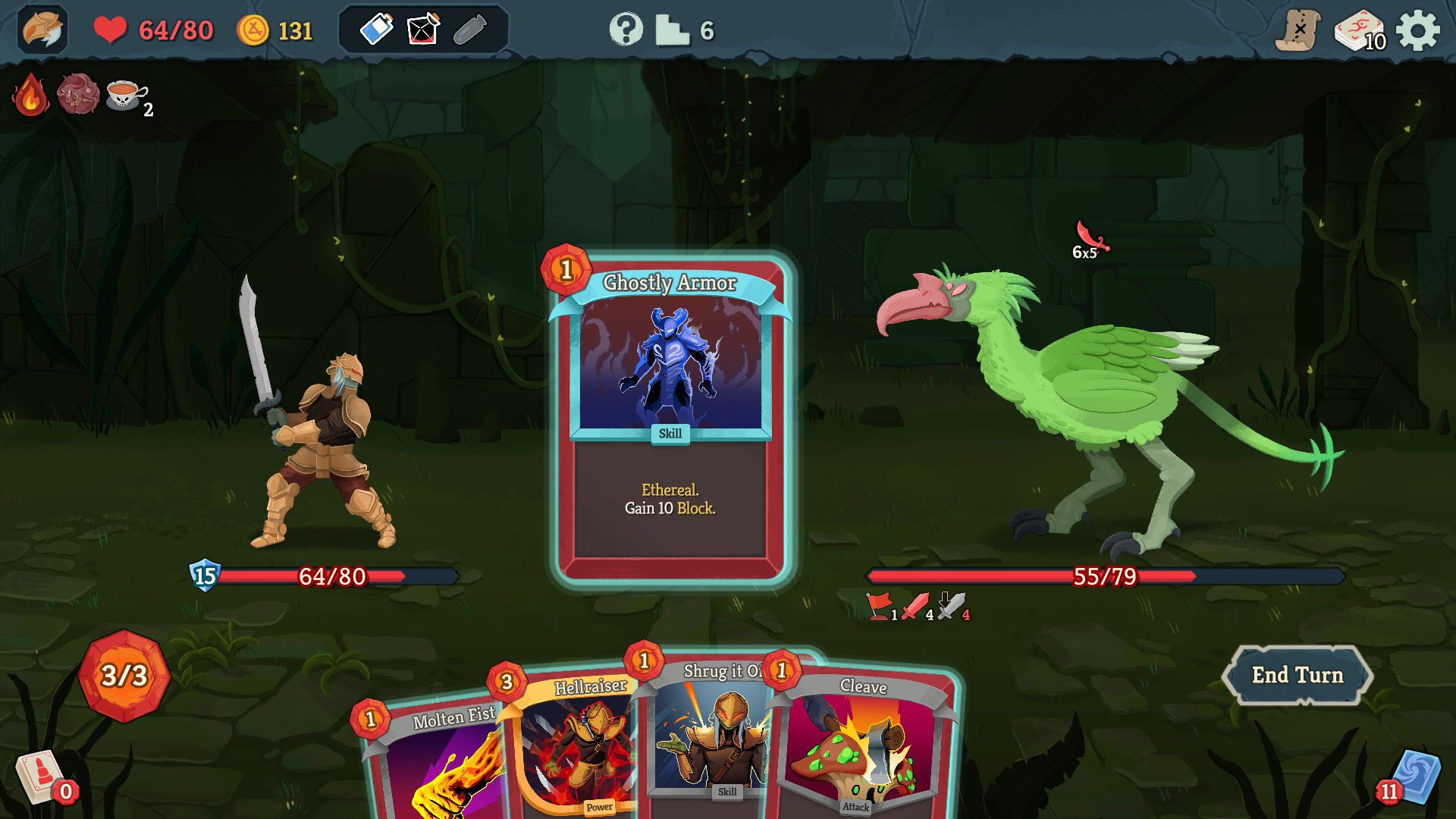
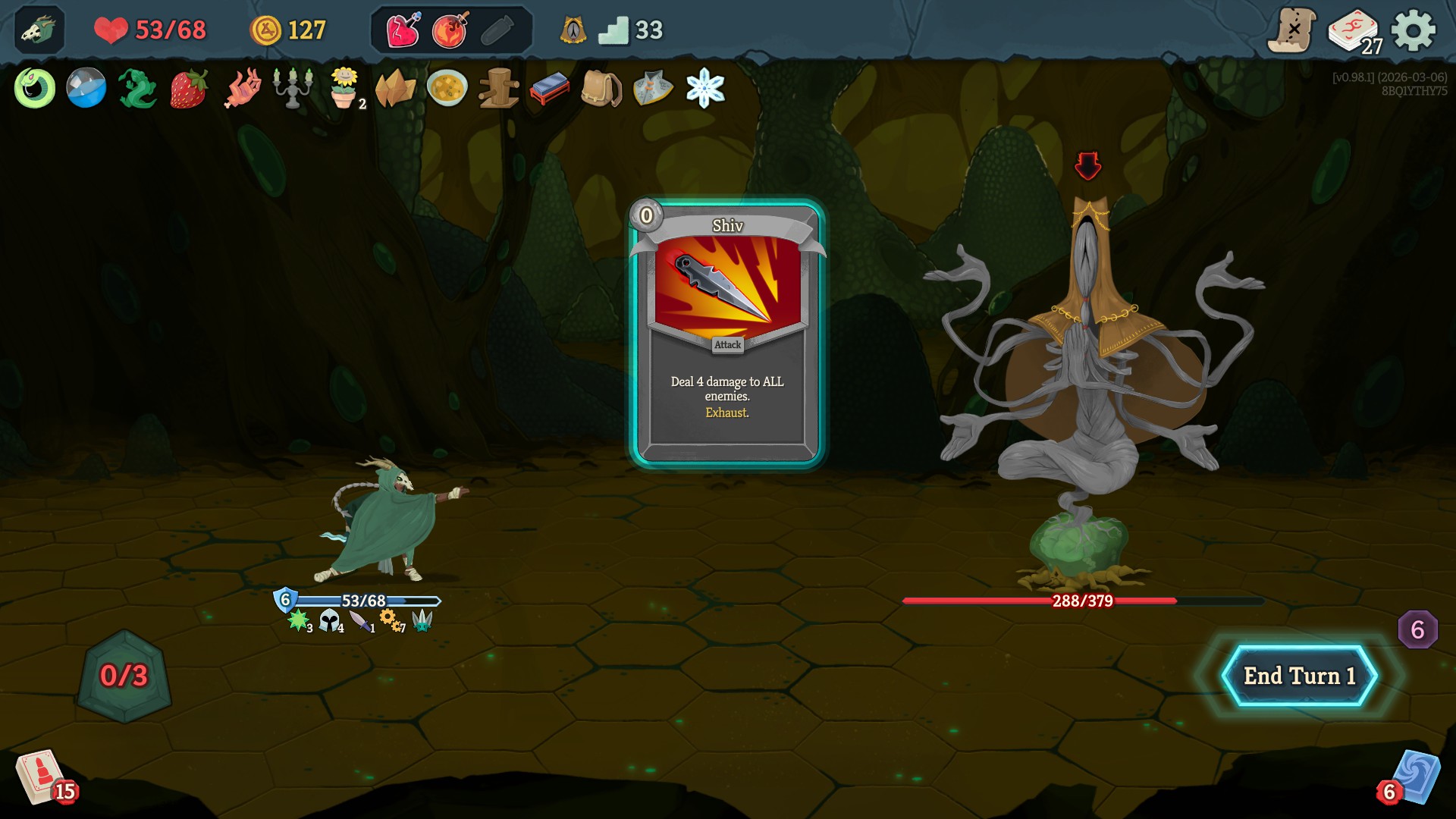
Then I did it again, and again, and again, dredging all the old archetypes out of my brain and finding them hardly touched by time. Shiv Silent, Powers Defect, Self-Damage Ironclad, and more. A new card here, a new relic there, and new bosses to beat them with, but they’re just little riffs on strategies practically etched into my soul by hundreds of hours in the first game.
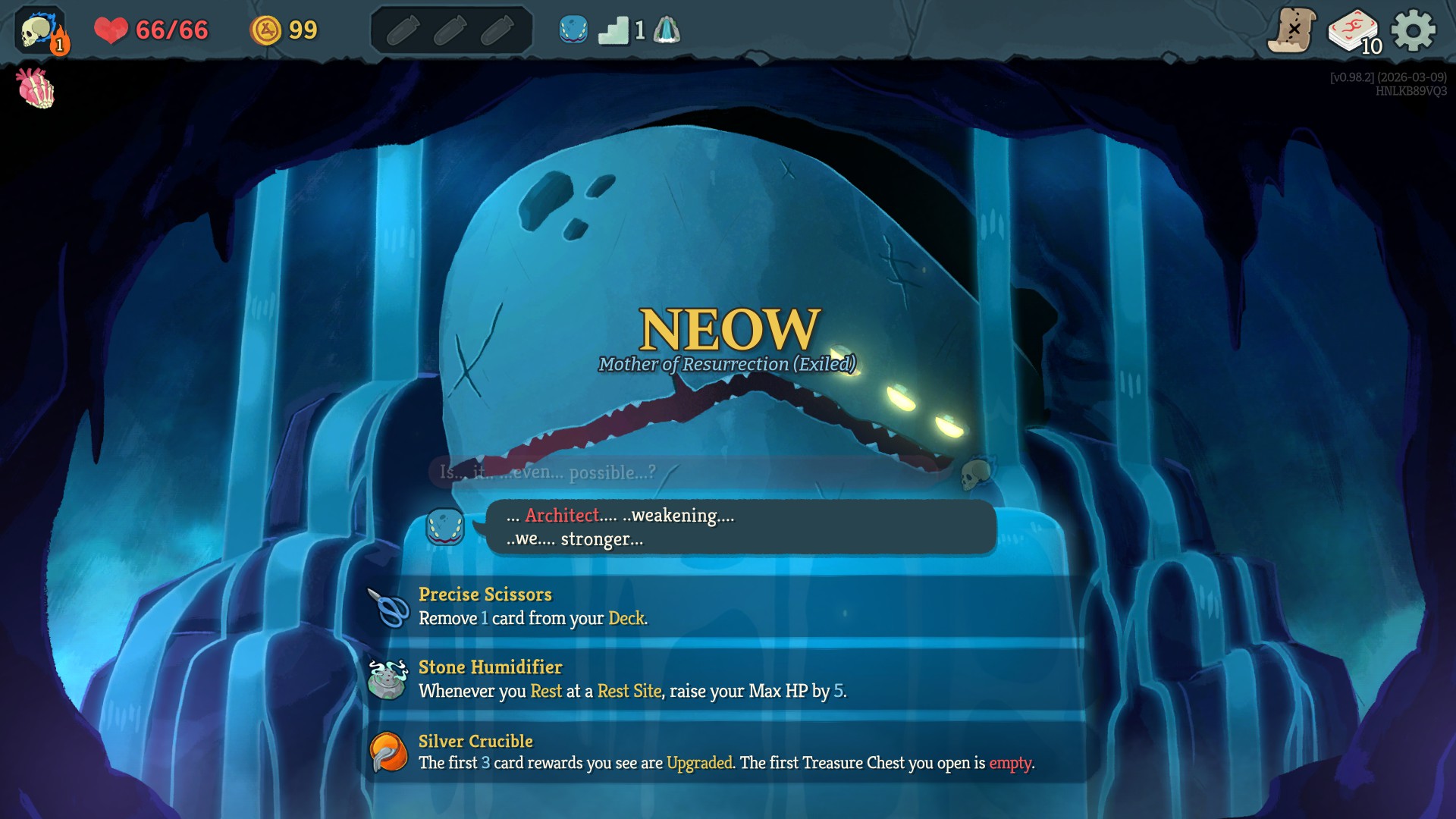
Don’t get me wrong, I’m having fun—the core formula of Slay the Spire remains great, a whip-smart deckbuilder that demands both precision play and the will to create combos so abominable they practically break the game. There’s a reason it’s still number 38 in our list of the Top 100 PC games we recommend readers play today.
But a lot has happened in the time since Slay the Spire first launched back in 2017. The genre has rapidly evolved and changed. Hades reimagined how storytelling could be woven into a roguelike. Balatro found a totally fresh take on the quest for ever-growing numbers. Just this year, Mewgenics embraced emergent storytelling and systems-driven chaos to a whole new degree.
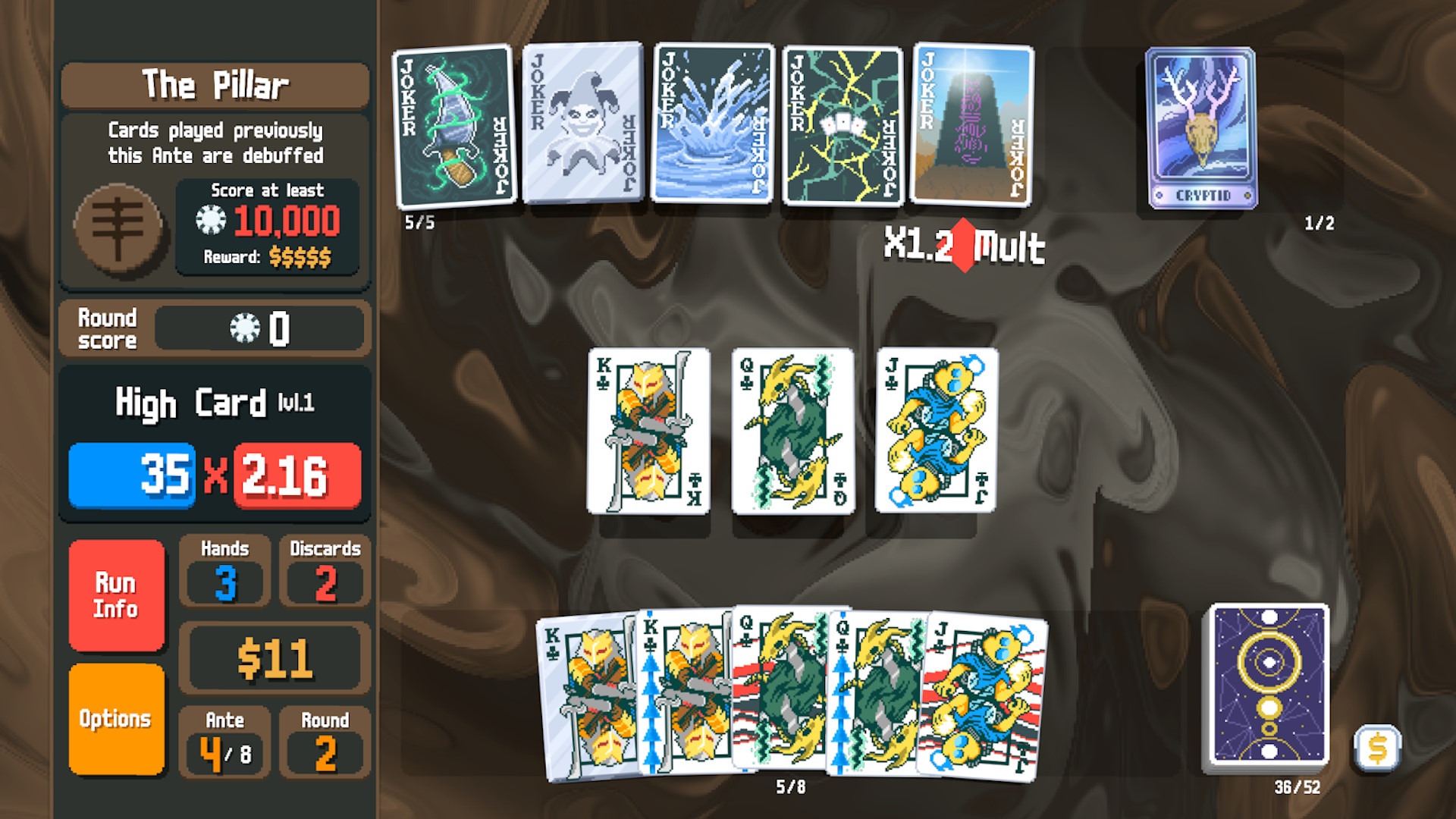
Meanwhile less well known but still groundbreaking games have remixed the deckbuilder concept specifically into everything from tense and tactical spaceship battles in Cobalt Core, to slickly choreographed martial arts sequences in Shogun Showdown, to brutal soulslike combats in Death Howl. I could name a hundred more.
Slay the Spire 2 feels untouched by any of that innovation. It is improved, for sure—the visual upgrade is striking, and of course there are new cards, characters, enemies, and events to discover. Fundamentally, though, it is the same experience with the same strategies, rhythms, and quirks that we’ve already enjoyed for hundreds of hours and nearly a decade.
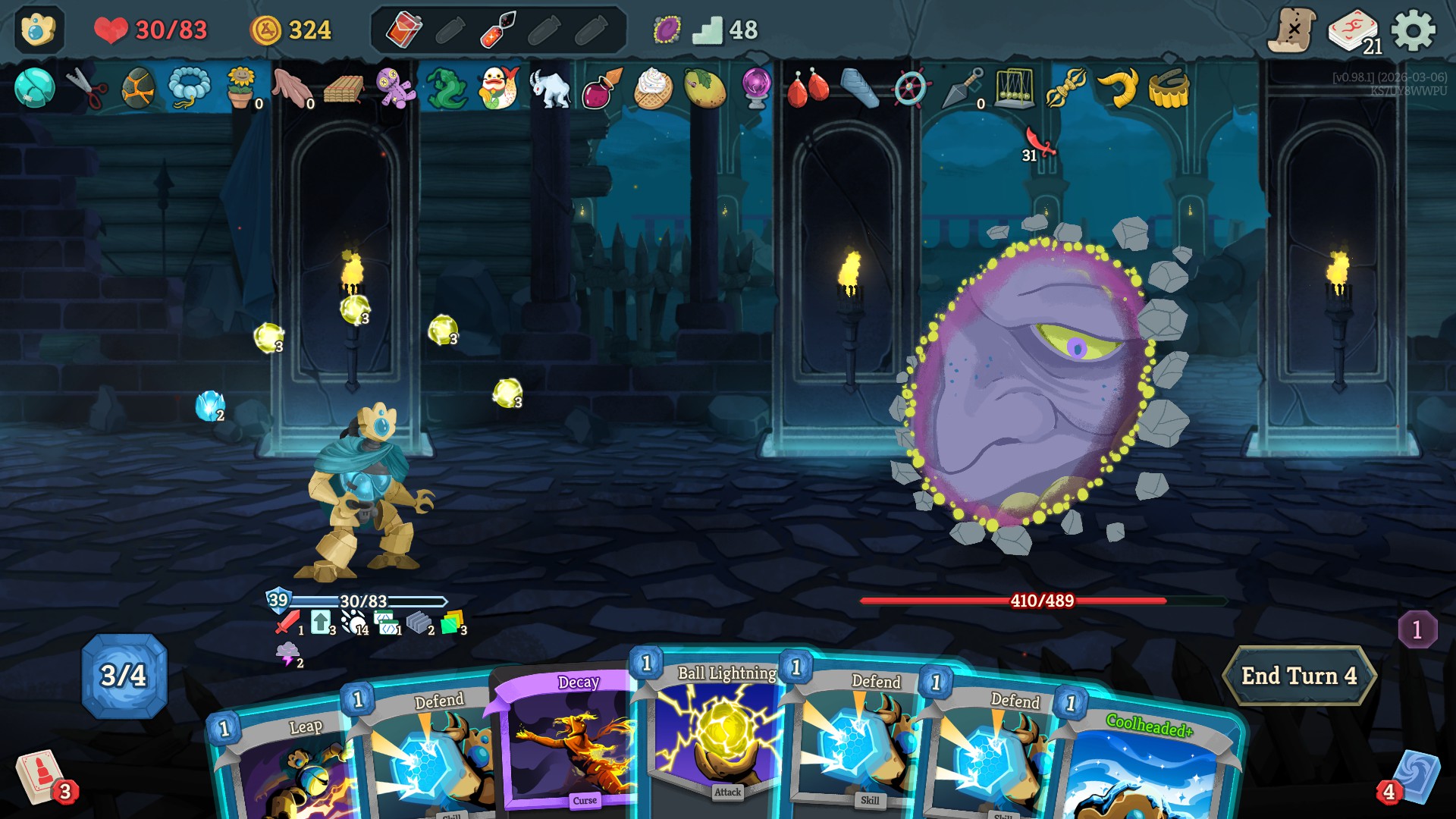
That’s not to say Slay the Spire 2 should have thrown all of its predecessor’s work out of the window, or become some totally different kind of game. But to say Slay the Spire is a landmark roguelike is not to say that it was ever perfect, and without doubt there was room there for the formula to change, evolve and try big, cool new things.
The one feature I can point to as a bold swing is the co-op multiplayer mode—a pretty radical addition for a typically singleplayer genre. But as it stands, the experience is barebones. A limited UI makes cooperation awkward—I can’t see at a glance what cards my team mates have in hand, and truly setting up combos between us means laboriously talking through our turns rather than being able to intuitively play off each other.
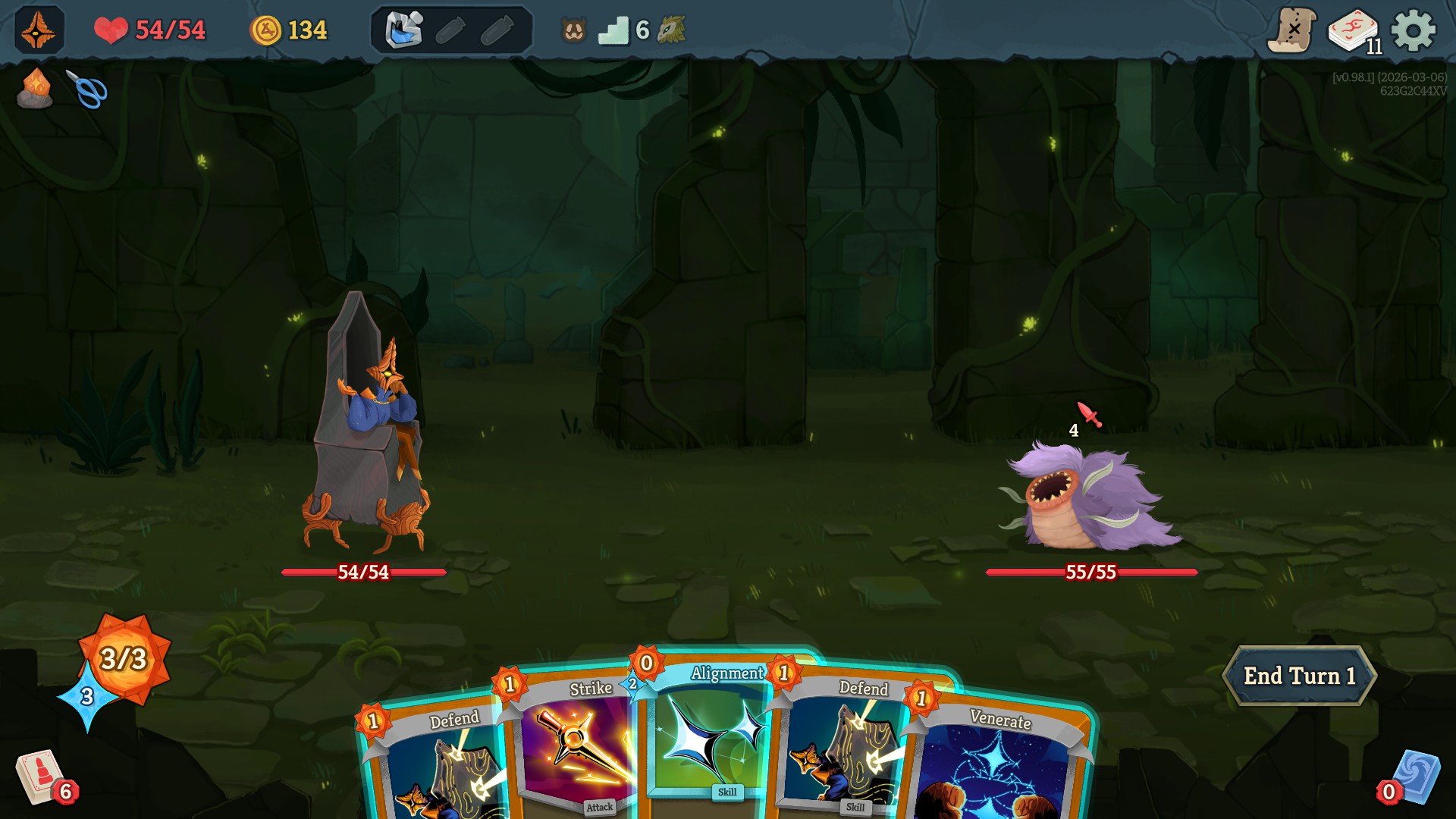
Not that there’s that many ways to interact anyway, with cards and abilities largely not affecting your team in battle outside of what damage you’re able to put on enemies. Those foes are the same as in singleplayer, simply with their health pools and buffs multiplied, which makes many of them feel a slog to chip down even with your combined output.
As a way of hanging out with friends while you play a game you all like, it’s fine, but it’s not a very elegant twist on the formula as it stands. It’s much less effective than the elegant implementation of multiplayer in the Slay the Spire board game.
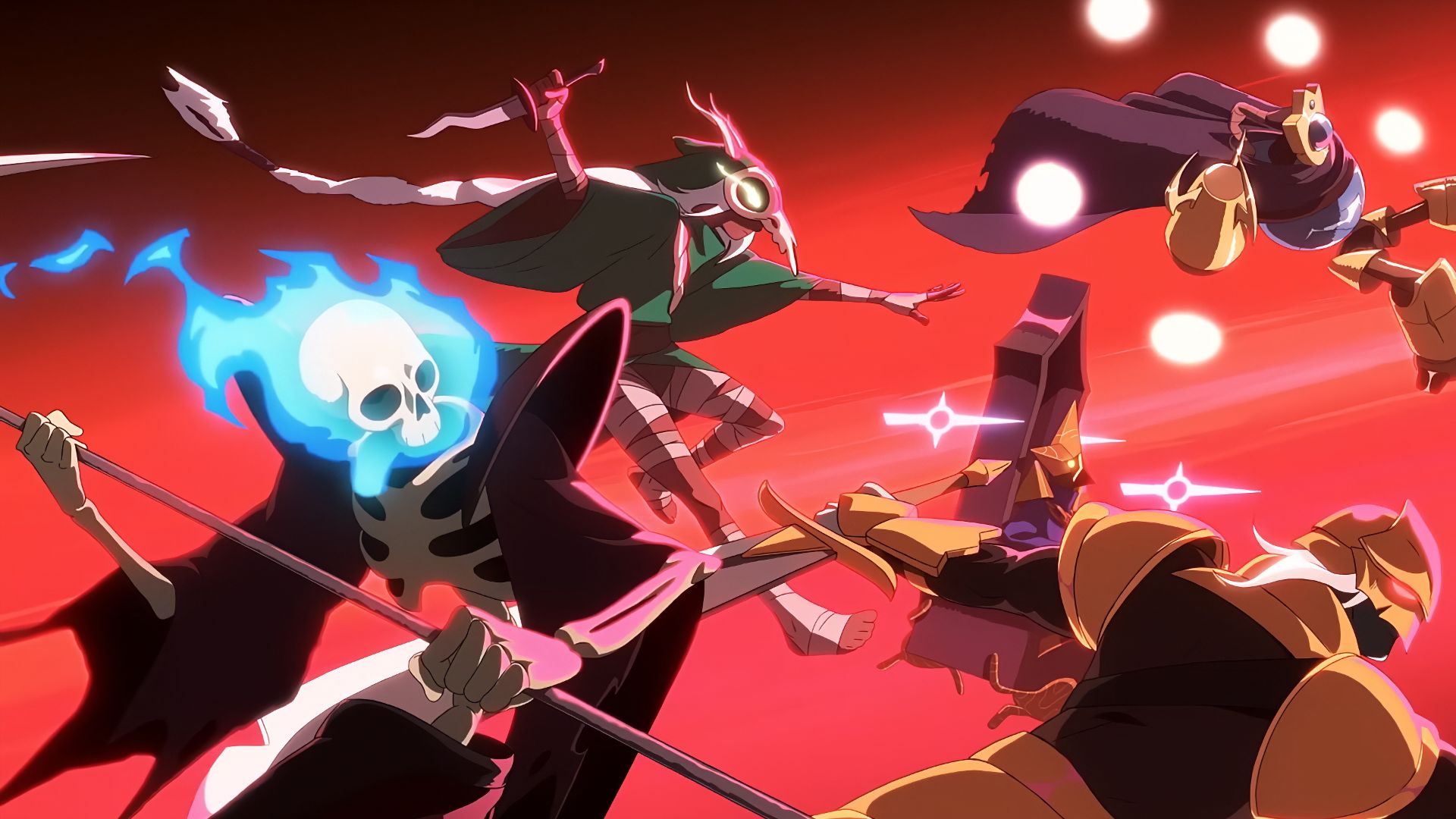
In the end, this one standout new feature only ends up highlighting the sequel’s familiarity for me. Trying it out with fellow PC Gamer Sean Martin, who never played the first game, I find myself giving him a droning rundown of years-old advice like some sort of roguelike robot. While he’s experimenting and discovering what does and doesn’t work with his deck, I’ve quickly got a Necrobinder deck going that makes me all but immune to damage and able to throw out five or more attacks a turn. Even on one of the new characters, it feels like the game is already solved for me—satisfying, perhaps, but not exciting.
Though I’m someone who never found Monster Train as engaging as Slay the Spire, it’s hard not to look at Monster Train 2 and feel a little jealous about the comparison. That sequel throws you right in the deep end with a completely fresh and wildly different set of new factions, along with tweaks and adjustments to pretty much every part of the formula. It overflows with new ideas.
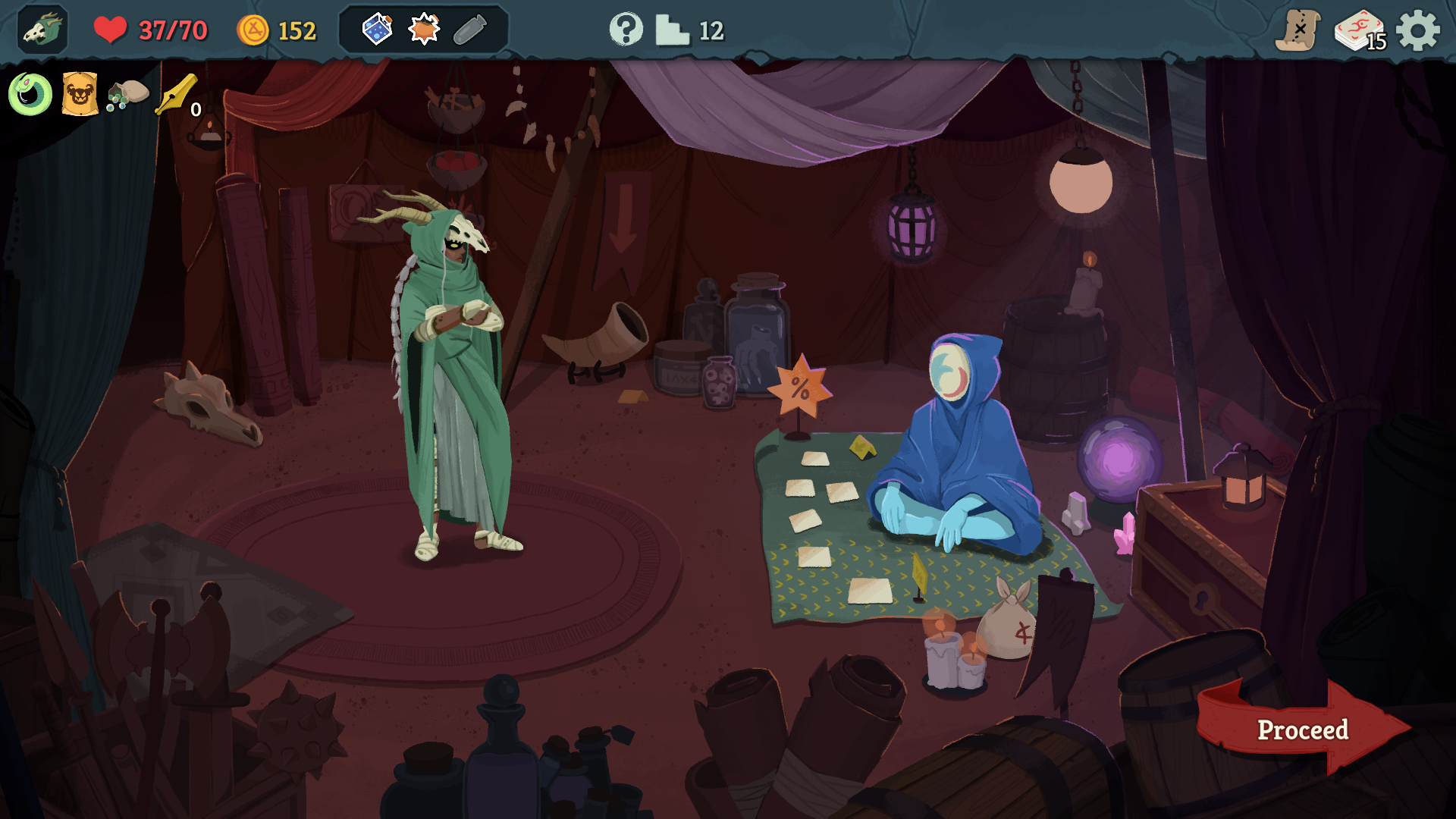
Slay the Spire 2 can’t help but feel like a re-run by comparison—more a really impressive late expansion pack or a remake than an exciting sequel. All these nostalgic runs are a reminder of the great strengths of Slay the Spire and the things it did so well at the time, but also all the little flaws my memory had come to skate over—many of which subsequent imitators have already found creative solutions to.
Of course, it should be said that this is an Early Access release, and it may well be that this very familiar initial launch is all part of the plan. Perhaps this core recreation of the original game is intended as a new platform to build on with subsequent updates, holding back some of the more experimental ideas for later. I may come to eat my words by the time the game hits 1.0 in what the developers estimate will be one to two years’ time.
But as it stands right now… I’m enjoying dipping back into one of the best roguelikes ever made, but that’s all Slay the Spire 2 feels like to me right now. A solid greatest hits album with some good bonus tracks, but a long way away from being the follow-up I’ve waited years for.