Esoteric Ebb Review | PC Gamer
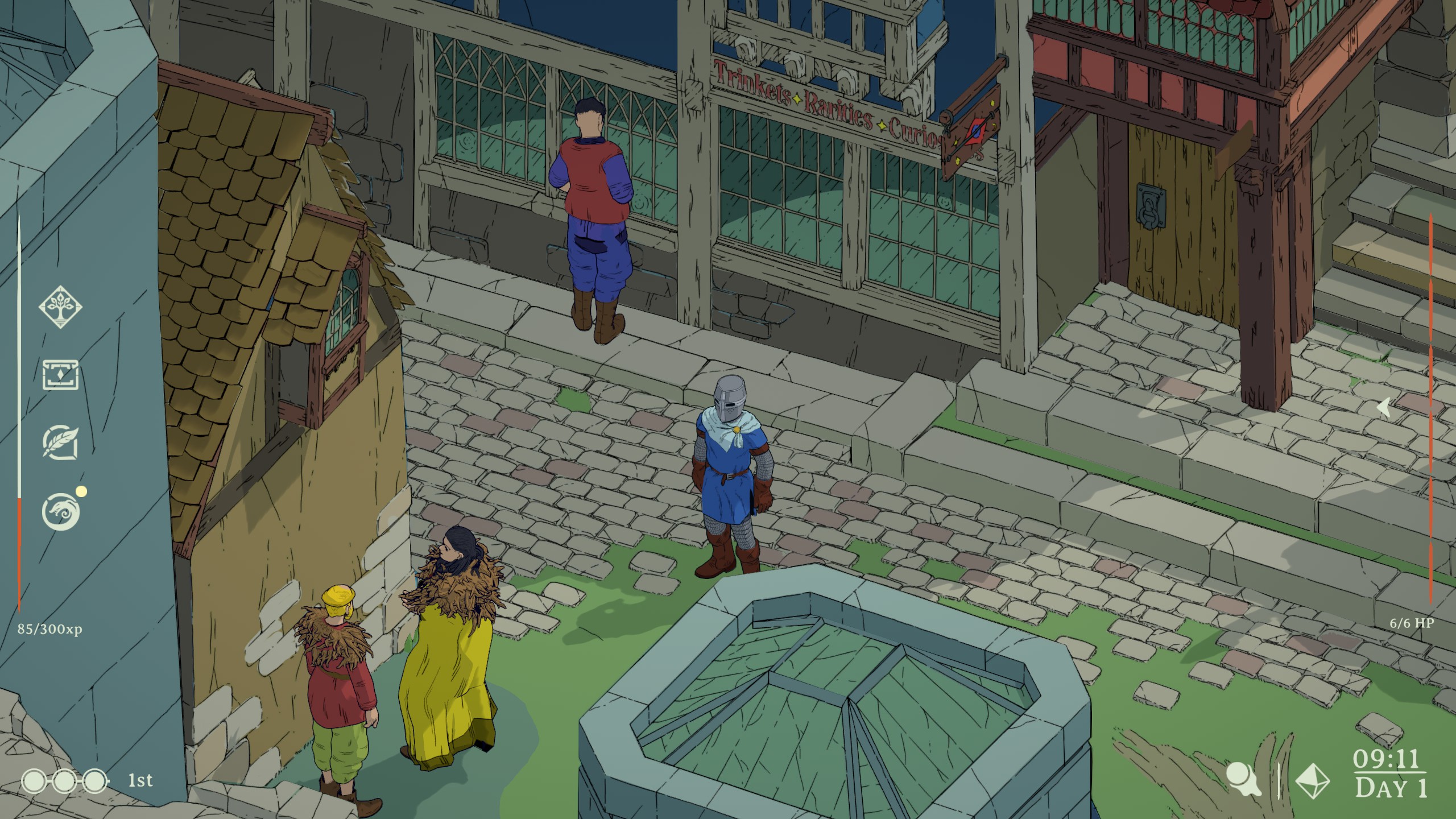
Esoteric Ebb is the best game like Disco Elysium that anybody’s made since Disco Elysium, an RPG with a focus on exploration over combat, a literary, political bent, where your skills attributes talk to you. But it’s not some rehash of the things Disco did well and few have managed to replicate: Esoteric Ebb has a charm all its own, and it’s an impressively reactive RPG with an innovative approach to combat.
Need to know
What is it? Disco Elysium by way of D&D, or D&D by way of Disco Elysium? But way more surprising and imaginative than that sounds.
Expect to pay: $25/£21
Release date March 3, 2026
Developer Christoffer Bodegård
Publisher Raw Fury
Reviewed on: Steam Deck, also Windows 11, Core i5 12600K, RX 9070 XT, 32GB RAM
Steam Deck Verified
Link Official site
Where Disco was all surreal noir with a grounding in Twin Peaks, True Detective, and post-Soviet melancholy, Esoteric Ebb is more classically fantasy, approaching Dungeons & Dragons with a sensibility close to Shrek. Disco Elysium is one of the funniest games ever made, and Esoteric Ebb is even more madcap. Not funnier per se—I can’t pit two queens against each other—but it boasts a greater density of laughs per minute, while still telling an affecting, dramatic story.
The humor and grounding in familiar D&D elements—attributes, classes, races, alignment, etc.—belie a shockingly confident, weird fantasy setting, something closer to Planescape or Spelljammer than the comforting (yet vanilla) Forgotten Realms. Mechanically, this game is capital-R Reactive, with seemingly minor items and choices reverberating throughout the story, and multiple dialogue-based “fights” whose complexity and variables rival Disco Elysium’s climactic Tribunal.
Revivify
With Disco by way of D&D, we’ve kinda come full circle back to Planescape: Torment, one of Elysium’s big inspirations. Our brave, bumbling cleric protagonist wakes up in a mysterious morgue, already threatened with a low-level zombie encounter. One big break with the talky RPGs of yesteryear: This guy remembers exactly who he is, he just didn’t see who pushed him into the river. Getting The Cleric to open up about his past sometimes requires harder skill checks than persuading NPCs.
The often-underappreciated divine spellcasting class feels like a perfect fit for this story. You’re an “Urthguard,” a cleric of the once-living god who founded your home city of Norvik. He’s been dead for 30 years, but the power and faith remains. We’re rocking with a modified version of D&D 5th edition rules: Spell memorization, short and long rests, six attributes, you know the drill.
Image 1 of 3
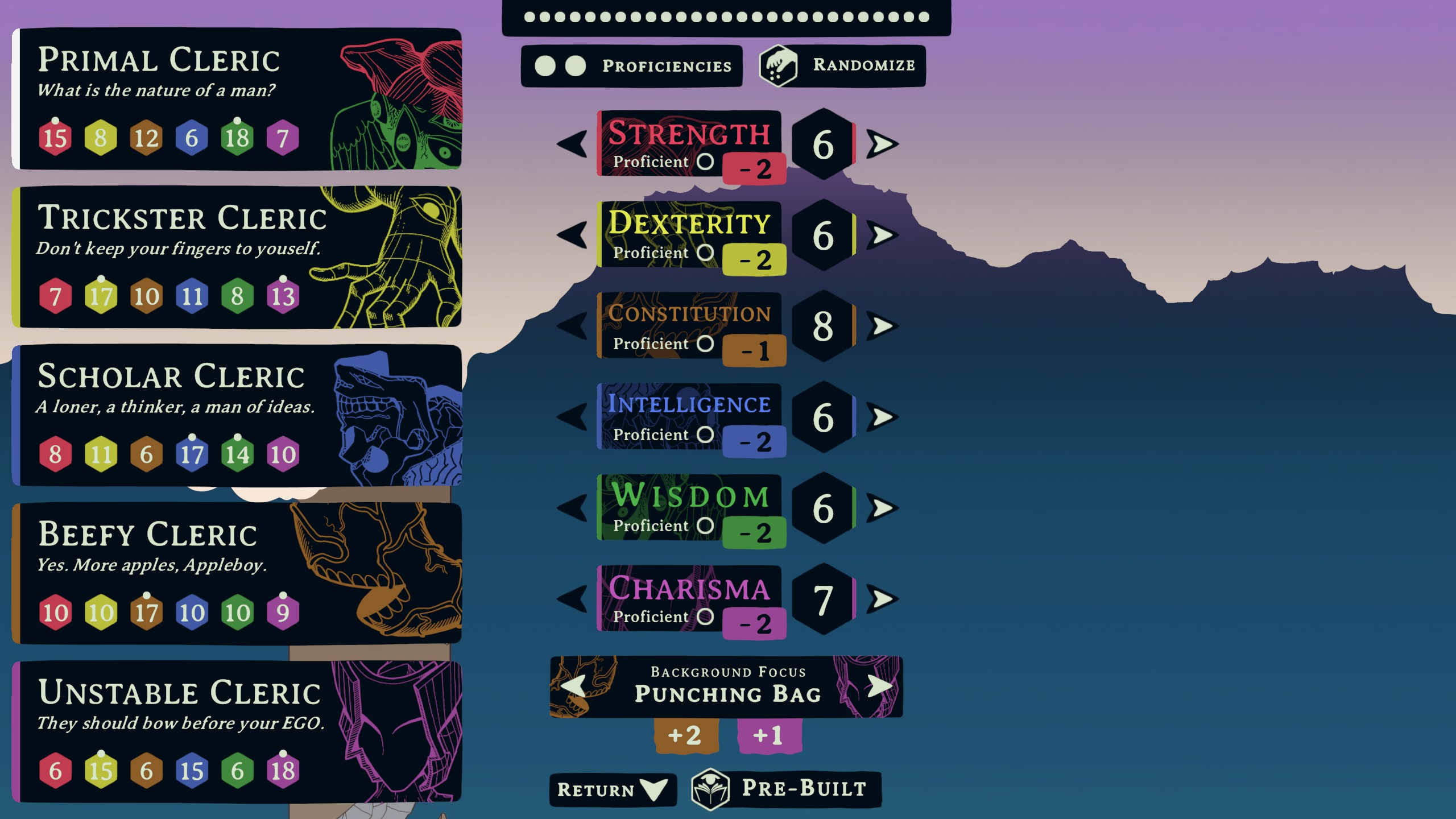
It’s been streamlined in service of Esoteric Ebb’s more focused premise, though. Instead of discrete skills, every check is pitted against your raw ability bonus (plus a proficiency in two of your choosing). It’s significantly simpler than Disco Elysium’s spread of 24 skills, but that comes with its own advantages.
You really could get through Disco Elysium specializing in any combination of its skills, but you may not have had the most fun time: There were clear winners and losers, your beloved Inland Empires and your replacement-level Composures. Esoteric Ebb’s Constitution is pulling triple duty as the equivalent of Disco’s Endurance, Shivers, and Half-Light, making it not only more versatile than any of the three alone, but also a more well-rounded character you’ll hear from more often.
I jacked up Wisdom and Dexterity, but I was surprised at how much I wound up loving Strength. When you put points into it, Strength talks like a stern, unimaginative, but well-meaning paternal figure who loves quests. It’s less of a musclehead barbarian vibe, more of a lawful stupid paladin.
Something I really dug: The attributes will still talk to you even with a low point investment, but their characterization changes. Strength becomes more of a bootlicking authoritarian wannabe at low levels, exhorting you to bow before the powerful or intimidating. High Intelligence is a deranged archwizard who wants you to revive the magic empires of old, but at low levels, it’s a dullard who constantly chimes in to say “can’t think of one, sorry,” or even just give you false info.
Image 1 of 3
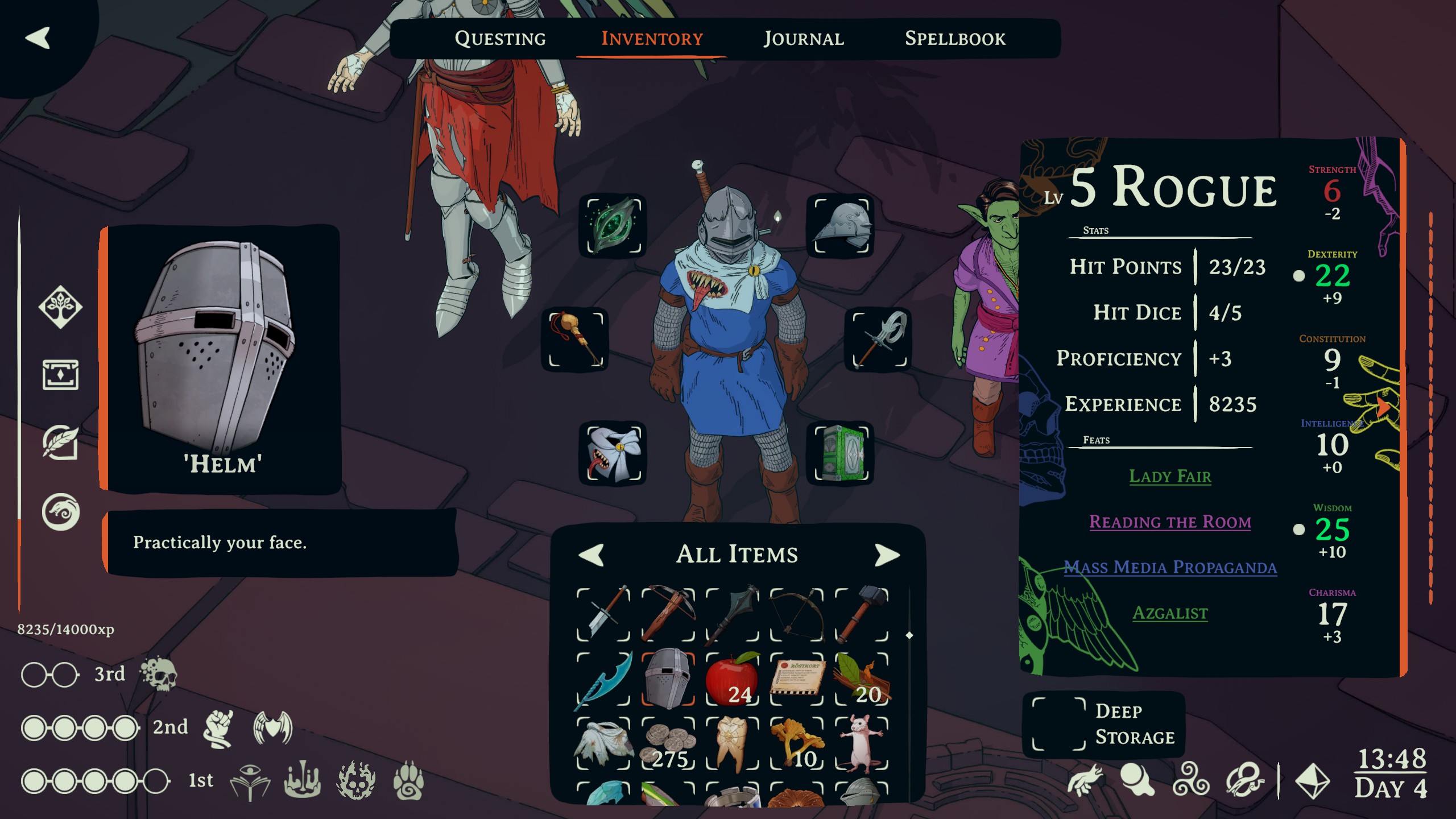
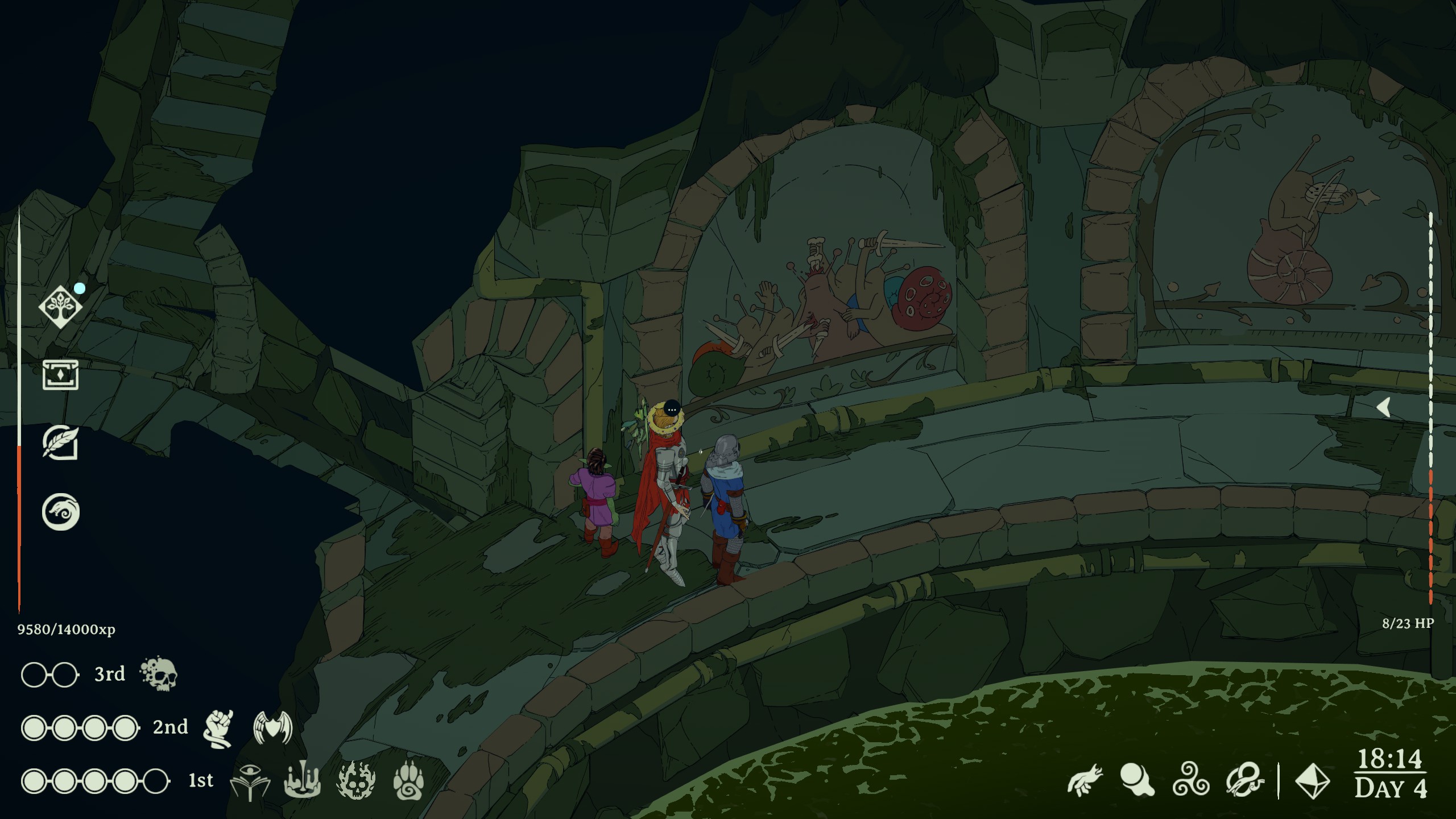
Even though you are The Cleric, you’re able to insist through dialogue that you’re actually another class instead, to the point that your character sheet will change to reflect it. As an “arcane cleric,” you can also cast wizard spells and embrace this aspect of yourself, but from the jump, I leaned into my go-to class: The “Dick-Ass Rogue,” as Esoteric Ebb put it. A number of conversations with side characters can unlock hidden classes as well, another delightful surprise in a game defined by surprise and delight.
I felt more like an arcane Boy Scout using every clever trick to solve problems.
Spellcasting is a real ace in the hole for Esoteric Ebb—this is a great wizard game. You can only learn spells from scrolls you find in the world, a hallmark of the OG Gates Baldur that leaves the magic feeling more tangible and less like a videogamey system. The spells themselves, meanwhile, are a mix of convenient, brute-force effects—bonuses to your rolls, direct damage to enemies—and puzzle-solving uses that always made me feel clever.
Mage Hand to yoink an item out of a gelatinous cube, Druidcraft to reveal hidden forest sprites with gifts, Speak with Animals to, uh, speak with animals, it’s the sort of magic that defines tabletop play and is very difficult to replicate in a videogame. I felt more like an arcane Boy Scout using every clever trick to solve problems, not just a glass cannon artillery unit on the battlefield.
Table talk
You’ve got five days to solve the mystery of a tea shop that exploded before Norvik’s first ever election, with time moving forward only when you talk to people, and each day ideally capped off with a classic eight-hour long rest—though it seems possible, unlike in Disco Elysium, to pull straight all-nighters. The only thing stopping you is a system of exhaustion points that lower your health, make checks harder, and eventually kill you.
It tells a great mystery yarn, but like Disco Elysium, it’s a detective-themed RPG rather than a detective game. The primary gameplay isn’t making deductions based on evidence like in Pentiment or Case of the Golden Idol, you’re pitting the character you built against various challenges and unraveling the story along the way. That’s not a weakness, just a distinction.
Image 1 of 4
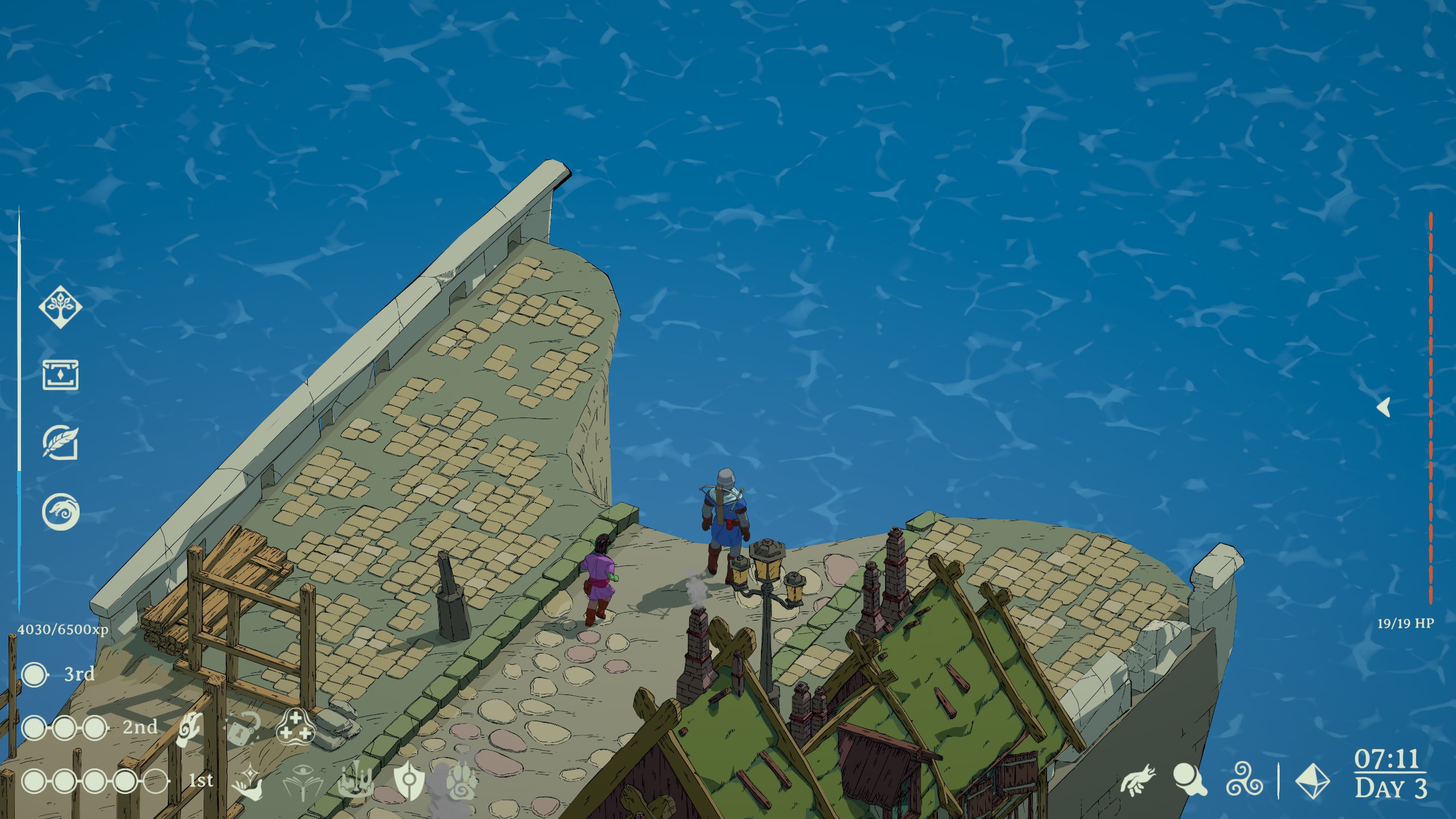
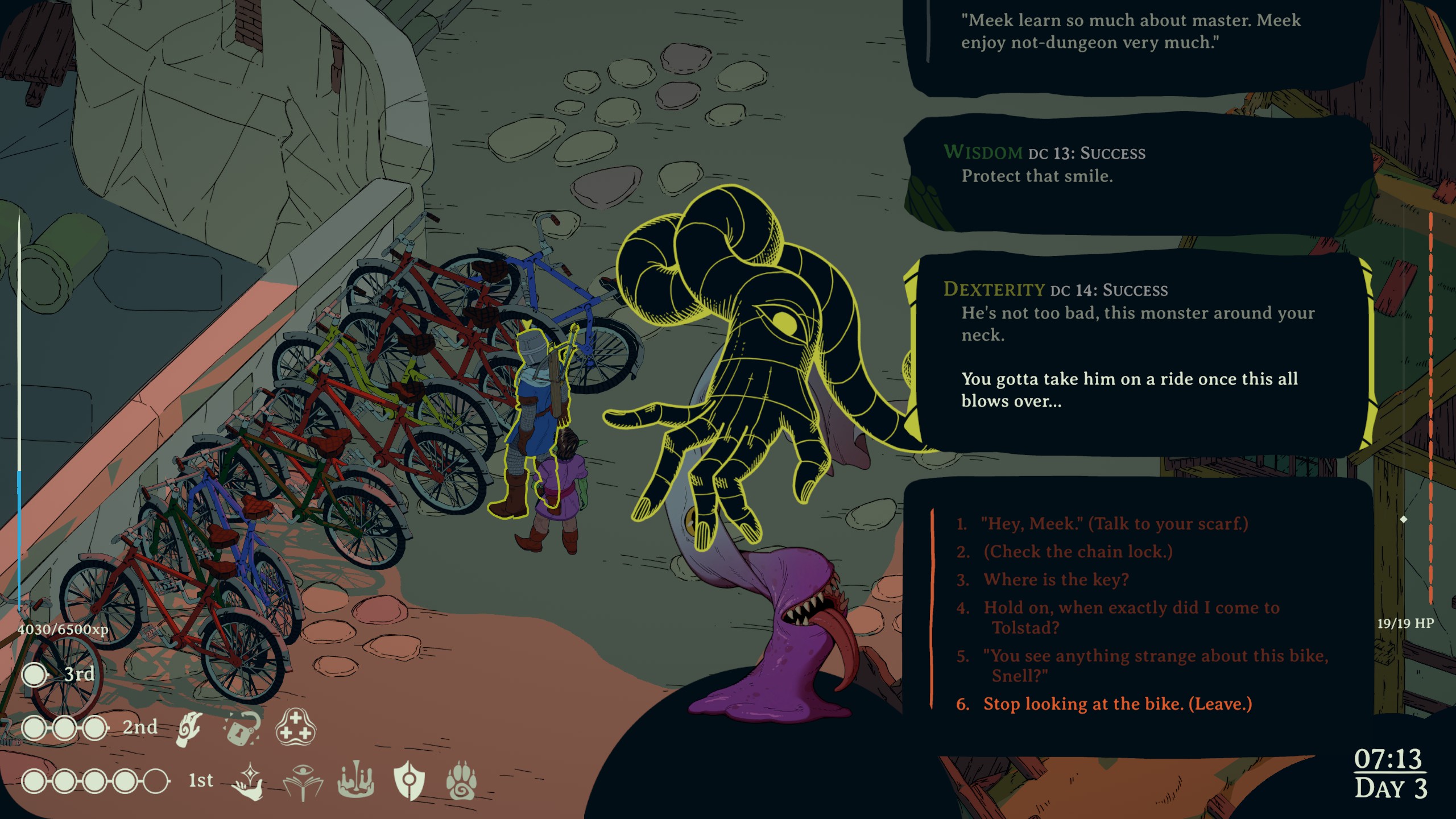
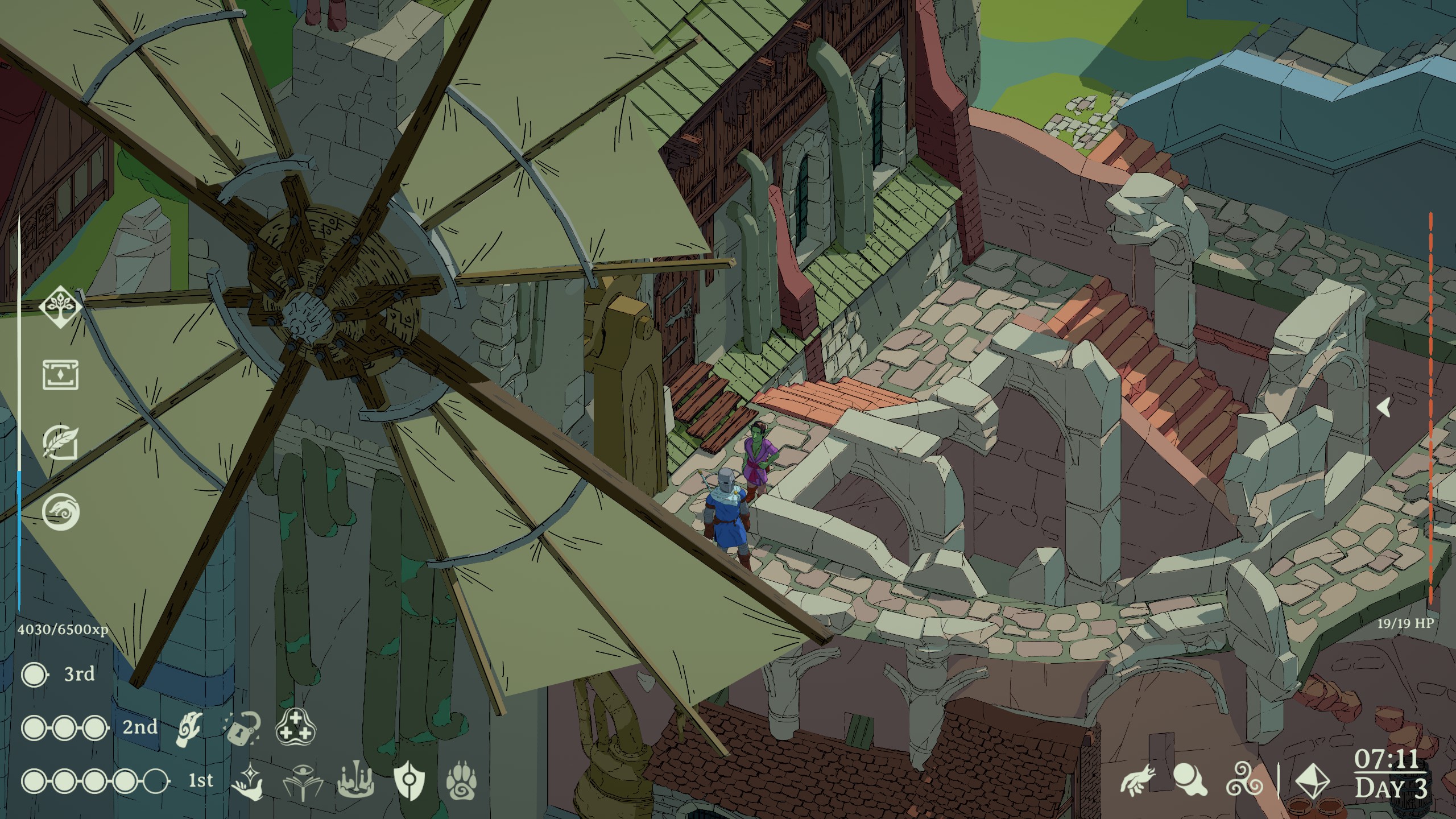
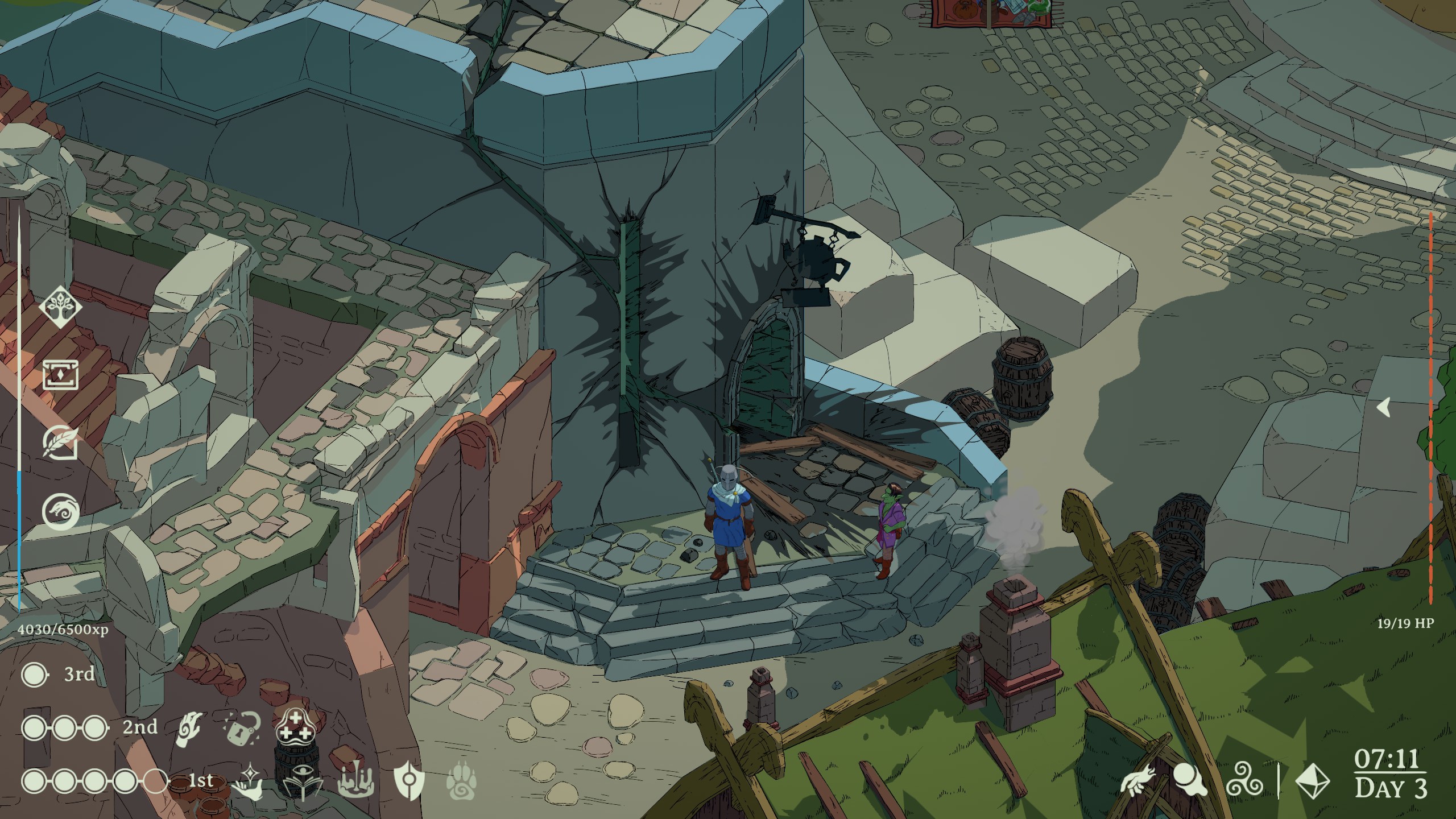
It would all be for nothing if Esoteric Ebb didn’t have interesting things to say, but it’s in the 99.9th percentile of videogame writing, “Obsidian-Tier.” Shrek’s one good point of comparison for its anarchic but loving treatment of D&D tropes, and The Venture Bros. is another one I kept thinking of as I played. Esoteric Ebb starts off playing the fool, but it’s got cavernous depths of world-building, character writing, and sweet, sweet pathos. I cried.
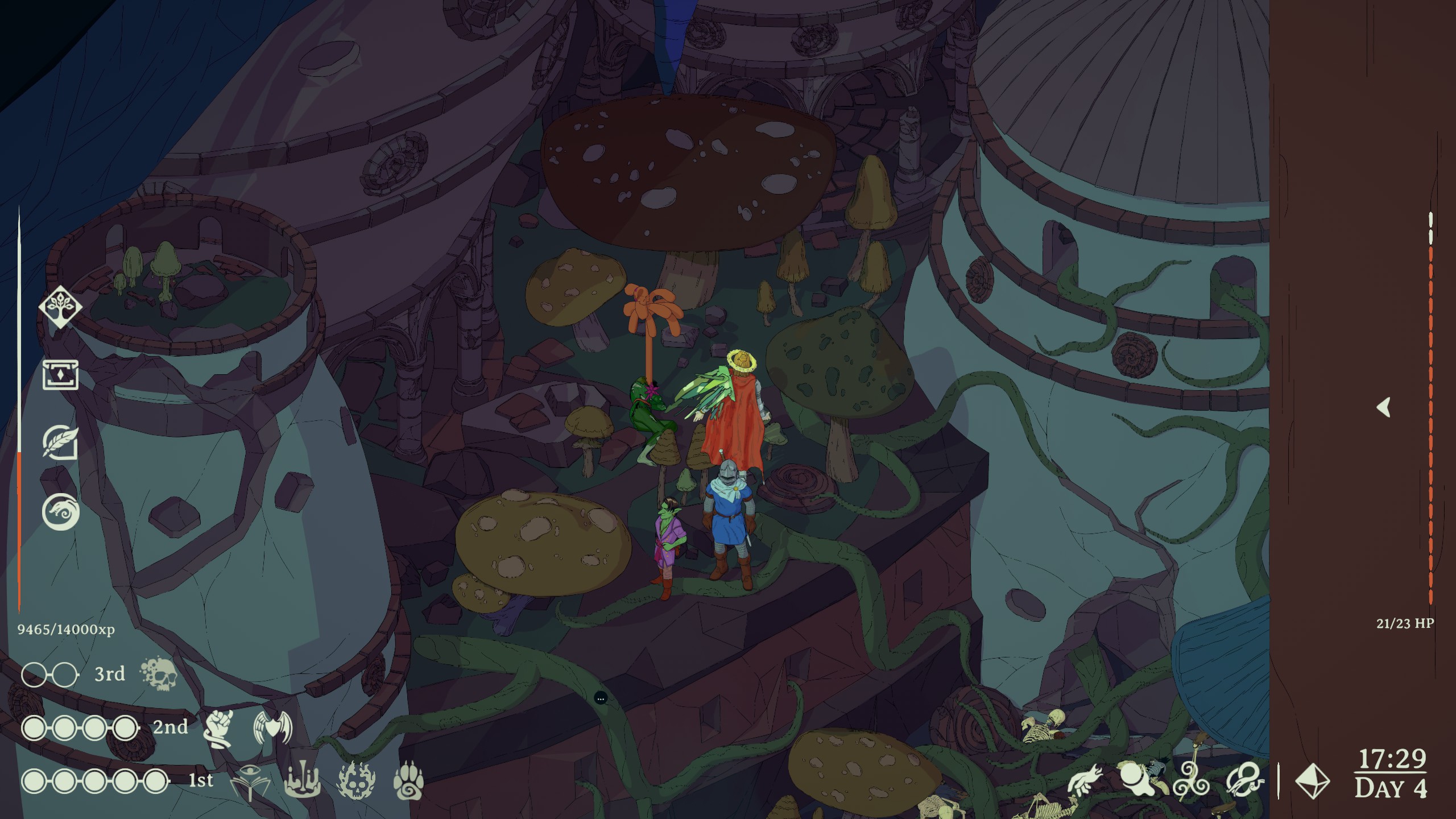
That world is a good place to start: Esoteric Ebb does a fantastic job of making you think it’s a familiar sort of fantasy at first glance, but then every new detail reveals a more alien setting than you first imagined. Some people in-universe think the world is a globe, but smart money seems to have it as a hollow dome, a single hemisphere with landmasses on the outside. Esoteric Ebb’s take on the Underdark, meanwhile, seems to be on the inside of that hemisphere. Dig deep enough, and you reach a “gravity flip” where you have to start climbing.
…full of lovable, imperfect, conflicted weirdos to befriend, with only a few irredeemable bastards I loved to hate.
One of my favorite gags: The earliest dialogue establishes that this all takes place in March, the third month of the year. I figured great, none of that Elder Scrolls Morndas, Tirdas, Last Seed, fantasy-timekeeping stuff. I finally found an in-game calendar hours later, and psych! March is the only normal one. The other nine months have fake fantasy bullshit names.
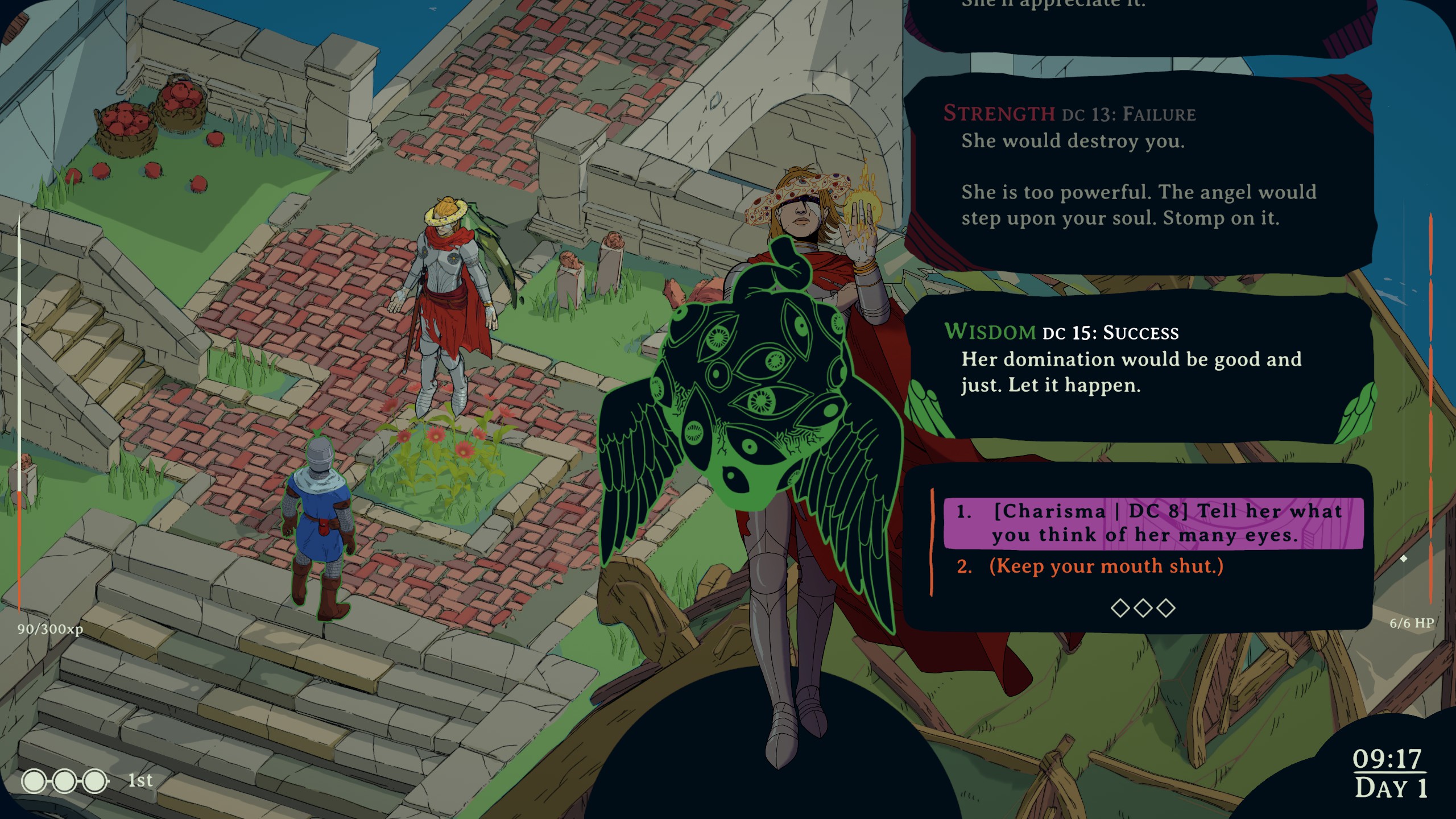
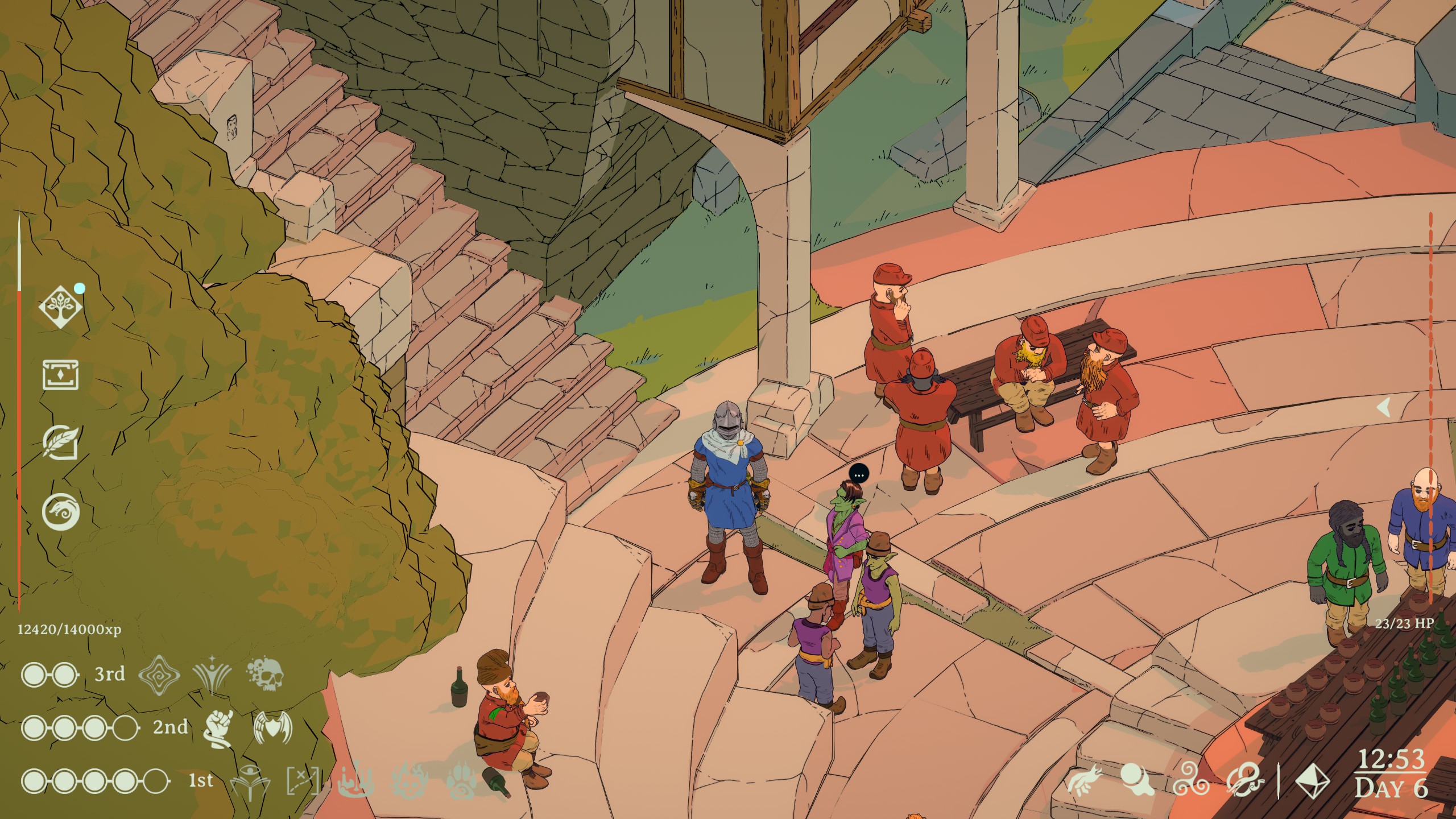
The district of Tolstad is full of lovable, imperfect, conflicted weirdos to befriend, with only a few irredeemable bastards I loved to hate. Your primary companion, Snell, is a real winner—a competent, yet playful goblin rogue with an understandable distrust of humans, especially the Urthguard. Also available to join you is Ettir, an angel of the “terrible and unfathomable” variety who met your god personally. Instead of normal peepers, she has a “halo” riffing on the idea of a “biblically accurate angel,” a rotating ring of dozens of eyes. If you pass a tough Charisma check, you can ask her on a date.
Image 1 of 3
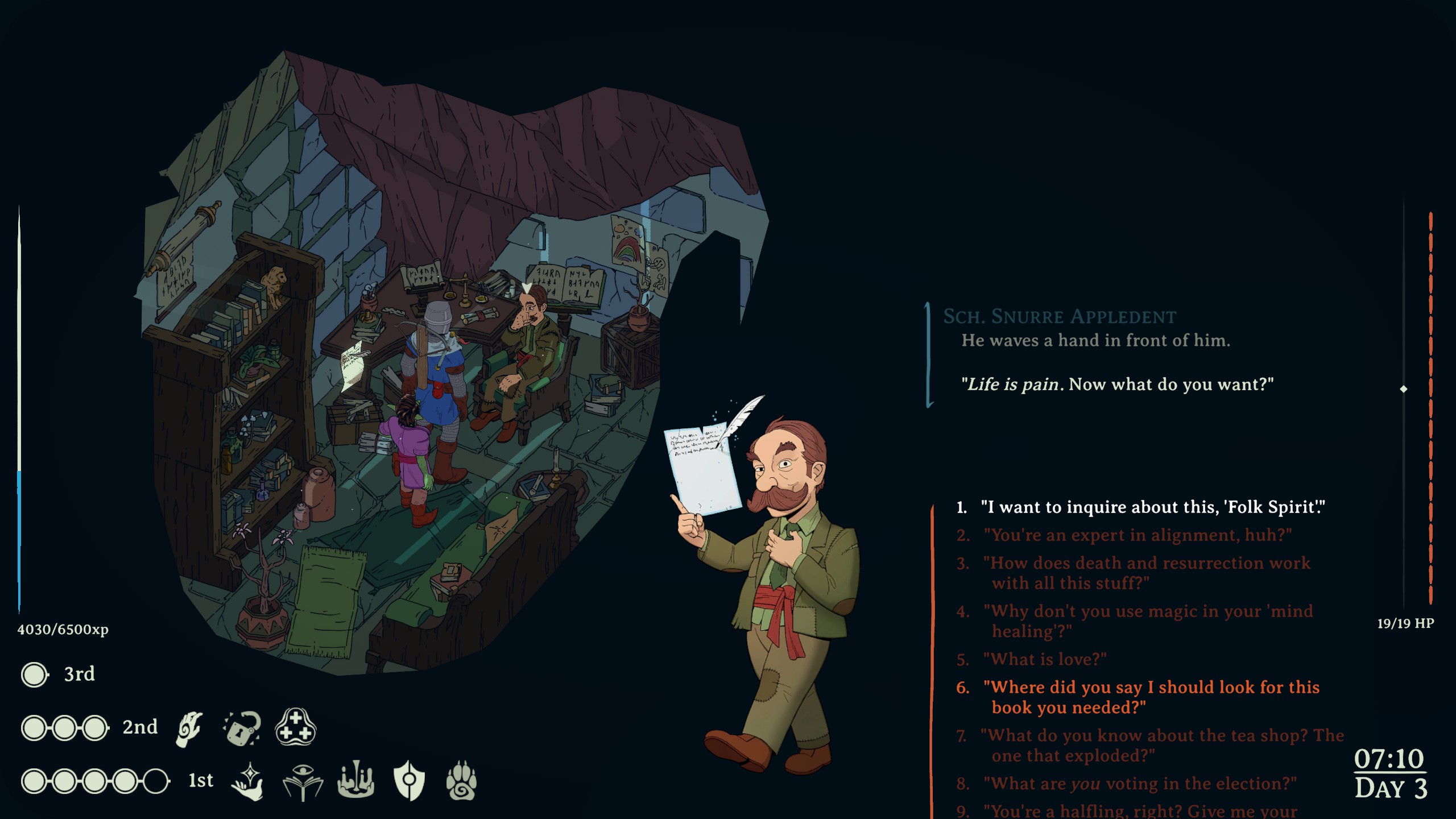
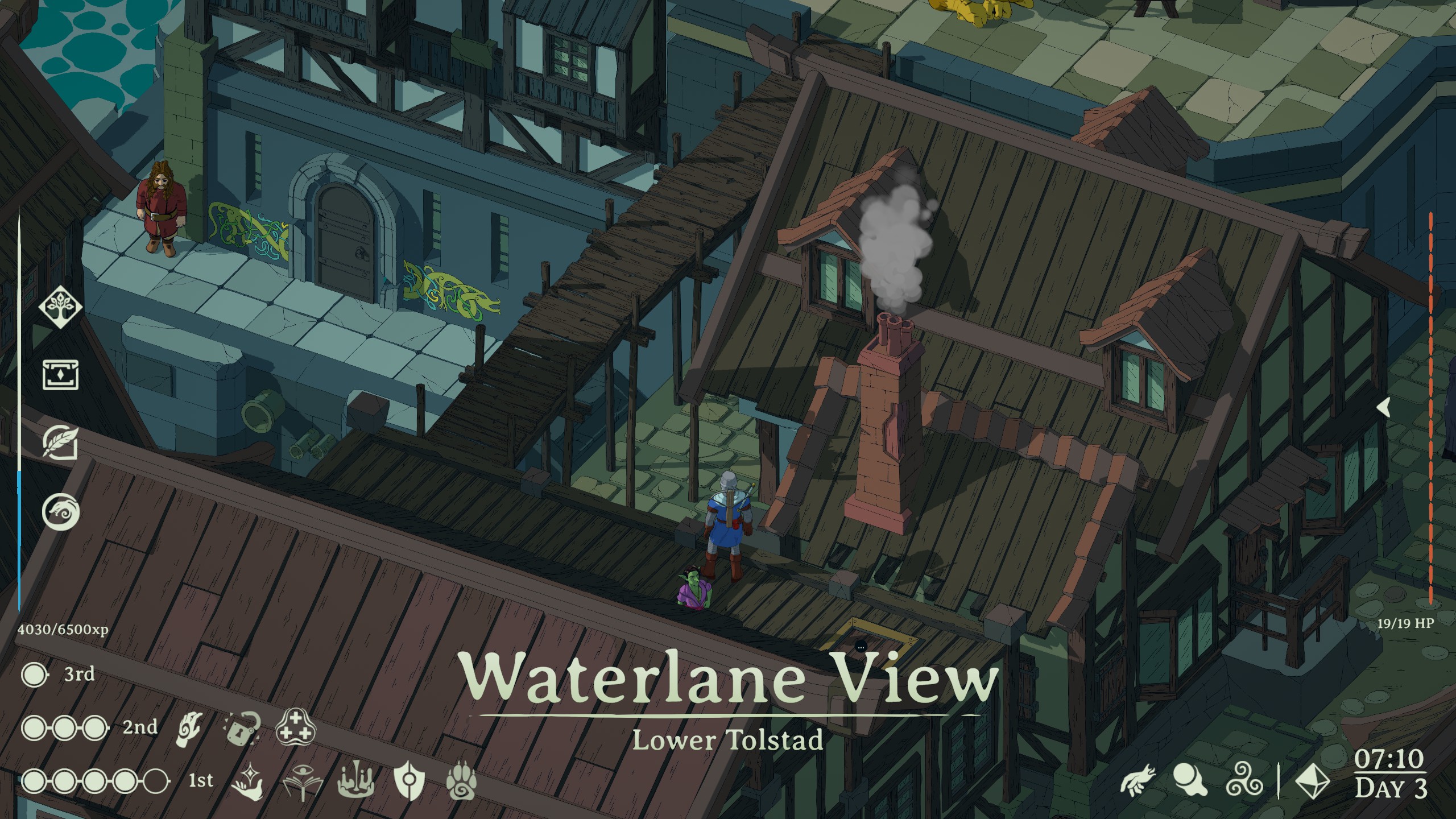
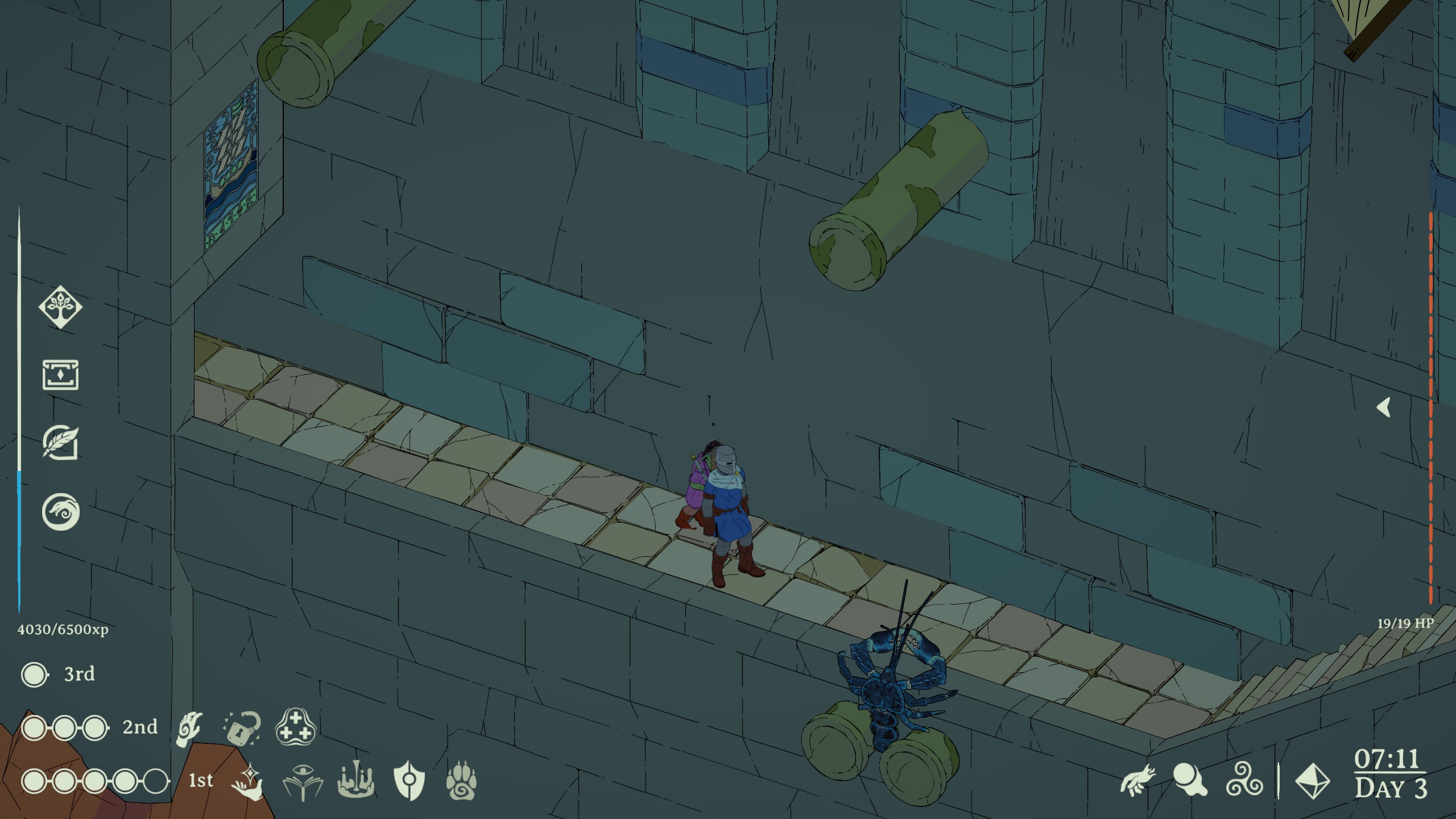
Every major NPC has a character sheet and dossier that will only reveal itself on passing a “behold” check. These are themed for each NPC: Rogueish Snell’s is gated by Dexterity, stoic Ettir by Strength, and so on. A weak roll might get you some basic information, stronger ones their alignment and attributes, and some even have their deepest secret behind a high-DC check. I unlocked a hidden, seemingly completely optional conversation that contained a major reveal off the back of one such check.
Esoteric Ebb always gives you space to disagree, even call bullshit.
At the end of major quests, you have long conversations with your attributes where you process the events, selecting one “feat” from a selection of multiple conclusions to draw. It’s a hybrid of D&D feats and Disco’s Thought Cabinet, and the denouement conversations are introspective, philosophical, and bordering on didactic. They all landed for me, but there’s one about young men, how they relate to young women, and their place in society that I could see sending a certain type of Steam reviewer into hysterics.
But like Disco Elysium and a scant few other great RPGs I’ve played, Esoteric Ebb always gives you space to disagree, even call bullshit. If Wisdom’s peace-and-love routine rubs you the wrong way, you can always pump some antiwoke iron with big daddy Strength or eat out of garbage cans with Constitution instead.
Similarly, the election’s social democratic Azgalists are clearly the good guys, but they’re also annoying serial losers, just like real life. Esoteric Ebb gives a more than fair shake to the hustle grindset Freestriders and nationalist Party of Urth, while even the cryptofascist guys who want a return to rule by magelords get one supremely likable character who will advocate for them. I still went Azgalist, though—I’m a soft touch.
Kensai/Mage
In terms of mechanics, layout, and design for one of these Talking Simulators (let’s make this one happen, people!), Esoteric Ebb impressed me in two key ways. First and most critically, it’s an elastic, reactive game. You can approach it from any angle, in any order, and Designer Christoffer Bodegård will have anticipated it with a reward, some dialogue, or a joke at your expense.
There’s an achievement for cracking the case and getting the minimum “good” ending without ever having set foot inside the tea shop crime scene. NPCs will frequently remark on your choices, including class and political allegiance. You can pickpocket most major (and some minor) NPCs, and I was able to double dip on an early quest’s rewards, pickpocketing the money one side would have given me while helping the other. Later on, I failed the check to swipe the legendary enchanted battleaxe carried by a friendly civil undead knight, and got a special conversation where he intercepted my wandering hand and nearly snapped my wrist.
I carried a largely useless, broken magic item with me through the entire game. Out of nowhere, I was presented with the option of using it as a makeshift trap against a late-game boss, one of many paths at my disposal, including talking the guy down and just going for it head-on.
That boss is one of many throughout Esoteric Ebb, perhaps its single most impressive design innovation. Disco Elysium had the Tribunal, a dialogue-driven, turn-based battle with multiple diverging paths, a number of options contingent on your choices throughout the game, and a corresponding variety of potential end states.
Image 1 of 3
Off the top of my head, I believe I got into nine fights in my playthrough, and there are probably more that I didn’t encounter. The biggest of them rival Disco’s Tribunal in complexity. Which companion(s) do you have with you? Which spells do you have prepared? What initiative order are the up-to-four combatants going in? What dialogue and choices did you make prior to the fight?
If Baldur’s Gate 3 is the best engine anyone’s ever made for simulating D&D fights on the fly, Esoteric Ebb is a Dungeon Master anticipating and reacting to your choices years in advance. It’s one of the all-time best recreations of tabletop magic in a videogame, a pantheon that also includes Disco Elysium and Betrayal at Club Low.
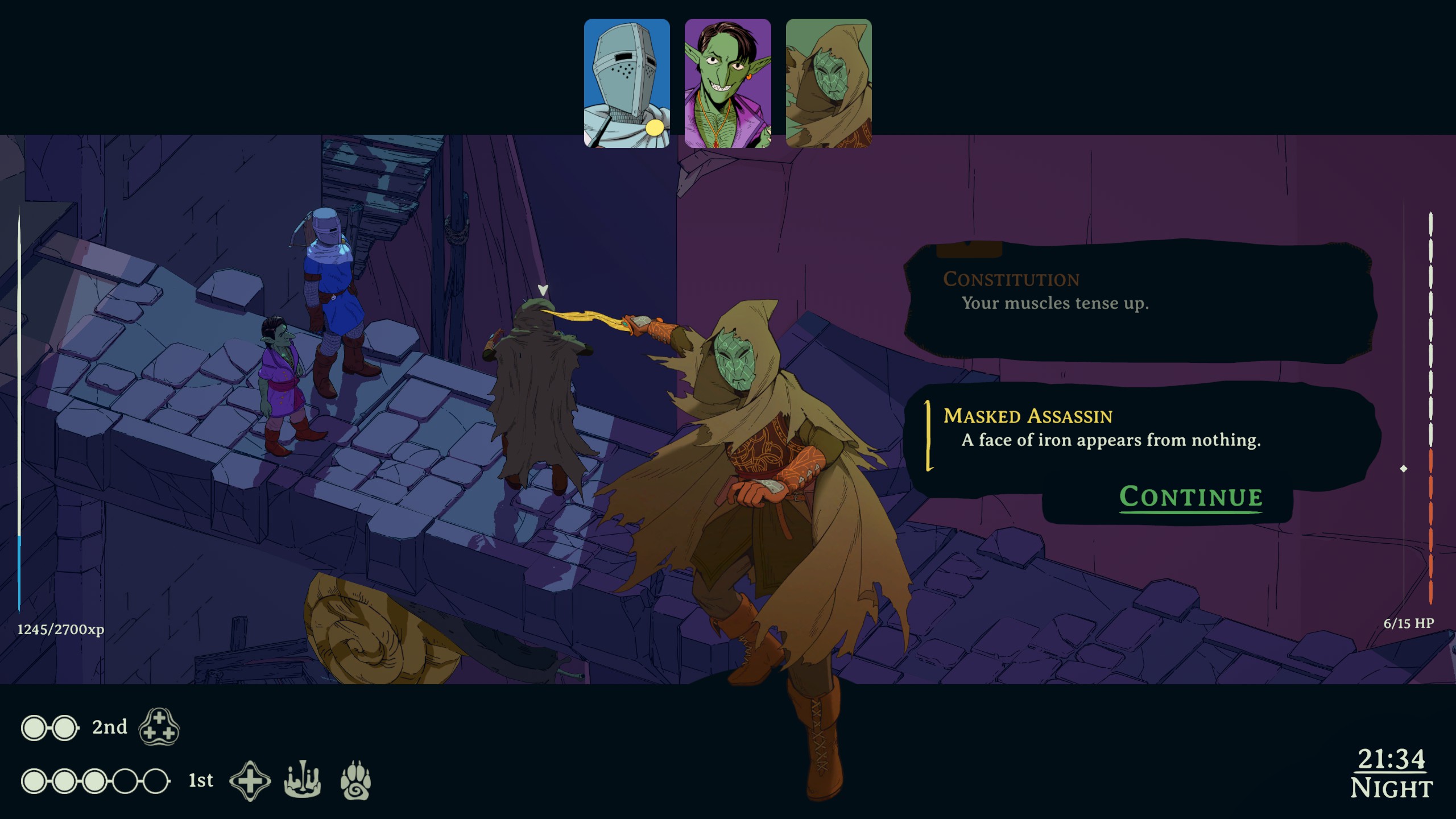
PCG online editor Fraser Brown and I were both stumped by the same early fight, an assassin’s ambush on a bridge. We each attempted it four or five times with our sensitive, brainiac, low-Strength Clerics before we noticed one of our spells highlighted during the battle: Grease, a level one crowd controller of the “who the hell ever uses this” variety. I cast Grease to see what happened, netting me an instant slip-and-fall environmental KO on the baddie.
Nat 20
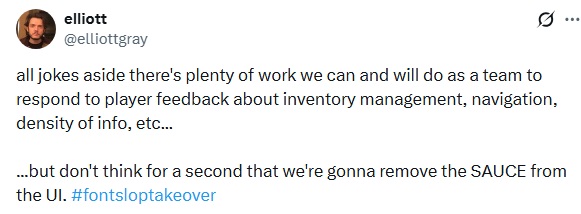
The few complaints I have are either small enough or easy fixes. I found Esoteric Ebb’s UI to be a bit cluttered and confusing, especially when playing on Steam Deck—the inventory management in particular is a bear on gamepad, especially when you’re swapping every slot around to make a difficult ability check. Still, that’s how I logged almost all of my playtime, and I can firmly recommend Esoteric Ebb as an on-the-go experience.
It would require quite a bit of post-launch playtime to determine how many of the polish issues I saw in the review build persist in the 1.0 version, but there were a number of typographic errors, which stand out all the more in a text-heavy game. More frustrating were occasional UI glitches that seem largely exclusive to gamepad: Multiple dialogue options or inventory slots highlighted at once, and some occasional weird pathfinding with analogue controls. My biggest issues involved two bugged feats: One that just didn’t seem to give its intended effect, and one where I selected an option, and was given a different feat from the list.
But those are minor problems that may be resolved post-launch. This is a game for anyone who loves RPGs, one I’d recommend even if it cost, like, $40 or $50. I just checked its live Steam page for the first time, saw it was 25 bucks, and said “Oh, fuck off” aloud to my empty office. Esoteric Ebb is a winner, the best Disco since Disco, the best encapsulation of tabletop D&D magic I’ve seen in a game, and tough to beat as the best RPG of 2026. I’ll probably play it again before the year is over.