2026’s Defining Sports Narratives Across Football, NFL, NBA, MLB, and NHL
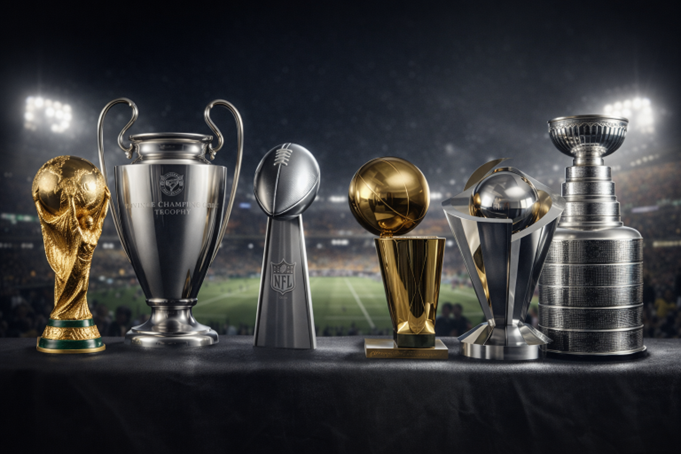
Some years feel like a bridge. Others feel like a traffic jam with floodlights. 2026 is the latter: a season shaped by global tournaments, new media realities, and leagues that keep stretching their calendars across borders.
The storylines aren’t only about trophies. They’re about infrastructure: how competitions are packaged, how fans watch, and how clubs and leagues handle the quiet consequences of playing more games in more places. If you want a simple rule for what matters in 2026, it’s this: the biggest leagues are fighting to own attention without breaking the athletes who generate it.
Football’s loud summer
The 2026 FIFA World Cup in Canada, Mexico, and the United States is an unavoidable gravitational force, not only because it’s in North America, but because it’s bigger by design. The tournament is set as a 48-team event with 104 matches, which means more fixtures, more travel, and more commercial oxygen pulled into one summer.
For European clubs, the tension is familiar: players return from international duty with mileage in their legs and media pressure in their pockets. Domestic leagues and UEFA competitions still have to run, still have to sell, still have to keep their best players on the pitch. By 2026, the expanded UEFA Champions League “league phase” is no longer a novelty; it’s just the background rhythm, eight matches before the knockouts, and a season that feels slightly longer even when the dates look the same.
The NFL keeps exporting Sundays
The NFL’s international project has been a curiosity for years. By 2026, it reads like a strategy with its own momentum: regular-season games staged in multiple countries, local marketing rights for teams, and a schedule that treats time zones as negotiable.
Madrid’s first NFL regular-season game was scheduled for 2025 at the Santiago Bernabéu, a symbol of how aggressively the league is pursuing new markets. Germany has become another pillar, and the league has already signaled that Munich will host again in 2026. For fans, it’s novelty and access; for the league, it’s an attempt to turn a national product into a global habit.
The NBA’s new media era
The NBA signed new long-term media agreements that expand its national partner base and reshape the definition of “prime time.” In 2026, the practical effects are everywhere: a broader spread of platforms, more intense competition for weekly windows, and a viewing culture that expects highlights, alternative feeds, and immediate context.
That viewing culture also pulls betting closer to the mainstream experience. Live stats, win probability graphics, and quick market movement have trained fans to watch games like decision trees. Across every major league, the same pattern keeps repeating: more data, faster distribution, and a fan experience built around constant updates. That’s good for analysis and terrible for impulsive decision-making.
Platforms within the sports ecosystem must balance product design with responsibility. Across second screens, betting programs (Arabic: برامج المراهنات) sit next to clips and box scores, and MelBet is among many working platforms to make that layer feel informative rather than pushy.
Baseball’s global week
MLB’s most international storyline in 2026 is the World Baseball Classic, scheduled for March with pool play spread across Tokyo, San Juan, Houston, and Miami, and a championship staged in Miami. It’s a tournament that makes the sport feel like a world language again, with national teams and star players carrying a different kind of pressure than the long season.
At the same time, the everyday MLB product continues to live in the pitch-timer era. The pitch clock and related pace-of-play rules were introduced in 2023 and later adjusted, and they’ve changed the texture of games: a quicker rhythm, fewer dead minutes, and a new emphasis on stealing bases and managing tempo. In 2026, the storyline isn’t whether baseball changes. It already has. The real question is whether teams and fans continue to like what the sport has become.
Hockey’s Olympic return
The NHL’s 2026 headline doesn’t begin in an arena. It starts on Olympic ice. NHL players are set to participate in the Milano Cortina 2026 Winter Olympics after an absence that stretched back to 2014, following a finalized agreement involving the NHL, the NHLPA, the IIHF, and the IOC.
That return brings the obvious romance of best-on-best international hockey, but it also reshapes the NHL season. Scheduling, travel, rest, and injuries become part of the conversation. Fans will treat it as a showcase; general managers will treat it as a risk-management exercise.
What to watch, really
In 2026, the most important sports stories won’t always be the ones that trend. They’ll be the structural ones: a World Cup that expands the scale of football, a Champions League format that quietly increases load, an NFL that keeps booking passports, an NBA that redraws where fans find games, a WBC that makes baseball feel global, and an NHL that returns to the Olympics with its best players.
The leagues are chasing growth, but the constraint is human. That’s the real 2026 storyline—how far the calendar can stretch before it starts to snap.